
Travel and leisure occupy a unique intersection in the wellness landscape. Far from being simple indulgence or escape, they represent powerful tools for physical health, mental restoration, and personal growth. Yet the gap between intention and execution remains wide: travelers return exhausted rather than renewed, outdoor adventures lead to injury instead of vitality, and leisure time becomes another source of stress rather than genuine restoration.
This disconnect stems from fundamental misunderstandings about how to prepare our bodies for travel, engage meaningfully with nature, navigate cultural experiences, and reclaim authentic play. The following framework addresses these challenges by examining the science, practical techniques, and psychological shifts necessary to transform travel and leisure into genuine wellness practices.
The foundation of wellness-focused travel begins weeks before departure, yet most travelers approach health preparation as an afterthought. This timing error creates cascading consequences that undermine both safety and enjoyment.
Many vaccines require multiple doses spread over several weeks to achieve full protection. The hepatitis A series, for example, needs an initial dose followed by a booster six to twelve months later, while some vaccines need two to four weeks simply to generate adequate antibody response. Last-minute clinic visits represent one of the most common preparation failures, leaving travelers with incomplete protection or forcing them to manage side effects during their trip.
Scheduling your travel medicine consultation at least six to eight weeks before departure allows time for proper vaccine spacing, gives your immune system time to respond without the added stress of travel, and provides a buffer for managing any unexpected reactions. This timeline also permits proper evaluation of your itinerary, pre-existing conditions, and specific risk factors.
The documentation landscape has evolved rapidly, creating confusion about which format provides the most reliable proof of vaccination. While digital health passes offer convenience and instant verification, they depend entirely on battery life, compatible technology, and acceptance by local authorities. Paper records remain the universal fallback, recognized across all borders and requiring no technological infrastructure.
The optimal approach maintains both formats: digital for speed and convenience, with certified paper copies as backup. Keep vaccination records separate from your passport in waterproof storage, and photograph all documents as an additional layer of redundancy.
Pre-packaged travel medical kits often contain items you’ll never use while omitting the essentials you’ll actually need. A properly optimized kit reflects your specific itinerary, health profile, and risk tolerance. Core components should include:
Include a written list of generic drug names in the local language, as brand names vary internationally and you may need to source replacements abroad.
Physical activity during travel ranges from gentle exploration to ambitious trekking expeditions. Understanding the biomechanics, equipment considerations, and age-appropriate modifications ensures these activities build vitality rather than cause injury.
The hiking and trekking industry often presents a false dichotomy between sedentary tourism and extreme adventure. For active aging travelers, the sweet spot lies in sustained moderate-intensity movement that challenges cardiovascular and musculoskeletal systems without exceeding recovery capacity.
Activities like Nordic walking, gentle trail hiking with proper pole support, and multi-day moderate treks build bone density, maintain joint mobility, and enhance balance—critical factors for longevity and independence. The key lies in selecting terrain that matches your current conditioning while incorporating deliberate rest days for adaptation and recovery.
Trekking poles reduce knee impact by up to 25 percent on descents, distribute effort across upper body muscles, and dramatically improve stability on uneven terrain. Yet improper grip, incorrect length adjustment, and poor technique often cause tennis elbow and wrist strain, transforming a supportive tool into an injury source.
The grip error causing most problems involves excessive wrist extension and white-knuckle gripping. Your hand should rest naturally in the strap with a relaxed grip, allowing the strap to bear weight during the forward swing. Pole length should position your elbow at 90 degrees when the tip contacts the ground on level terrain, shortening for uphill sections and lengthening for descents.
The choice between fixed-length and telescopic poles depends primarily on travel logistics versus performance. Fixed poles offer superior durability and lighter weight for dedicated hikers, while telescopic designs pack into luggage and allow on-trail adjustment. For wellness-focused travelers combining hiking with other activities, telescopic poles provide essential versatility despite the modest weight penalty.
Successful trekking vacations match terrain characteristics to fitness levels while building in progressive challenge. Beginning with established trails that offer clear marking, predictable surfaces, and nearby support infrastructure allows you to calibrate effort and identify your personal comfort zone before advancing to more remote or technical routes.
Evaluate potential trails based on three key factors: cumulative elevation gain rather than just distance, trail surface consistency, and escape route availability. A ten-mile hike with minimal elevation change stresses the body very differently than a five-mile route with sustained climbing, even though distance-based comparisons suggest the opposite.
Nature exposure operates through mechanisms far more sophisticated than simple stress relief or pleasant scenery. The practice of Shinrin-yoku, or forest bathing, has generated substantial research revealing specific physiological changes triggered by forest environments.
Trees and plants release aromatic compounds called phytoncides as part of their defense systems against bacteria and fungi. When humans inhale these compounds during forest exposure, they trigger measurable increases in natural killer cell activity—a crucial component of immune surveillance against cancer cells and viral infections. This effect persists for up to thirty days following a single forest bathing session, suggesting profound impacts from even occasional nature immersion.
The concentration of phytoncides varies by forest type, season, and time of day, with coniferous forests and morning hours typically offering the highest levels. However, the immune-boosting effects require actual presence within the forest environment; viewing nature through windows or photographs does not generate the same physiological response.
Many outdoor enthusiasts approach nature with a performance mindset—tracking distance, speed, and elevation gain while missing the therapeutic potential of sensory engagement. Forest bathing explicitly rejects goal-oriented movement in favor of slow, attentive presence: noticing the texture of bark, listening to wind patterns in the canopy, feeling temperature variations between sun and shade.
This distinction matters because the stress-reduction benefits of nature appear to correlate with sensory engagement rather than physical exertion. A slow two-hour forest bathing session produces more significant decreases in cortisol levels than a vigorous hike covering the same terrain in half the time. Both approaches offer value, but they serve fundamentally different purposes within a comprehensive wellness strategy.
The perceived need for pristine wilderness or exotic destinations creates an artificial barrier to regular nature exposure. Urban parks, tree-lined residential streets, and botanical gardens provide sufficient natural elements to generate measurable wellness benefits when approached with intentional awareness.
Scheduling regular “nature doses”—even just twenty minutes three times weekly—builds consistency that occasional weekend wilderness trips cannot match. The key lies in establishing a routine practice accessible within your daily environment, then enhancing it with more intensive immersion during travel and leisure time.
Travel disrupts familiar patterns and confronts us with different ways of organizing society, relationships, and daily life. This disruption carries genuine psychological risks, but also offers powerful opportunities for personal growth when properly understood and managed.
Culture shock describes the stress response triggered when environmental cues no longer produce predictable results. Simple acts like ordering food, greeting strangers, or navigating public transportation suddenly require conscious effort rather than automatic execution. This cognitive demand proves exhausting, yet it also stimulates neuroplasticity—the brain’s ability to form new neural connections in response to novel experiences.
Research on adult learning demonstrates that novelty and mild stress optimize conditions for neural adaptation. Travel provides precisely this combination when the shock remains manageable rather than overwhelming. The goal is not to eliminate culture shock but to calibrate its intensity through proper preparation and realistic expectations.
Productive culture shock requires enough unfamiliarity to stimulate adaptation without triggering defensive withdrawal. This balance depends heavily on preparation depth, trip duration, and support structures. Learning basic phrases in the local language, researching cultural norms around personal space and eye contact, and identifying a few familiar comfort foods creates just enough scaffolding to keep stress within the growth zone.
The itinerary packing error—attempting to see too much in too little time—prevents the sustained engagement necessary for meaningful cultural learning. Genuine psychological benefits emerge from spending enough time in one location to move beyond surface-level tourism into actual daily life rhythms, even temporarily.
The choice between structured guidance and independent exploration reflects different learning styles and risk tolerances. Guided experiences provide cultural context and interpretation that independent travelers might miss, while solo exploration demands greater personal engagement and problem-solving that accelerates adaptation.
The optimal approach often combines both: guided experiences for complex cultural or historical contexts where expert knowledge adds genuine value, balanced with unstructured time for wandering, making mistakes, and practicing cultural navigation independently. This hybrid model maximizes both learning efficiency and personal growth.
The psychological challenges of returning home often catch travelers unprepared. Reverse culture shock—finding your home environment suddenly strange or unsatisfying—can undermine the positive effects of travel if not properly managed. Building in a buffer day before returning to work, scheduling time to process and integrate your experiences through journaling or conversation, and identifying specific practices or perspectives you want to maintain helps convert travel insights into lasting change.
Modern leisure faces a paradoxical crisis: despite unprecedented free time by historical standards, many people struggle to experience genuine restoration and play. The root cause lies in fundamental misunderstandings about the nature and purpose of leisure itself.
Adult play is defined by its purposelessness—activity engaged purely for intrinsic enjoyment without external justification. This stands in sharp contrast to most adult leisure, which serves instrumental purposes: exercising for health outcomes, socializing for network building, or pursuing hobbies that might generate income.
True play requires releasing outcome orientation and embracing the activity itself as sufficient justification. This proves surprisingly difficult for achievement-oriented adults who have spent decades being rewarded for productivity and measurable results. Yet the psychological benefits of play—enhanced creativity, reduced anxiety, and genuine restoration—depend precisely on this release from outcome pressure.
The distinction between active and passive leisure has often been framed moralistically, with passive activities like watching television dismissed as inferior. Recent research suggests this dichotomy oversimplifies a more nuanced reality. The restorative value of leisure depends less on the activity type than on the psychological state it generates: does it provide genuine recovery, or does it simply fill time?
Passive activities can offer profound restoration when chosen deliberately and engaged with full attention, while “active” pursuits can prove depleting when pursued compulsively or for external validation. The key question is whether the activity restores your energy and sense of self, not whether it appears productive to outside observers.
The contemporary pressure to monetize every skill and passion represents a significant threat to genuine leisure. Hobbies become “side hustles,” creative pursuits transform into potential income streams, and social media encourages treating every activity as content creation for audience consumption.
This monetization trap destroys the purposelessness essential to real play and leisure. Maintaining activities that you deliberately refuse to monetize or professionalize creates protected space for genuine restoration and intrinsic enjoyment. Finding at least one hobby pursued purely for joy, without any productivity justification, serves as an essential counterbalance to achievement-oriented aspects of life.
The paradox of scheduling unstructured time reflects a genuine challenge: without deliberate protection, unstructured time simply disappears under the pressure of tasks and obligations. The solution lies in blocking time without prescribing specific activities—creating containers for spontaneity rather than detailed itineraries.
Effective leisure scheduling protects time boundaries while remaining flexible about content. This might mean reserving Saturday mornings as “unscheduled” without determining in advance whether you’ll read, garden, or simply sit with coffee. The commitment is to the openness itself, not to any particular activity.
Travel and leisure, properly understood and practiced, function as essential components of holistic wellness rather than mere rewards for work completed. By addressing the practical, physiological, and psychological dimensions with equal attention, these experiences transform from temporary escapes into lasting sources of health, growth, and vitality.

For driven professionals, the constant pressure to optimize every minute makes true relaxation feel impossible. This guide reveals a counterintuitive truth: the most powerful way to reduce anxiety isn’t more efficiency, but embracing ‘purposefully unproductive play.’ By learning to enjoy…
Read more
Contrary to the belief that burnout is cured by passive relaxation, a true mental reset requires active neurological recalibration. A beach resort pacifies, but it doesn’t challenge the over-optimized thought patterns of a high-stakes career. Immersing yourself in a completely…
Read more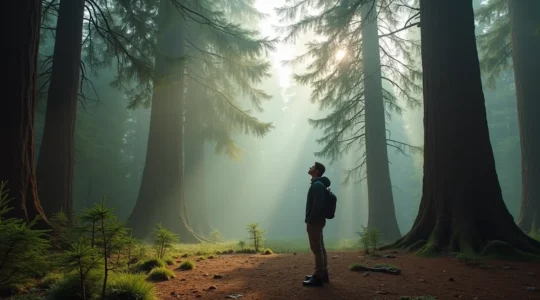
Shinrin-yoku’s immune-boosting power isn’t magic; it’s a measurable biological response to specific forest compounds called phytoncides. Breathing in phytoncides directly increases the number and activity of Natural Killer (NK) cells, your body’s first line of defense against viruses and tumors….
Read more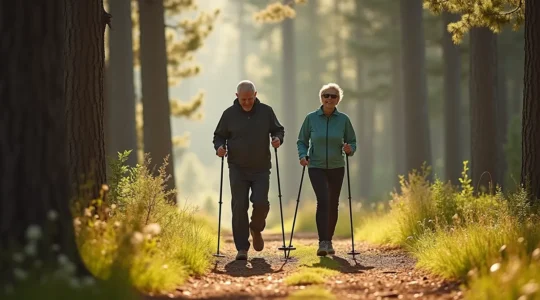
The claim that Nordic walking burns 20% more calories is only true if you master the physics of pole propulsion; otherwise, your poles are just dead weight. Dragging your poles instead of actively pushing off negates the entire upper-body workout…
Read more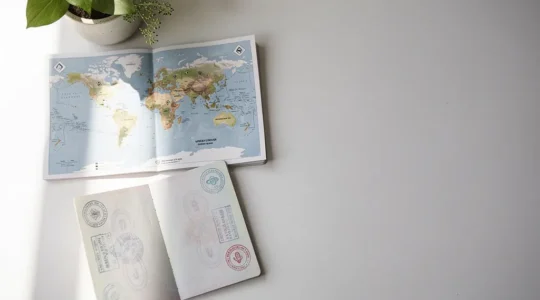
In summary: Treat your travel vaccination plan as a strategic 3-month project, not a last-minute checklist, to ensure full immunity. Schedule vaccines with the longest lead times (like Japanese Encephalitis or two-dose series) first, at the 3-month mark. Buffer for…
Read more