
In summary:
- Treat your travel vaccination plan as a strategic 3-month project, not a last-minute checklist, to ensure full immunity.
- Schedule vaccines with the longest lead times (like Japanese Encephalitis or two-dose series) first, at the 3-month mark.
- Buffer for side effects by receiving your final boosters at least 1-2 weeks before your departure date.
- Understand the “transit trap”: even a brief layover in a yellow fever zone can require a vaccination certificate upon arrival in Asia.
- Carry both a physical ICVP (Yellow Card) and digital copies of your records, as remote borders may lack digital readers.
Planning a trip to Southeast Asia evokes images of vibrant street markets, ancient temples, and breathtaking natural landscapes. For the adventure traveler, however, this excitement is coupled with a necessary concern: tropical diseases. The standard advice is often to “see a doctor 4-6 weeks before you go,” but this approach treats a critical medical process like a simple item on a to-do list. In an era of resurgent diseases and complex travel itineraries, this is no longer sufficient. This reactive mindset often leads to rushed vaccinations, suboptimal immunity, and unnecessary stress right before departure.
The truth is that effective travel health preparation is not a last-minute chore; it is a strategic, time-sensitive medical project. The key isn’t just knowing *what* vaccines to get, but understanding *how* and *when* to sequence them to build a robust shield of protection. This guide reframes the process, moving away from a simple checklist and toward a comprehensive 3-month timeline. We will look beyond the standard Hepatitis A and Typhoid recommendations to explore the nuances of booster schedules, the critical timing of vaccines like Yellow Fever, and how to build a medical kit that is calibrated to your specific vaccination status.
This approach transforms pre-travel anxiety into confident preparation. By front-loading the medical logistics, you create the mental and physical space to fully embrace the transformative power of your journey. Over the next eight sections, we will detail this strategic timeline, ensuring your only concern upon landing is which direction to explore first.
This article provides a detailed roadmap for your vaccination journey. Below is a summary of the key stages we will cover to ensure you are fully prepared for your Southeast Asian adventure.
Summary: Your 3-Month Southeast Asia Vaccination Roadmap
- Why Measles Outbreaks Are Increasing in Popular Tourist Destinations?
- How to Schedule Boosters so Side Effects Don’t Ruin Your Departure Day?
- Digital Wallet or Yellow Card: Which Is Safer for Border Crossings?
- The Timing Mistake That Leaves You Unprotected Against Yellow Fever
- What to Pack in Your Medical Kit Based on Your Vaccination Gaps
- How to Choose a Destination That Challenges You Without Overwhelming You?
- Why Breathing Forest Air Lowers Stress Hormones for 7 Days?
- Why Traveling to a Completely Foreign Culture Resets Your Brain Faster Than a Beach Resort
Why Measles Outbreaks Are Increasing in Popular Tourist Destinations?
The notion of measles as a vanquished disease is a dangerous misconception, especially for international travelers. A combination of pandemic-related disruptions to routine immunization programs and vaccine hesitancy has created a perfect storm for resurgence. Globally, the situation is alarming; in 2023 alone, there were an estimated 10.3 million people infected with measles globally, with a significant rise in outbreaks. Tourist hubs, where people from diverse vaccination backgrounds converge, have become potent amplifiers for the virus.
Southeast Asia is a prime example of this trend. In early 2024, Thailand reported approximately 2,000 confirmed measles cases, with the vast majority (92%) occurring in individuals with incomplete or unknown vaccination histories. These outbreaks were concentrated in popular southern provinces like Songkhla, Pattani, Yala, and Narathiwat, underscoring how easily a highly contagious, vaccine-preventable disease can spread through traveler and local populations. An unprotected traveler not only risks their own health but can also become a carrier, transporting the virus across borders and back to their home country.
For the adventure traveler, this means the MMR (Measles, Mumps, Rubella) vaccine is no longer an optional childhood memory but a non-negotiable component of pre-travel preparation. Ensuring you have two documented doses is the first and most critical step in your 3-month plan, as it forms the bedrock of protection against one of the most immediate and preventable travel-related risks. The required four-week interval between doses for those needing a full series makes starting early essential.
How to Schedule Boosters so Side Effects Don’t Ruin Your Departure Day?
A well-designed vaccination plan is about maximizing immunity, but it’s also about strategic scheduling to minimize disruption. The goal is to complete your “immunity ramp-up” well before your departure date, creating a buffer to manage any potential side effects without the stress of an imminent flight. The worst-case scenario is feeling feverish or experiencing muscle aches from a recent Typhoid or Yellow Fever shot while trying to pack or navigate airport security. This is entirely avoidable with a 3-month timeline.
Your scheduling should be back-timed from your departure date. Here is a logical sequence to discuss with your travel medicine physician:

The key is to front-load the vaccines that require multiple doses or have longer immunity development periods. For instance, the MMR series requires a 4-week gap between two doses, and the final dose should be at least two weeks before travel. Similarly, combined vaccines like Hepatitis A+B should be administered 4-6 weeks out. This leaves the final month for single-dose vaccines and ensures you are not receiving any major shots in the last 10-14 days before you fly.
Understanding the typical side effect profile of each vaccine is crucial for effective “side effect buffering.”
| Vaccine Type | Common Side Effects | Duration | Optimal Pre-Travel Window |
|---|---|---|---|
| Hepatitis A | Sore arm, mild fatigue | 1-2 days | 2-3 weeks |
| Typhoid (injection) | Headache, muscle aches | 1-2 days | 4 weeks |
| Japanese Encephalitis | Headache, muscle pain | 2-3 days | Complete series 1 week before |
| Yellow Fever | Flu-like symptoms | 5-10 days | 10+ days (mandatory waiting period) |
By scheduling your Yellow Fever shot, which can have more pronounced flu-like symptoms, a full 3-4 weeks before departure, you allow your body ample time to recover. This strategic foresight transforms vaccination from a pre-travel hassle into a seamless part of your preparation.
Digital Wallet or Yellow Card: Which Is Safer for Border Crossings?
Proof of vaccination is as essential as your passport, but the method of carrying it requires a strategic choice. In an increasingly digital world, relying solely on an app or a QR code can be a high-risk gamble, especially for the adventure traveler. While digital health passes and apps like the Express Plus Medicare app in Australia offer convenient backup, the physical International Certificate of Vaccination or Prophylaxis (ICVP), commonly known as the “Yellow Card,” remains the undisputed gold standard at many international borders.
This is particularly true at remote land crossings in Southeast Asia, where internet connectivity can be unreliable and border officials are trained to recognize the specific format of the WHO-approved ICVP. For Yellow Fever, the only vaccine required by international health regulations for entry into certain countries, the physical card is often the only accepted form of proof. An official may not have the means—or the inclination—to scan a QR code on your phone. Being unable to produce the required physical document can lead to delays, denied entry, or, in some cases, a forced (and expensive) vaccination at the border.
The safest approach is a “documentation duality” strategy, leveraging the strengths of both physical and digital formats. This ensures redundancy and preparedness for any situation, from a high-tech airport in Singapore to a rural checkpoint on the Thai-Cambodian border.
Your Border-Proof Documentation Checklist
- Secure the Physical Copy: Keep your physical ICVP Yellow Card in a waterproof holder, stored separately from your passport to prevent losing both at once.
- Create Digital Backups: Photograph all pages of your ICVP and other vaccination records. Store these images both in the cloud (e.g., Google Drive, Dropbox) and offline on your phone’s memory.
- Utilize Official Apps: If your national health service provides a digital wallet or app (like Australia’s myGov), have it downloaded and logged in as a secondary backup.
- Carry Certified Copies: If you have a medical exemption for a required vaccine (e.g., Yellow Fever), carry the original letter from your physician plus a certified copy.
- Be Proactive: When approaching a checkpoint where vaccination proof may be required, have your documents ready. Presenting them confidently and proactively can smooth the process significantly.
This dual approach turns a potential point of failure into a demonstration of preparedness, ensuring your paperwork is never an obstacle to your adventure.
The Timing Mistake That Leaves You Unprotected Against Yellow Fever
The most common and costly timing mistake in travel vaccination involves Yellow Fever. Many travelers correctly assume they don’t need the vaccine for direct travel to Southeast Asia. However, they fall into the “transit trap.” International Health Regulations require proof of Yellow Fever vaccination if a traveler is arriving from a country with a risk of transmission. This rule applies even if you only spent a few hours in an airport during a layover. Countries in much of South America and sub-Saharan Africa are on this list.
Imagine this scenario: you book a flight from Europe to Bangkok with a 6-hour layover in Addis Ababa, Ethiopia. Ethiopia is a Yellow Fever endemic country. Upon arrival in Thailand, immigration officials will legally require you to present a valid ICVP. If you don’t have one, you could be denied entry or quarantined. The critical rule is this: the Yellow Fever vaccine certificate only becomes valid 10 days after you receive the vaccination. Getting the shot a few days before your flight is useless for meeting this requirement.
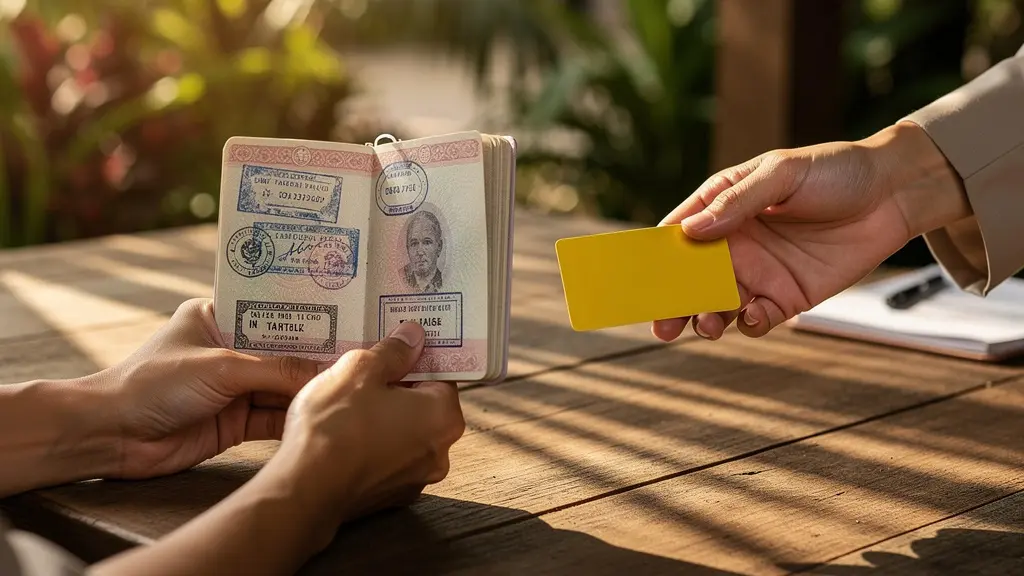
This 10-day mandatory waiting period is non-negotiable and is enforced to ensure the vaccine has prompted an effective immune response. Misunderstanding this rule can completely derail the start of a trip. The only way to avoid the transit trap is through meticulous itinerary review as part of your 3-month planning process.
To prevent this, you must:
- Scrutinize Your Entire Itinerary: Review not just your final destination, but every single stop, including airport layovers. Check the official WHO or CDC lists of countries with risk of Yellow Fever transmission.
- Schedule Accordingly: If any country on your itinerary (including transit) requires the vaccine, you must schedule your appointment at least 10 days before you are set to enter the first country with this requirement. To be safe, aim for 3-4 weeks out.
- Consider Contraindications: The Yellow Fever vaccine is a live virus and is not recommended for everyone, including infants, pregnant women, immunocompromised individuals, and sometimes adults over 60. If it’s contraindicated for you, you must obtain an official medical waiver letter from your physician to carry with your passport.
This single point of planning can be the difference between a smooth arrival and a logistical nightmare. It highlights why a 3-month lead time is not a luxury, but a necessity for complex international travel.
What to Pack in Your Medical Kit Based on Your Vaccination Gaps
Your personal medical kit should not be a generic pre-packaged box from a pharmacy. As a travel medicine physician, I advise my patients to build a “risk-calibrated” kit, where the contents are directly informed by their itinerary, activities, and, most importantly, their vaccination status. If you are fully vaccinated against diseases like Typhoid and Hepatitis A, your focus can shift. If you have gaps, your kit becomes a critical line of defense.
The most common ailment affecting travelers is diarrhea, with up to 50% of travelers to developing countries experiencing it. Your vaccination status dictates your management strategy. A traveler vaccinated against Typhoid can manage most cases with rehydration salts and perhaps a non-antibiotic agent like Imodium. However, an unvaccinated traveler experiencing a high fever with severe diarrhea must have a prescription for a broad-spectrum antibiotic (like Azithromycin) on hand, as this could be a sign of a serious bacterial infection.
Your kit should be built in layers, based on specific risks you haven’t mitigated with vaccines:
- Baseline Essentials (for everyone): This includes paracetamol for pain/fever, a rehydration mixture, antacids, antihistamines for allergic reactions, basic wound care (antiseptic wipes, bandages, blister treatment), and a good quality insect repellent containing DEET or Picaridin.
- If Skipping the Japanese Encephalitis (JE) Vaccine: This vaccine is for a mosquito-borne illness found in rural, agricultural areas. If you are forgoing it, your kit must be heavily focused on bite prevention. This includes permethrin-treated clothing and a high-concentration DEET repellent (30-50%), plus a mosquito net if staying in basic accommodation.
- If Unvaccinated Against Rabies: Rabies is 100% fatal once symptoms appear. While the pre-exposure vaccine is recommended for long-term or high-risk travelers, many opt out. If you are one of them, your kit must contain a potent antiseptic wound wash for immediate and thorough cleaning of any animal bite or scratch. Critically, you must also have pre-researched information on the nearest reputable clinic for post-exposure prophylaxis (PEP).
- If Unvaccinated Against Typhoid: As mentioned, this necessitates carrying a course of appropriate prescription antibiotics and knowing the precise symptoms (prolonged high fever, stomach pain) that would trigger its use.
This targeted approach transforms your medical kit from a collection of “just-in-case” items into a personalized and intelligent support system, directly compensating for any gaps in your immunological armor.
How to Choose a Destination That Challenges You Without Overwhelming You?
Comprehensive health preparation does more than just prevent illness; it empowers you to be a more ambitious traveler. Once your vaccination schedule is managed and your medical kit is packed, you can lift your eyes from the practicalities of survival and focus on the nature of your adventure. This is where you can consciously choose a destination that strikes the perfect balance between challenge and comfort, ensuring the experience is transformative rather than overwhelming.
For a first-time adventure traveler to Southeast Asia, a great strategy is to start with countries that have a robust healthcare infrastructure. Cities like Singapore, Bangkok (Thailand), and Kuala Lumpur (Malaysia) boast world-class international hospitals. This provides a psychological safety net, allowing you to push your boundaries knowing that excellent care is accessible. You can use these modern hubs as a base from which to make more adventurous forays into rural areas or neighboring countries with less developed infrastructure.
Your health preparedness directly informs this choice. The risk of vector-borne diseases like dengue is a serious consideration. For example, Malaysia recorded approximately 122,423 dengue cases in 2024, a significant increase. Being aware of such statistics, and armed with effective mosquito repellent and knowledge of symptoms, allows you to travel to these regions confidently rather than avoidantly. Assessing your destination’s “challenge level” involves considering these factors:
- Healthcare Access: How far is the nearest reputable clinic or international hospital from your planned locations?
- Malaria and Dengue Risk: Is your itinerary primarily in low-risk urban areas or high-risk rural/jungle regions?
- Sanitation Standards: Will you have consistent access to safe drinking water and food, or will you need to be highly vigilant? (A Typhoid vaccine provides a crucial safety layer here).
- Vaccination Complexity: A destination requiring multiple specialized vaccines like Japanese Encephalitis or Rabies is inherently more complex than one covered by routine shots.
By using your 3-month preparation window to address these health logistics, you free yourself to make travel choices based on desire and curiosity, not fear. You can confidently choose the challenging jungle trek over the safe city tour because you’ve done the work to mitigate the risks.
Why Breathing Forest Air Lowers Stress Hormones for 7 Days?
The three months leading up to a major trip can be a period of significant stress. The logistics of booking flights, arranging visas, and managing a complex vaccination schedule can elevate anxiety, precisely when you should be feeling excited. An effective travel health plan should therefore include strategies not just for physical immunity, but for mental resilience. One of the most powerful and accessible tools for this is the practice of *Shinrin-yoku*, or “forest bathing.”
This is not simply a walk in the woods; it is the conscious and contemplative practice of immersing oneself in the atmosphere of the forest. The science behind its benefits is robust and compelling. When we are in a forest, we breathe in phytoncides, which are airborne antimicrobial organic compounds emitted by trees and plants to protect themselves from pests and disease. Inhaling these compounds has a profound and measurable effect on the human body.

Research has shown that exposure to a forest environment significantly reduces levels of cortisol, the body’s primary stress hormone. A study by noted researcher Qing Li provides strong evidence for this effect. As he states in his work on the health benefits of forests, ” Forest bathing reduces scores for anxiety, depression, anger, fatigue, and confusion, and increases the score for vigor.” Furthermore, these studies have shown that forest bathing boosts the activity of natural killer (NK) cells, a type of white blood cell that plays a vital role in the immune system’s defense against viruses and tumors. Remarkably, the positive effects on NK cell activity can last for up to seven days after a trip to a forest.
Incorporating regular, mindful walks in a local park or forest during your 3-month preparation period can be a powerful antidote to pre-travel stress. It actively lowers anxiety, strengthens your immune system right when you’re asking it to process new vaccines, and sets a calm, centered tone for the adventure ahead. It’s a natural, cost-free complement to your medical preparations.
Key Takeaways
- Strategic Timing is Everything: Start your vaccination plan 3 months out to accommodate multi-dose vaccines and build full immunity without last-minute stress.
- Side Effects are Manageable: Schedule your final shots, especially Yellow Fever, at least 2-3 weeks before departure to create a “buffer zone” for recovery.
- Documentation is Dual: Rely on the physical Yellow Card as your primary proof at borders, but keep digital photos and app-based records as essential backups.
- Beware the Transit Trap: Your layover locations, not just your final destination, dictate Yellow Fever vaccine requirements. A short stop in an endemic zone is enough to trigger the rule.
- Your Medkit is Personal: Calibrate the contents of your medical kit based on your specific vaccination gaps, especially for risks like rabies and severe traveler’s diarrhea.
Why Traveling to a Completely Foreign Culture Resets Your Brain Faster Than a Beach Resort
The ultimate reward for meticulous health preparation is not just the avoidance of disease, but the freedom to pursue a truly transformative travel experience. While a week at a beach resort can be relaxing, immersing yourself in a completely foreign culture—navigating unfamiliar languages, customs, and social cues—acts as a powerful “cognitive reset.” This kind of travel forces your brain out of its habitual patterns, fostering neuroplasticity and creating new neural pathways. You are not just seeing new things; you are rewiring the way you think.
This process is amplified by the contrast between your diligent preparation and the spontaneity of discovery. Having methodically addressed the tangible risks of tropical diseases, you create a foundation of safety that allows for genuine, uninhibited exploration. You can sample street food with curiosity instead of fear (knowing your Typhoid and Hepatitis A vaccines are your safety net). You can venture into a rural village for an overnight stay (knowing your medical kit and mosquito precautions are sound). This confidence is the key that unlocks deeper cultural immersion.
The psychological shift is profound. The part of your brain that was occupied with medical logistics and risk assessment is now freed to focus on observation, connection, and adaptation. The mental energy once spent on “what ifs” is redirected to “what’s this?” This journey from anxiety to curiosity is the very essence of adventure travel. A trip to Southeast Asia, when properly prepared for, becomes an experience that challenges your perceptions and leaves you with memories of profound connection, not a legacy of preventable illness.
Ultimately, the goal of a strategic vaccination plan is to make health a non-issue so that you can fully engage with the world. It’s the invisible framework that supports the most memorable and life-changing moments of your journey.
Your health and safety are paramount for a successful adventure. The next logical step is to translate this knowledge into a personalized action plan. Schedule an appointment with a travel medicine clinic or your physician at least 3 months before your departure to discuss your specific itinerary and create a tailored vaccination schedule.