
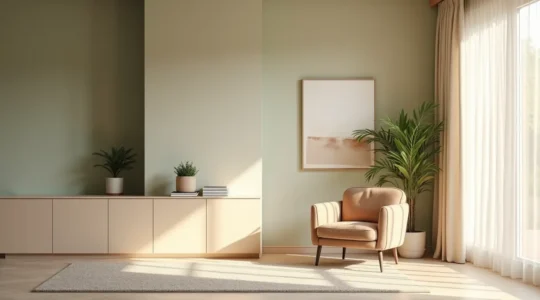
Designing for a Highly Sensitive Person is not about minimalism, but about sensory ergonomics—intentionally curating light, texture, and space to calm the nervous system. Visual calm is paramount: Replace open shelves with closed storage to reduce cognitive load and visual…
Read more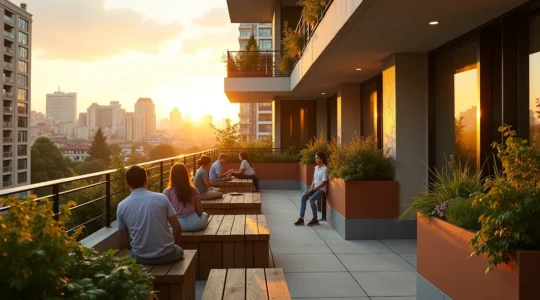
Creating a true urban ‘village’ is not about chance encounters, but about deliberately engineering micro-environments for genuine connection. Authentic relationships thrive on structured vulnerability (like “crap dinners”), overcoming the pressure for perfection that stifles connection. Activities with a shared purpose…
Read more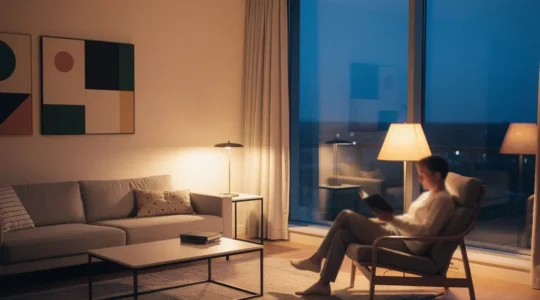
In summary: Treat light as a biological signal; your home’s lighting should be a dynamic system that changes from day to night. Prioritize bright, blue-enriched light exposure in the morning to set your internal clock and boost daytime alertness. Systematically…
Read more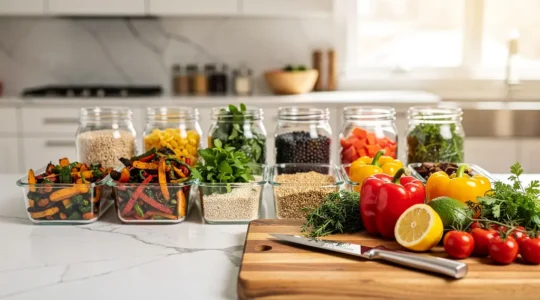
In summary: Swap stressful “batch cooking” for flexible “component prepping” to create endless meal variations. Organize your pantry and fridge by use-by date and meal type to eliminate last-minute decisions and food waste. Master simple chef techniques for seasoning and…
Read more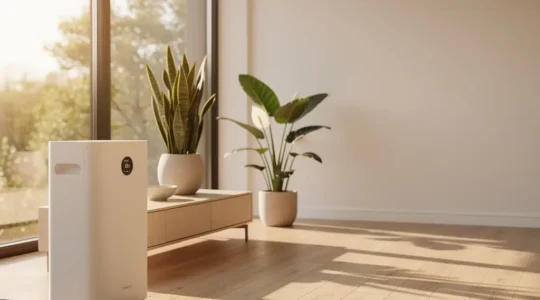
Your home is not a passive shelter; it’s an active biological system whose invisible inputs are constantly programming your body’s inflammatory response. Chronic inflammation is often driven by low-grade environmental signals like airborne chemicals, artificial light, and accumulated allergens, not…
Read more