

The true power of acupressure for immunity lies not in a secret list of points, but in understanding the body’s underlying energetic logic.
- Effective immunity is a systemic balance, connecting digestion, mental state, and physical defense.
- The *method* of stimulation (heat vs. pressure) and its *precision* are more critical than the point itself.
Recommendation: Shift from merely pressing points to engaging in an intelligent dialogue with your body by recognizing its specific signals and responding with targeted protocols.
As the chill of flu season descends, many health-conscious individuals seek natural ways to fortify their body’s defenses. The common advice often involves a familiar list of acupressure points like LI4 or ST36, presented as simple buttons to press for immunity. This approach, while well-intentioned, treats the body’s profound energetic system like a vending machine, missing the deep wisdom woven into the fabric of Traditional Chinese Medicine (TCM).
The ancient teachings emphasize that the body is not a collection of isolated parts, but an interconnected whole. True resilience doesn’t come from mechanically stimulating a few “magic” points. It arises from understanding the energetic grammar that governs your health. The key is not just knowing *which* points to use, but *why* a point on your foot can influence your entire system, *how* to adapt your technique to your body’s specific needs, and *when* to listen to the subtle signs of imbalance before they manifest as illness. This is the difference between blindly following a recipe and mastering the art of healing.
This guide will move beyond the superficial list. We will explore the systemic logic behind point selection, the critical importance of precise location and stimulation, and how to combine points to address the root causes of weakened immunity, such as stress and poor sleep. By the end, you will not just have a list of points; you will have a new framework for having an intelligent dialogue with your own body to cultivate lasting wellness.
To navigate this ancient wisdom, this article is structured to build your understanding layer by layer. The following summary outlines the key concepts we will explore to transform your acupressure practice from a routine into a targeted, powerful tool for health.
Summary: Mastering Acupressure for Systemic Immunity
- Why a Point on Your Foot Affects Your Digestion?
- How to Use Vaccaria Seeds for Continuous Stimulation of Ear Points?
- Heat Stimulation or Finger Pressure: Which Is Better for “Cold” Conditions?
- The Location Mistake That Makes Your Acupressure Useless
- How to Combine Points to Treat Both Anxiety and Insomnia Simultaneously?
- What to Pack in Your Medical Kit Based on Your Vaccination Gaps
- Mushrooms or Smart Drugs: Which Is Safer for Long-Term Memory?
- How to Recognize the Signs of Stagnant Qi Before It Becomes Illness
Why a Point on Your Foot Affects Your Digestion?
In the cosmology of Traditional Chinese Medicine, the body is a landscape traversed by meridians, or pathways of Qi (vital energy). These pathways connect the exterior of the body to the internal organs in a complex, intelligent network. This is why a point on your leg, like the famed ST36 (Zusanli or “Leg Three Mile”), can have a profound impact on your digestion and, by extension, your immunity. The Stomach meridian flows from the face down to the foot, linking this point directly to its namesake organ.
Modern science is beginning to map this ancient wisdom, revealing that points like ST36 are located over major nerve pathways. Stimulating ST36 has been shown to activate the vagus nerve, a critical component of the “gut-brain-immune axis.” This activation helps regulate gastric motility and reduces systemic inflammation. As one study highlights, acupuncture can significantly reduce inflammatory markers like TNF-α through these vagal pathways. This is not magic; it is a targeted dialogue with the body’s integrated systems.
Strengthening the digestive system, or the “Middle Jiao” in TCM, is paramount for building strong Defensive Qi (Wei Qi), which is our first line of defense against external pathogens. When digestion is robust, the body can efficiently extract nutrients to build blood and energy, fortifying the entire system. In fact, research demonstrates that activating this gut-brain connection can yield remarkable benefits. One study published in Evidence-Based Complementary Medicine confirms that proper stimulation can result in a 68% improvement in energy state and 59% faster healing, underscoring the link between a happy gut and a resilient body.
How to Use Vaccaria Seeds for Continuous Stimulation of Ear Points?
The ear is considered a microcosm of the entire body, a complete map where every organ and body part is represented. This concept, known as auricular therapy, allows for the treatment of systemic issues through precise points on the ear. While finger pressure can be effective, its effects are temporary. For sustained support, especially during flu season, we turn to a subtle yet powerful tool: Vaccaria seeds.
These small, hard seeds from the Vaccaria plant are attached to adhesive tape and placed on specific auricular acupoints. They provide gentle, continuous pressure, prolonging the therapeutic signal to the brain and nervous system. This method is discreet, non-invasive, and empowers you to carry the treatment with you for several days, reinforcing your body’s defenses around the clock.
To prepare for flu season, a specific protocol can be followed to bolster your Wei Qi. The goal is to create systemic balance, calm the nervous system (as stress weakens immunity), and directly support the respiratory system. You would apply the seeds and leave them in place for 3-5 days, gently pressing them a few times daily to reactivate the stimulation, before taking a 1-2 day break and repeating.
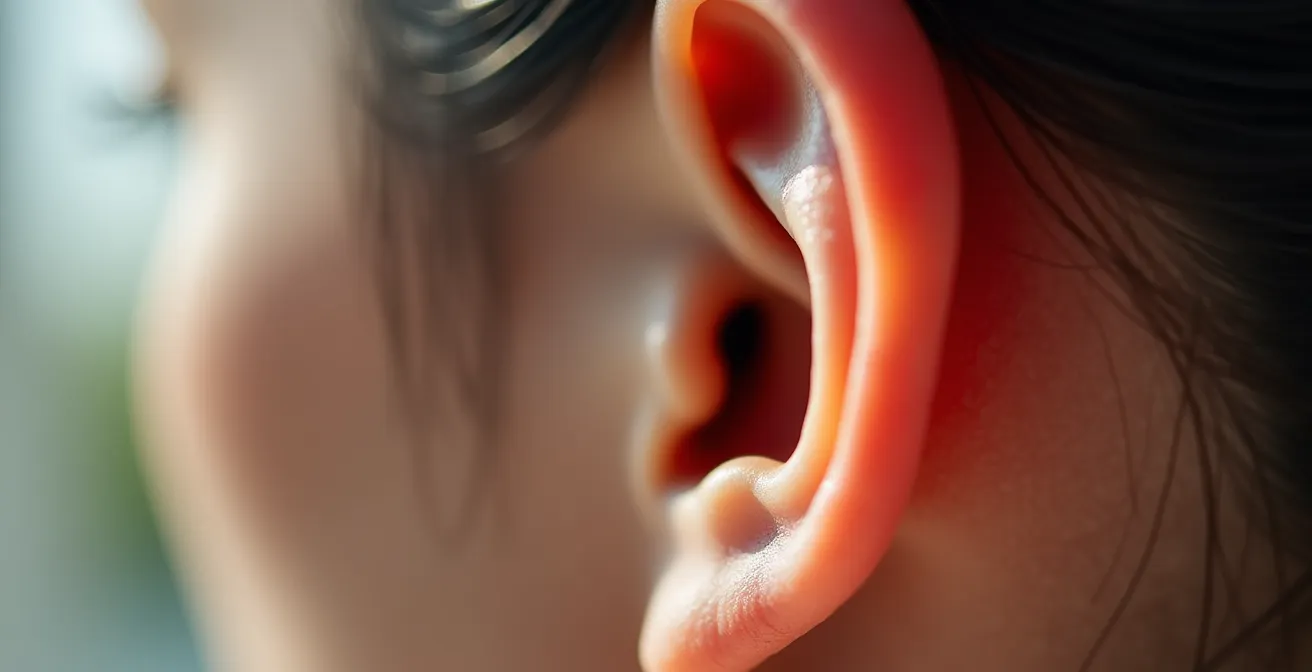
As the image shows, the ear’s intricate landscape provides a rich territory for this practice. The key points in an immune-boosting protocol include Point Zero, for bringing the whole body into homeostatic balance, Shen Men, to quiet the spirit and reduce stress, and the Lung point, to directly strengthen the organ system most vulnerable to airborne pathogens.
Heat Stimulation or Finger Pressure: Which Is Better for “Cold” Conditions?
Understanding the “energetic grammar” of TCM means recognizing that not all illnesses are the same, and therefore, not all treatments should be. A common cold, for instance, can manifest as either a “Wind-Cold” invasion or a “Wind-Heat” invasion, each requiring a different therapeutic approach. The choice between using heat stimulation (moxibustion or a simple heating pad) and firm finger pressure is not arbitrary; it is a targeted response to the body’s specific condition.
A Wind-Cold invasion is characterized by symptoms like chills, a clear or white runny nose, body aches, and a lack of sweat. Here, the pathogen is ‘Cold’ in nature. The correct response is to introduce ‘Yang’ energy to expel the Cold. Heat is the ultimate Yang element. Applying heat via moxibustion (the burning of mugwort herb) or a modern heating pad over points like ST36 warms the meridians, promotes circulation, and dispels the pathogenic cold.
Conversely, a Wind-Heat invasion presents with fever, a sore throat, yellow or green phlegm, and thirst. The pathogen is ‘Hot,’ and the principle is to clear Heat and move stagnant Qi. Here, firm, deep finger pressure is the method of choice. It helps to disperse the blockage and release the excess heat from the channel. Points like LI11 (Quchi), located at the elbow crease, are excellent for this purpose.
Heat adds ‘Yang’ energy, which is needed to fight ‘Cold’ pathogens. Firm pressure helps to move Qi and clear ‘Heat’ blockages.
– Traditional Chinese Medicine Principles, TCM Tips – Acupressure for Immune System
The following table, based on principles outlined by institutions like Sinomedica’s scientific approach, simplifies this diagnostic choice.
| Condition Type | Symptoms | Treatment Method | Key Points |
|---|---|---|---|
| Wind-Cold Invasion | Chills, clear runny nose, body aches, no sweat | Heat stimulation (moxibustion/heating pad) | ST36, LI4 |
| Wind-Heat Invasion | Fever, sore throat, yellow phlegm, thirst | Firm finger pressure | LI4, LI11 (Quchi) |
The Location Mistake That Makes Your Acupressure Useless
The most common failure in self-administered acupressure is not a lack of effort, but a lack of precision. An acupoint is not a large, forgiving target; it is a specific gateway to a meridian. Pressing in the general vicinity is like knocking on the wall next to a door—the message will not be received. The difference between an effective treatment and a useless one often comes down to a few millimeters.
Take, for example, the crucial point LI4 (Hegu), located on the hand. Many are told it’s “in the webbing,” but the true location is at the highest point of the muscle bulge when you press your thumb and index finger together. Simply squeezing the web will miss the mark. The key is to hunt for the point. Use your thumb to probe the area, feeling for a slight depression or a spot that is noticeably more tender than its surroundings. These are known as ‘Ashi’ points, which literally translates to “Ah, yes!”—an exclamation of finding the right spot.
The true confirmation of correct location is achieving the ‘Deqi’ sensation. This is not a sharp pain, but rather a distinct feeling of a dull ache, tingling, electricity, or heaviness that may radiate from the point. This sensation is the signal that you have connected with the Qi in the meridian. Without Deqi, your pressure is merely a superficial massage. With it, you are engaging in a powerful therapeutic dialogue. The importance of this precision is validated by modern research; a study in the Journal of Immunology found that correct LI4 stimulation can produce a 61% increase in immune cell activity, an effect that is significantly diminished with incorrect placement.
Your Action Plan: Correct Point Location Technique
- Explore the general area: Gently probe with your fingertip, feeling for subtle changes in the tissue, like slight depressions or tender spots.
- Confirm with anatomical cues: For a point like LI4, press your thumb and index finger together and locate the highest point of the muscle bulge. This is your target zone.
- Listen for ‘Ashi’ points: Pay close attention to any spot that feels noticeably more tender or “alive” than the surrounding area. This tenderness is a direct signal from your body saying, “press here.”
- Achieve the ‘Deqi’ sensation: Apply steady, deep pressure until you feel a dull ache, tingling, or a feeling of heaviness. This confirms you’ve connected with the meridian’s Qi.
- Maintain the connection: Once Deqi is achieved, hold the pressure for 1-3 minutes, breathing deeply to help the Qi circulate.
How to Combine Points to Treat Both Anxiety and Insomnia Simultaneously?
In the wisdom of TCM, the mind and body are not separate. Emotional states like anxiety and stress directly impact the flow of Qi and, consequently, the strength of our immune system. Chronic stress causes Qi to stagnate, consuming the body’s resources and leaving the Wei Qi (Defensive Qi) depleted and vulnerable. This is why a person under significant stress is more likely to catch a cold. Similarly, insomnia prevents the body from performing its nightly repair and regeneration, further weakening its defenses.
Therefore, a truly holistic approach to immunity must address the state of the Spirit (Shen). Combining points for immunity with points that calm the mind and promote sleep creates a powerful synergistic effect. This “Immunity-Calm Trifecta” doesn’t just fight pathogens; it strengthens the very foundation of your health. Research confirms this link, showing that acupuncture helps regulate the nervous system by promoting the release of endorphins and lowering levels of the stress hormone cortisol, which in turn supports better sleep and immune response.
A simple yet profound nighttime ritual can be to combine a core immunity point with calming points. For instance, you can press ST36 (Zusanli) on your leg to ground your energy and support digestion, followed by PC6 (Neiguan) on the inner wrist to open the chest and relieve anxiety, and finally HT7 (Shenmen) at the wrist crease to quiet the mind and invite sleep.

Creating a peaceful environment, as depicted, enhances the effects. By integrating this practice into your bedtime routine, you are not just treating symptoms; you are actively regulating your body’s nervous and immune systems, building deep, resilient health from the inside out. This proactive care is the essence of preventative medicine in TCM.
What to Pack in Your Medical Kit Based on Your Vaccination Gaps
While this article focuses on energetic medicine, it is vital to acknowledge the role of conventional preventative measures like vaccinations. Acupressure is a powerful complement, not a replacement. For the health-conscious traveler, preparing a medical kit should involve both modern and traditional tools. Your “energetic first-aid kit” is a personalized map of acupoints to support your body while navigating new environments, foods, and potential exposures.
Instead of packing bottles, you pack knowledge. Before you travel, create a small, laminated card with diagrams of key points. This becomes an invaluable resource for maintaining balance on the go. Applying pressure to these points communicates with your nervous system, stimulating your body’s natural defenses when they’re most challenged by the stress of travel.
Your travel immunity card should include a versatile selection of points to address common travel-related complaints:
- ST36 (Zusanli): Your go-to point for combating travel fatigue and soothing digestive issues that can arise from unfamiliar foods and water.
- LI4 (Hegu): The master point for the face and head, perfect for addressing travel headaches and providing a general boost to the entire immune system.
- PC6 (Neiguan): Located on the inner wrist, this is the premier point for preventing motion sickness on planes, boats, or cars, while also easing travel-related anxiety.
- LU7 (Lieque): This point on the wrist is a primary gateway to the Lung meridian, helping to protect your respiratory system from airborne pathogens common in enclosed spaces like airplanes and trains.
The most important step is to practice locating these points and feeling the Deqi sensation before your trip. This ensures you can use them effectively and confidently when you need them most, turning your own hands into a portable, powerful medical kit.
Mushrooms or Smart Drugs: Which Is Safer for Long-Term Memory?
The modern quest for cognitive enhancement often leads to “smart drugs” or nootropics. However, from a TCM perspective, long-term mental clarity and memory are not achieved by forcing the brain to work harder, but by ensuring the entire system is in harmony. Brain fog, poor memory, and difficulty concentrating are often seen as symptoms of a deeper imbalance, frequently involving ‘Phlegm’ clouding the mind or a deficiency of core energy.
In TCM theory, the same ‘Phlegm’ that obstructs the clarity of the mind can also obstruct the Lungs, making the body more susceptible to illness. The connection is direct: a clear mind resides in a clear body. Therefore, points that clear the head and senses also play a role in strengthening immunity. Points like GV20 (Baihui) at the crown of the head and Yintang (between the eyebrows) are used to lift the spirit, clear the senses, and allow the body’s ‘commander’ (the mind) to better direct its immune resources.
Rather than relying on external substances, TCM focuses on nourishing the body’s innate intelligence. This involves clearing blockages and building fundamental energy (Qi) and Blood. The point SP6 (Sanyinjiao), where the Spleen, Liver, and Kidney meridians meet, is a powerhouse for nourishing this core energy, thereby supporting both cognitive function and immunity from the ground up. This approach is inherently safer for long-term health as it corrects imbalance rather than overriding the body’s natural state. The profound link between mental state and immunity is echoed in research, where interventions that reduce stress have shown a corresponding benefit to the immune system. Indeed, a study in *Complementary Therapies in Medicine* showed a 55% improvement in immune response following mindfulness-based stress reduction.
Key Takeaways
- Systemic Logic: Immunity is not isolated. It’s deeply connected to your digestion (ST36), emotional state (PC6, HT7), and mental clarity (GV20).
- Precision and Method Matter: The effectiveness of acupressure depends on finding the exact point (achieving ‘Deqi’) and using the right method (heat for ‘Cold’ conditions, pressure for ‘Heat’).
- Prevention is Key: Recognizing early signs of ‘Stagnant Qi,’ like irritability and frustration, allows you to intervene with points like LV3 before illness takes hold.
How to Recognize the Signs of Stagnant Qi Before It Becomes Illness
The highest form of medicine, according to the ancient masters, is preventative. It is the art of recognizing subtle imbalances and correcting them before they consolidate into a full-blown illness. One of the most common and important of these preclinical patterns is Liver Qi Stagnation. When the body’s Qi, or vital energy, is not flowing smoothly, it stagnates. This is the energetic equivalent of a traffic jam, creating frustration, pressure, and eventually, dysfunction that weakens the body’s defenses.
Recognizing the signs of Stagnant Qi is the first step to proactive self-care. The symptoms are often emotional and physical. Emotionally, you might experience irritability, fluctuating moods, a short temper, or a pervasive feeling of being ‘stuck’ or frustrated. Physically, it often manifests as tension in the neck and shoulders, temporal headaches, or digestive upset that worsens with stress. These are not random annoyances; they are clear signals from your body that its energy flow is compromised, weakening your Wei Qi and leaving you vulnerable.
When you recognize these signs, you can intervene. Two of the most powerful points for resolving Liver Qi Stagnation are LV3 (Taichong), located on the top of the foot between the first and second metatarsal bones, and GB21 (Jianjing), at the highest point of the shoulder muscle. Pressing LV3 helps to strongly soothe the Liver and regulate Qi flow throughout the body, while pressing or kneading GB21 directly releases the tension where stagnant Qi often accumulates. Using these points when you feel that tell-tale irritability or shoulder tightness can restore flow and strengthen your defenses before an opportunistic pathogen can take hold. As a therapeutic methodology, acupuncture and acupressure are capable of activating precisely these kinds of measurable immune responses.
With this knowledge, you now hold the keys to the three most fundamental acupoints for flu season resilience. The first is ST36 (Zusanli), to build your core energy through digestion. The second is LI4 (Hegu), the master commander of surface immunity. And the third is LV3 (Taichong), the great regulator that ensures your emotional state doesn’t sabotage your physical defenses. This trio forms a complete, intelligent protocol.
By understanding this energetic grammar, you can now move beyond simply pressing points and begin a truly intelligent dialogue with your body, transforming your approach to health and building a foundation of deep, lasting resilience.