
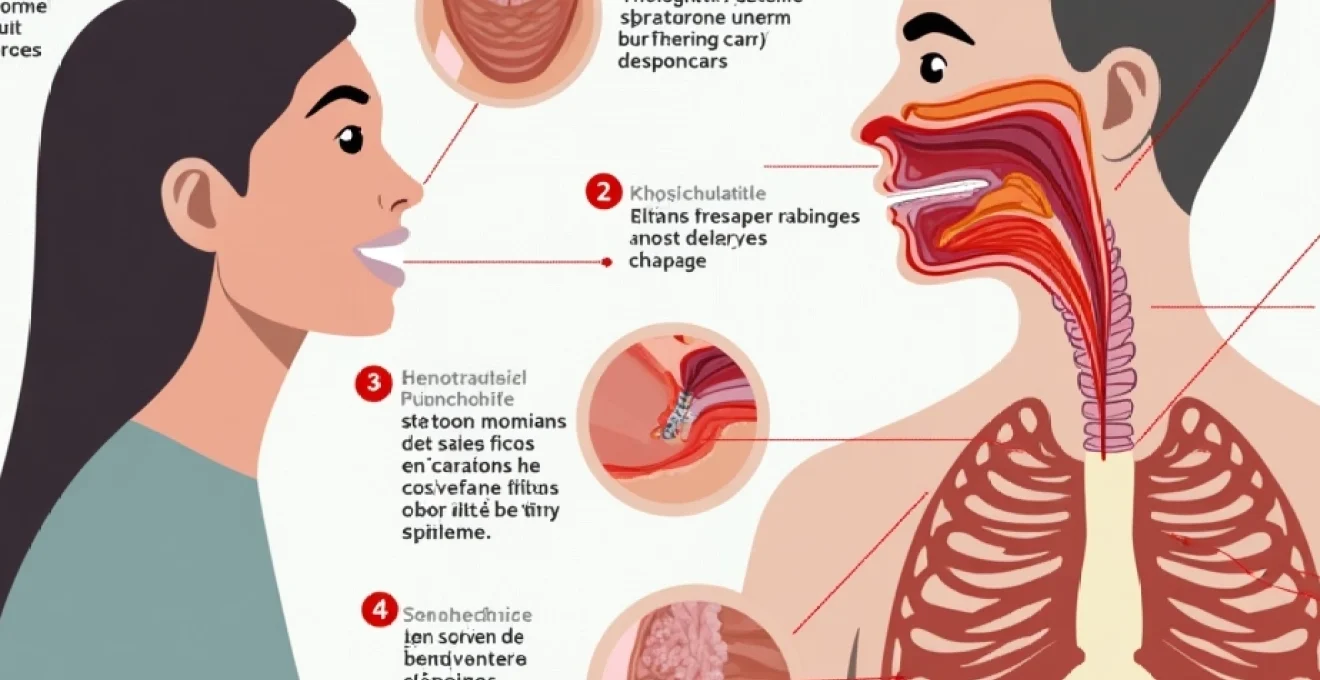
The distinctive popping or crackling sound that occurs in your chest during a sneeze can be both startling and concerning, particularly if you’ve never experienced it before. This audible phenomenon results from complex biomechanical processes involving multiple joints, cartilage structures, and muscle groups throughout your thoracic region. While chest popping during sneezing is typically harmless, understanding the underlying mechanisms can help you distinguish between normal joint sounds and potential signs of medical conditions requiring attention.
The human chest contains numerous articulations where bones, cartilage, and connective tissues meet, creating an intricate network of joints that facilitate breathing, movement, and postural support. During the explosive force of a sneeze, these structures experience sudden pressure changes and mechanical stress that can produce audible sounds. The intensity of these sounds varies considerably between individuals, depending on factors such as joint mobility, muscle tension, and anatomical variations in chest wall structure.
Anatomical mechanisms behind chest popping during sneezing episodes
The chest wall represents one of the most complex anatomical regions in terms of joint interactions and mechanical coordination. When you sneeze, multiple anatomical structures work simultaneously to generate the powerful expulsion of air, creating conditions ripe for joint cavitation and audible popping sounds. Understanding these mechanisms requires examining the specific components involved in thoracic movement during forceful respiratory events.
Costochondral joint movement and cartilage displacement
The costochondral joints, where your ribs meet the costal cartilage, experience significant stress during sneezing episodes. These joints function as flexible connections that allow your rib cage to expand and contract during breathing. During a sneeze, the sudden contraction of intercostal muscles and the dramatic increase in intrathoracic pressure can cause temporary displacement of cartilage at these junctions.
This displacement often produces the characteristic popping sound as cartilage snaps back into position. The costochondral joints of ribs eight through ten are particularly susceptible to this phenomenon because they form part of the “false ribs” that connect indirectly to the sternum through cartilaginous attachments. The flexibility of these connections makes them more prone to movement-related sounds during forceful respiratory actions.
Sternoclavicular joint mobility during forceful expiration
The sternoclavicular joint, where your collarbone meets your breastbone, plays a crucial role in upper body movement and breathing mechanics. During a sneeze, the rapid elevation and depression of the shoulder girdle can cause this joint to shift slightly, producing audible clicking or popping sounds. This joint contains a fibrocartilaginous disc that can contribute to sound production when compressed or released suddenly.
The sternoclavicular joint’s unique saddle-shaped configuration allows for multiple planes of movement, making it particularly responsive to the multi-directional forces generated during sneezing. The surrounding ligaments and joint capsule can also contribute to sound production as they stretch and recoil during the explosive respiratory event.
Intercostal muscle contraction and rib cage expansion dynamics
The intercostal muscles, positioned between your ribs, contract forcefully during sneezing to assist in the rapid expulsion of air. This contraction can cause subtle shifts in rib position, leading to temporary changes in the alignment of costal joints. As these muscles relax following the sneeze, the ribs may settle back into their resting positions with audible clicks or pops.
The external intercostal muscles work in conjunction with the diaphragm and accessory respiratory muscles to create the powerful pressure changes necessary for an effective sneeze. This coordinated muscular effort can generate forces that exceed normal respiratory pressures by several fold, creating ideal conditions for joint cavitation and sound production throughout the thoracic region.
Thoracic spine facet joint cavitation processes
The facet joints of your thoracic spine can also contribute to chest popping during sneezing. These joints, located between adjacent vertebrae, experience increased loading during the forceful muscle contractions associated with sneezing. The sudden pressure changes can cause cavitation within the synovial fluid of these joints, producing audible pops that may be perceived as originating from the chest area.
The thoracic spine’s connection to the rib cage means that spinal joint sounds can easily be mistaken for chest wall sounds. The costovertebral and costotransverse joints, where ribs attach to the spine, are particularly susceptible to cavitation during sudden movements or pressure changes associated with sneezing episodes.
Physiological pressure changes and cavitation phenomena in chest structures
The physics behind joint popping involves complex pressure dynamics and gas behavior within synovial fluid. During a sneeze, the rapid changes in intrathoracic pressure create ideal conditions for cavitation phenomena throughout the chest region. Understanding these physiological processes helps explain why some individuals experience more pronounced chest popping than others during respiratory events.
Intrathoracic pressure fluctuations during sneeze reflex activation
The sneeze reflex generates dramatic pressure changes within the thoracic cavity, with intrathoracic pressures potentially reaching levels several times higher than normal respiratory pressures. This pressure spike occurs in multiple phases: an initial deep inspiration, followed by brief breath-holding with vocal cord closure, and finally the explosive expulsion of air. Each phase creates distinct mechanical stresses on chest wall joints and surrounding tissues.
During the explosive phase of sneezing, intrathoracic pressure can increase to levels exceeding 100 mmHg above atmospheric pressure. This sudden pressure change affects all joint spaces within the thoracic region, potentially causing rapid expansion and compression of joint capsules and synovial fluid spaces. The resulting mechanical stress can trigger cavitation events in multiple joints simultaneously, creating the characteristic popping sounds.
Synovial fluid gas bubble formation in costovertebral joints
The costovertebral joints, where ribs articulate with vertebrae, contain synovial fluid that plays a crucial role in joint lubrication and movement. During pressure changes associated with sneezing, dissolved gases within this synovial fluid can rapidly come out of solution, forming microscopic bubbles. The collapse or formation of these bubbles creates the audible popping sounds commonly heard during forceful respiratory events.
This cavitation process is similar to the mechanism behind knuckle cracking, but occurs in the context of respiratory-induced pressure changes rather than deliberate joint manipulation. The refractory period following cavitation explains why you may not hear the same popping sound if you sneeze again immediately afterward—the dissolved gases require time to return to their pre-cavitation state.
Nitrogen gas release mechanisms in joint capsules
Nitrogen comprises the majority of dissolved gases within synovial fluid, making it the primary contributor to cavitation-induced joint sounds. During the rapid pressure changes of sneezing, nitrogen solubility decreases, leading to bubble formation within joint spaces. The acoustic properties of nitrogen bubble collapse create the characteristic sharp popping or cracking sounds heard during chest joint cavitation.
The rate of nitrogen gas release depends on several factors, including joint size, synovial fluid volume, and the magnitude of pressure change. Larger joints with greater synovial fluid volumes typically produce more pronounced sounds when cavitation occurs. This explains why some chest joints are more likely to pop audibly during sneezing than others.
Biomechanical forces acting on thoracic articulations
The biomechanical forces generated during sneezing create a unique loading pattern throughout the thoracic region. Compressive, tensile, and shear forces act simultaneously on different joint structures, creating complex stress distributions that can trigger multiple cavitation events. The coordination of these forces depends on individual anatomical variations, muscle strength, and joint mobility patterns.
Research indicates that the peak forces generated during sneezing can exceed those produced during many athletic activities. These forces act across multiple planes of movement, creating three-dimensional stress patterns that affect joint capsules, ligaments, and surrounding soft tissues. The temporal sequence of force application and release during the sneeze cycle creates optimal conditions for sequential joint popping throughout the chest region.
Medical conditions associated with audible chest joint sounds
While chest popping during sneezing is often benign, certain medical conditions can increase the frequency, intensity, or associated symptoms of these joint sounds. Understanding when chest popping might indicate an underlying health concern helps distinguish normal physiological responses from pathological processes requiring medical evaluation.
Healthcare professionals emphasise that isolated joint popping without accompanying pain, swelling, or breathing difficulties typically represents normal physiological phenomena rather than pathological processes.
Costochondritis and inflammatory joint responses
Costochondritis, an inflammatory condition affecting the cartilage connecting ribs to the breastbone, can significantly alter the acoustic properties of chest joints during sneezing. Inflammation increases joint sensitivity and can make normal cavitation sounds more noticeable or uncomfortable. Individuals with costochondritis may experience sharp chest pain accompanying the popping sounds, particularly in the upper chest region near the sternum.
The inflammatory process associated with costochondritis affects the biomechanical properties of cartilaginous joints, potentially altering the pressure thresholds required for cavitation. This can result in more frequent or pronounced popping sounds during respiratory activities, including sneezing, coughing, or deep breathing. The condition often develops following respiratory infections, chest injuries, or periods of increased physical activity involving the upper body.
Tietze syndrome impact on sternocostal articulations
Tietze syndrome, characterised by localised swelling and inflammation of the sternocostal joints, can significantly impact joint mechanics during forceful respiratory events. Unlike costochondritis, Tietze syndrome typically involves visible swelling at the affected joint sites, most commonly involving the second and third ribs. This swelling can alter normal joint movement patterns and affect the acoustic characteristics of cavitation events.
The mechanical restriction caused by Tietze syndrome may result in different types of joint sounds during sneezing, potentially including grinding or crepitus-like noises rather than sharp pops. The condition predominantly affects young adults and may be triggered by upper respiratory infections, intense coughing episodes, or physical trauma to the chest wall.
Thoracic outlet syndrome and rib mobility restrictions
Thoracic outlet syndrome involves compression of neurovascular structures in the space between the collarbone and first rib, potentially affecting normal rib mechanics during breathing and sneezing. This condition can alter the normal movement patterns of the upper ribs, leading to compensatory movements in other chest joints and potentially changing the distribution of cavitation events during forceful respiratory activities.
Individuals with thoracic outlet syndrome may notice that chest popping during sneezing is accompanied by arm tingling, numbness, or weakness. The altered biomechanics associated with this condition can create abnormal stress concentrations in certain chest joints while reducing mobility in others, potentially leading to asymmetric popping patterns or increased frequency of joint sounds on one side of the chest.
Differentiating normal joint sounds from pathological chest symptoms
Distinguishing between benign joint popping and symptoms requiring medical attention involves careful consideration of associated signs, symptom patterns, and functional impact. Normal joint cavitation during sneezing typically occurs without pain, produces brief, sharp sounds, and resolves immediately without lasting discomfort. Understanding the characteristics of concerning symptoms helps guide appropriate medical decision-making.
Pathological chest symptoms often include persistent pain, swelling, breathing difficulties, or sounds accompanied by other concerning features. Sharp, stabbing chest pain that spreads to the arms, neck, or jaw requires immediate medical evaluation, as these symptoms may indicate serious cardiac or pulmonary conditions. Similarly, chest popping accompanied by shortness of breath, dizziness, or crushing chest sensations warrants emergency medical attention.
Medical experts recommend seeking evaluation when chest sounds are accompanied by persistent pain, swelling, breathing difficulties, or any symptoms suggestive of cardiac or pulmonary complications.
The timing and pattern of symptoms provide important diagnostic clues. Normal joint popping typically occurs only during specific movements or activities like sneezing, while pathological processes may produce continuous or recurrent symptoms independent of respiratory events. Additionally, normal cavitation sounds usually decrease in frequency over time as joints adapt to repeated stress, whereas pathological conditions may worsen progressively without appropriate treatment.
Functional limitations associated with chest symptoms also help differentiate normal from abnormal findings. Benign joint popping rarely interferes with daily activities or causes significant discomfort, while pathological conditions often restrict movement, cause sleep disturbances, or impair work and recreational activities. The presence of systemic symptoms such as fever, night sweats, or unexplained weight loss alongside chest symptoms particularly warrants comprehensive medical evaluation.
Preventative measures and management strategies for chest popping
While complete prevention of chest popping during sneezing may not be possible or necessary, several strategies can help minimise discomfort and reduce the frequency of joint sounds. These approaches focus on maintaining optimal joint health, improving thoracic mobility, and managing underlying factors that may contribute to increased cavitation frequency.
Regular chest wall stretching and mobility exercises help maintain normal joint function and may reduce the likelihood of uncomfortable popping episodes. Gentle thoracic spine rotation, shoulder blade squeezes, and intercostal stretches can improve joint mechanics and reduce muscle tension that might contribute to abnormal joint loading during sneezing. Incorporating these exercises into daily routines helps maintain chest wall flexibility and joint health.
Postural awareness plays a significant role in chest joint health and function. Poor posture, particularly forward head position and rounded shoulders, can alter normal chest wall mechanics and increase stress on thoracic joints. Maintaining proper spinal alignment through ergonomic workstation setup, regular position changes, and postural strengthening exercises helps optimise joint function and may reduce the frequency of uncomfortable popping episodes.
Breathing technique modifications can also influence chest joint mechanics during respiratory events. Deep breathing exercises that emphasise gradual, controlled expansion and contraction of the rib cage help maintain joint mobility while reducing sudden pressure spikes that might trigger uncomfortable cavitation. Practicing diaphragmatic breathing techniques particularly benefits overall respiratory function and may reduce stress on chest wall joints during forceful expiratory events like sneezing.
Environmental factors affecting respiratory health indirectly influence chest joint function. Maintaining appropriate humidity levels, minimising exposure to irritants that trigger excessive sneezing or coughing, and managing allergies help reduce the frequency of forceful respiratory events that might cause uncomfortable joint sounds. These preventative measures focus on addressing root causes rather than simply managing symptoms after they occur.