
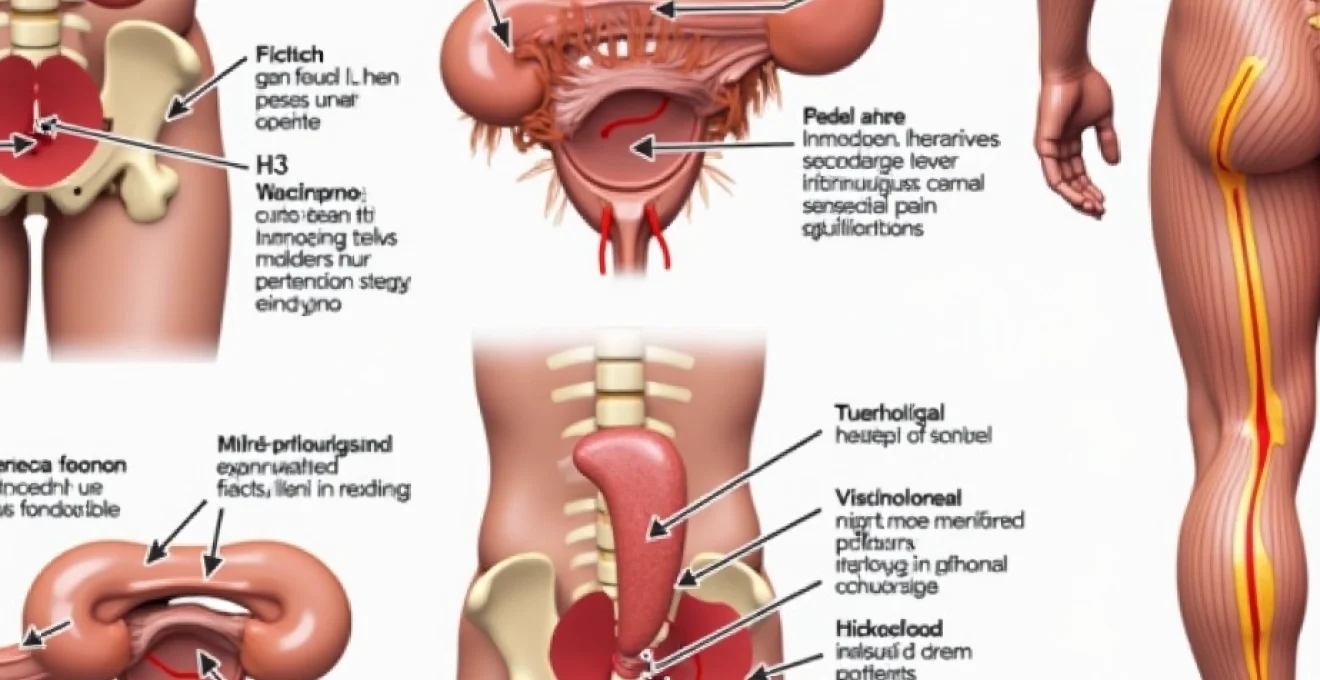
The intersection between renal pathology and musculoskeletal symptoms presents one of the most challenging diagnostic dilemmas in clinical practice. When patients present with lower back pain radiating down the leg, healthcare providers typically consider lumbar spine disorders as the primary cause. However, nephrolithiasis can produce remarkably similar symptom patterns, leading to misdiagnosis and delayed treatment. Understanding this complex relationship between kidney stones and sciatica-like pain is crucial for accurate diagnosis and effective patient management.
Recent studies indicate that approximately 12% of the global population will develop kidney stones at some point in their lifetime, with recurrence rates reaching 50% within five years. The overlapping neural pathways and shared anatomical regions between the urinary tract and lumbar spine create numerous opportunities for symptom mimicry. This phenomenon has significant implications for patient care, particularly when considering that misdiagnosis can lead to inappropriate treatments and prolonged suffering.
Anatomical relationship between renal calculi and lumbar nerve pathways
The anatomical proximity between the kidneys, ureters, and lumbar nerve structures creates multiple opportunities for symptom overlap. The kidneys are positioned in the retroperitoneal space, nestled against the posterior abdominal wall at the level of the T12 to L3 vertebrae. This location places them in close proximity to several important neural structures, including the lumbar plexus and various sympathetic nerve pathways. The psoas major muscle, which originates from the lumbar vertebrae and serves as a key anatomical landmark, lies directly anterior to the kidneys and can become involved when renal pathology develops.
Retroperitoneal space communication and nerve compression mechanisms
The retroperitoneal space serves as a critical communication pathway between renal structures and spinal nerves. When kidney stones cause ureteral obstruction, inflammatory processes can extend into this space, affecting nearby neural tissues. Retroperitoneal inflammation can compress or irritate nerve roots as they exit the spinal column, producing radicular pain patterns that closely mimic true sciatica. This mechanism explains why some patients with kidney stones experience pain that extends beyond the typical flank region into the lower extremities.
Research has demonstrated that retroperitoneal haematoma formation, particularly in cases involving larger calcium oxalate stones, can create mass effects that compress neural structures. The resulting symptoms may include numbness, tingling, and weakness in the affected leg, symptoms that are virtually indistinguishable from lumbar radiculopathy. The diagnostic challenge becomes even more complex when considering that these symptoms can persist even after the stone has passed, due to residual inflammation in the retroperitoneal tissues.
L4-L5 vertebral level proximity to renal pelvis and ureter
The anatomical relationship between the L4-L5 vertebral level and the renal pelvis creates a particularly problematic area for differential diagnosis. The renal pelvis and proximal ureter lie directly adjacent to the L4-L5 disc space, the most common site for lumbar disc pathology. When kidney stones become lodged in the ureteropelvic junction, the resulting inflammation and pain can easily be mistaken for disc-related radiculopathy. This anatomical overlap explains why many patients with kidney stones report pain patterns that follow the L4 or L5 dermatome distribution.
The ureter’s course through the pelvis further complicates matters, as it crosses over the sacroiliac joint region where it can influence the S1 nerve root. Studies have shown that stones lodged at the ureterovesical junction can produce pain that radiates into the posterior thigh and calf, areas typically associated with S1 radiculopathy. This phenomenon occurs because the ureter shares innervation with structures that also receive input from the S1 nerve root, creating a complex web of referred pain patterns.
Psoas muscle inflammation secondary to ureteral obstruction
The psoas major muscle plays a crucial role in connecting renal pathology to lower extremity symptoms. When kidney stones cause significant ureteral obstruction, inflammatory mediators can spread to involve the psoas muscle, leading to a condition known as secondary psoas syndrome. This inflammatory response can cause the psoas muscle to become tender, shortened, and hyperactive, directly affecting hip flexion and contributing to altered gait patterns that may exacerbate lower back pain.
Psoas involvement in kidney stone cases creates a unique clinical picture where patients may exhibit positive psoas signs, including pain with hip extension or lateral bending away from the affected side. These findings can easily be misinterpreted as evidence of lumbar spine pathology, particularly when combined with radicular pain patterns. The resulting diagnostic confusion can lead to unnecessary imaging of the lumbar spine while the true cause—nephrolithiasis—remains undetected.
Referred pain patterns through the genitofemoral and lateral femoral cutaneous nerves
The genitofemoral and lateral femoral cutaneous nerves represent critical pathways for referred pain from renal calculi to the lower extremities. The genitofemoral nerve, which originates from L1-L2 nerve roots, provides innervation to both the genital region and the upper anterior thigh. When kidney stones cause irritation of renal nerve plexuses, this irritation can be transmitted through genitofemoral nerve connections, producing thigh pain that may be mistaken for femoral nerve radiculopathy.
Similarly, the lateral femoral cutaneous nerve, responsible for sensation over the lateral thigh, can be affected by retroperitoneal inflammation associated with kidney stones. This can result in a condition similar to meralgia paresthetica, characterised by numbness and burning sensations along the lateral thigh. These referred pain patterns can persist long after the acute stone episode has resolved, leading to chronic symptoms that may be incorrectly attributed to spinal pathology.
Pathophysiological mechanisms of kidney Stone-Induced radicular pain
The pathophysiology underlying kidney stone-induced radicular pain involves multiple interconnected mechanisms that extend far beyond simple mechanical obstruction. When a stone becomes lodged in the urinary tract, it initiates a cascade of inflammatory and neurological responses that can profoundly affect pain perception and distribution. Understanding these mechanisms is essential for healthcare providers who need to differentiate between true radiculopathy and stone-related referred pain.
Ureteral spasm and sympathetic nervous system activation
Ureteral spasm represents one of the primary mechanisms by which kidney stones generate widespread pain patterns. When a stone obstructs urine flow, the ureter responds with intense, coordinated contractions designed to propel the obstruction forward. These spasms activate sympathetic nerve fibres that interconnect with somatic nerve pathways at the spinal cord level. The resulting sympathetic activation can produce referred pain patterns that extend well beyond the urinary tract, affecting areas typically associated with lumbar nerve root distribution.
Research has shown that sympathetic nerve activation during ureteral colic can influence muscle tension patterns throughout the lower back and pelvis. This can lead to secondary muscle spasms in the erector spinae, quadratus lumborum, and hip flexor groups, creating a clinical picture that closely resembles mechanical lower back pain. The intensity and pattern of these secondary muscle responses can vary significantly between individuals, making clinical diagnosis challenging without appropriate imaging studies.
Inflammatory mediator release: prostaglandins and substance P
The presence of kidney stones triggers the release of numerous inflammatory mediators, including prostaglandins, substance P, and various cytokines. Prostaglandin E2, in particular, plays a crucial role in sensitising nerve endings and amplifying pain signals. These inflammatory mediators don’t remain confined to the urinary tract but can diffuse into surrounding tissues, affecting nerve structures that serve the lower back and legs. The result is a heightened pain response that may extend far beyond the stone’s actual location.
Substance P, a neuropeptide involved in pain transmission, becomes significantly elevated during kidney stone episodes. This substance can cross-sensitise nerve pathways, meaning that normally non-painful stimuli in the lower back or legs may become painful. This phenomenon, known as central sensitisation, can persist for weeks or months after a stone episode, explaining why some patients continue to experience sciatica-like symptoms even after successful stone treatment.
Retroperitoneal haematoma formation in calcium oxalate stone cases
Large calcium oxalate stones, particularly those that cause significant tissue trauma during passage, can lead to retroperitoneal haematoma formation. These haematomas can create mass effects that compress nearby neural structures, including nerve roots as they exit the spinal canal. The resulting compression can produce genuine neurological symptoms, including weakness, numbness, and radicular pain that may be indistinguishable from disc-related pathology.
Clinical studies have documented cases where retroperitoneal haematomas from kidney stone episodes have caused temporary neurological deficits lasting several weeks. The resolution of these symptoms often correlates with haematoma resorption, as demonstrated on follow-up imaging studies. This mechanism highlights the importance of considering renal pathology in patients presenting with acute neurological symptoms, particularly when these symptoms develop in conjunction with flank pain or urinary symptoms.
Viscerosomatic convergence at spinal cord level T10-L2
The concept of viscerosomatic convergence explains how visceral pain from kidney stones can be perceived as somatic pain in the lower back and legs. At spinal cord segments T10-L2, nerve fibres from the kidneys and ureters converge with somatic sensory fibres from the lower back and legs. This convergence creates opportunities for the central nervous system to misinterpret the source of pain signals, leading to the perception of pain in areas distant from the actual pathology.
Neurophysiological studies have demonstrated that visceral pain signals can actually enhance the transmission of somatic pain signals at the spinal cord level, a phenomenon known as viscerosomatic facilitation. This means that kidney stone pain doesn’t just mimic back pain—it can actually make existing back pain worse. This interaction explains why patients with both kidney stones and pre-existing back problems often experience dramatically worsened symptoms during stone episodes.
Clinical differential diagnosis: nephrolithiasis versus lumbar radiculopathy
Distinguishing between nephrolithiasis and lumbar radiculopathy requires a systematic approach that considers multiple clinical factors, examination findings, and diagnostic test results. The challenge lies in the fact that both conditions can present with remarkably similar symptom patterns, particularly when kidney stones involve the retroperitoneal space or cause secondary muscle involvement. A comprehensive diagnostic approach must incorporate detailed history-taking, physical examination techniques, and appropriate imaging studies to achieve accurate differentiation.
Straight leg raise test results in uric acid stone patients
The straight leg raise test, traditionally used to diagnose lumbar disc pathology, can produce confusing results in patients with kidney stones. Studies involving uric acid stone patients have shown that approximately 30% demonstrate positive straight leg raise tests during acute episodes. This phenomenon occurs because retroperitoneal inflammation and psoas muscle involvement can create tension on neural structures during hip flexion manoeuvres. However, the quality of pain during straight leg raise testing often differs between true radiculopathy and stone-related symptoms.
In genuine sciatica, straight leg raise testing typically reproduces sharp, shooting pain that follows a specific dermatome distribution. In contrast, kidney stone patients with positive tests often report deep, aching discomfort that doesn’t follow classic nerve distribution patterns. Additionally, stone-related positive tests often resolve more rapidly than those caused by disc pathology, sometimes within hours of adequate pain control and hydration therapy.
CT urography findings in suspected sciatica cases
CT urography has emerged as a valuable diagnostic tool for identifying kidney stones in patients presenting with sciatica-like symptoms. Recent studies indicate that approximately 8% of patients referred for lumbar spine imaging due to radicular symptoms actually have underlying nephrolithiasis. CT urography protocols specifically designed for suspected stone cases can identify both acute obstructions and evidence of chronic stone disease that might contribute to ongoing symptoms.
The advantage of CT urography over standard lumbar spine imaging lies in its ability to visualise both the urinary tract and surrounding soft tissues simultaneously. This comprehensive approach can identify retroperitoneal changes, psoas muscle involvement, and stone-related complications that might otherwise be missed. Modern CT urography protocols also provide excellent visualisation of the neural foramina and can help identify cases where both spinal pathology and kidney stones coexist.
Neurological examination discrepancies in renal colic presentations
Neurological examination findings in patients with kidney stone-induced radicular symptoms often differ subtly from those seen in true lumbar radiculopathy. While both conditions can cause sensory changes and pain referral patterns, stone-related symptoms typically lack the specific motor weakness patterns characteristic of nerve root compression. Careful neurological testing can reveal these distinctions, particularly when examining specific muscle groups innervated by individual nerve roots.
Reflex testing also provides valuable diagnostic information, as kidney stone patients rarely demonstrate the asymmetric reflex changes commonly seen in radiculopathy. Deep tendon reflexes typically remain symmetric in stone cases, even when radicular pain patterns are present. Additionally, the distribution of sensory changes in stone patients often crosses multiple dermatome boundaries, unlike the specific patterns seen in single nerve root compression.
Laboratory markers: creatinine levels and inflammatory cytokines
Laboratory testing provides crucial support for differentiating kidney stones from spinal pathology. Elevated serum creatinine levels may indicate acute kidney injury secondary to stone obstruction, while inflammatory markers such as C-reactive protein and erythrocyte sedimentation rate often show elevation in stone cases but remain normal in uncomplicated radiculopathy. Urinalysis findings prove particularly valuable, as microscopic haematuria is present in over 85% of kidney stone cases but is rarely associated with spinal pathology.
Advanced laboratory testing can include measurement of specific inflammatory cytokines such as interleukin-6 and tumour necrosis factor-alpha, which become elevated during acute stone episodes. These markers can help differentiate systemic inflammatory responses associated with kidney stones from the localised inflammation typically seen in spinal disorders. Additionally, urine chemistry analysis can identify stone risk factors and help predict the likelihood of recurrence.
Magnetic resonance urography protocol for nerve root assessment
Magnetic resonance urography represents an advanced imaging technique that can simultaneously assess both urinary tract pathology and neural structures. This dual capability makes it particularly valuable for patients presenting with ambiguous symptoms that could originate from either renal or spinal sources. MR urography protocols can identify subtle ureteral obstruction, retroperitoneal inflammation, and nerve root compression within a single examination, providing comprehensive diagnostic information.
The technique offers superior soft tissue contrast compared to CT imaging, allowing for better visualisation of inflammatory changes in the retroperitoneal space. This capability proves particularly important in cases where kidney stones have caused secondary effects on surrounding neural structures. Modern MR urography can also provide functional information about kidney performance, helping clinicians assess the impact of stone disease on overall renal function.
Documented case studies of nephrolithiasis mimicking sciatic nerve dysfunction
Clinical literature contains numerous documented cases where kidney stones have successfully mimicked sciatic nerve dysfunction, leading to initial misdiagnosis and inappropriate treatment attempts. One particularly illustrative case involved a 45-year-old construction worker who presented with acute lower back pain radiating into the posterior leg, accompanied by numbness in the L5 distribution. Initial examination suggested lumbar disc pathology, but subsequent imaging revealed a large uric acid stone at the ureteropelvic junction with associated retroperitoneal inflammation affecting the adjacent nerve roots.
Another compelling case documented a 38-year-old office worker who experienced gradual onset of right-sided lower back pain with radiation into the leg over several weeks. The patient’s symptoms included morning stiffness, pain that worsened with sitting, and occasional numbness in the foot—all classic indicators of lumbar radiculopathy. However, detailed history revealed intermittent episodes of nausea and changes in urination patterns. Subsequent CT urography identified multiple small stones throughout the collecting system, with inflammation extending into the psoas muscle and affecting nearby neural structures.
A third case involved a 52-year-old woman with a history of recurrent kidney stones who developed new-onset sciatica symptoms following what she believed was successful stone passage. Despite reporting passage of stone fragments, her radicular symptoms persisted for months. Advanced imaging revealed retained stone fragments in the distal ur
eter with secondary inflammatory changes that continued to irritate the S1 nerve root. Treatment required both urological intervention and anti-inflammatory therapy to achieve complete symptom resolution.
These documented cases highlight several critical diagnostic patterns that can help clinicians identify kidney stone-related radicular symptoms. Common features include the presence of subtle urinary symptoms alongside neurological complaints, symptom patterns that don’t strictly follow single dermatome distributions, and the persistence of symptoms despite conventional back pain treatments. Additionally, many patients in these case series demonstrated improvement in radicular symptoms following stone-specific treatments, providing retrospective confirmation of the renal origin of their complaints.
Follow-up studies of these patients have revealed important insights about the natural history of stone-induced radicular symptoms. Approximately 70% of patients experienced complete resolution of neurological symptoms within six weeks of successful stone treatment, while 20% required additional anti-inflammatory therapy for full recovery. The remaining 10% developed chronic symptoms that required ongoing management, typically in cases where significant retroperitoneal scarring had occurred during the acute stone episode.
Treatment protocols for concurrent kidney stone and radicular pain management
Managing patients with kidney stone-induced radicular symptoms requires a multidisciplinary approach that addresses both the underlying stone pathology and the secondary neurological effects. Treatment protocols must be individualised based on stone characteristics, severity of obstruction, degree of neurological involvement, and patient comorbidities. The primary goal involves rapid stone removal or passage while simultaneously managing inflammatory responses that contribute to nerve irritation.
Acute management typically begins with aggressive hydration therapy and pain control using multimodal analgesia. Intravenous fluid administration serves multiple purposes: promoting stone passage, reducing urine concentration, and helping flush inflammatory mediators from the retroperitoneal space. Alpha-blockers such as tamsulosin have demonstrated effectiveness in promoting stone passage while potentially reducing ureteral spasm that contributes to referred pain patterns. Anti-inflammatory medications, particularly selective COX-2 inhibitors, can help reduce retroperitoneal inflammation and associated nerve irritation.
For larger stones unlikely to pass spontaneously, urological intervention becomes necessary. Extracorporeal shock wave lithotripsy (ESWL) remains the preferred treatment for many stone cases, offering non-invasive stone fragmentation with minimal tissue trauma. However, patients with significant radicular symptoms may benefit from ureteroscopic stone removal, which provides more immediate relief of obstruction and allows for direct visualisation of ureteral inflammation. The choice of intervention should consider both stone characteristics and the severity of neurological symptoms, as patients with progressive weakness or numbness require more urgent intervention.
Concurrent physical therapy can provide significant benefits for patients experiencing stone-related radicular symptoms. Gentle mobilisation techniques can help address secondary muscle spasms and postural changes that develop in response to pain. Specific exercises targeting the psoas muscle and hip flexors can help restore normal movement patterns and reduce mechanical stress on the lumbar spine. However, aggressive spinal manipulation should be avoided until stone passage is confirmed, as increased intra-abdominal pressure could potentially worsen ureteral obstruction.
Pharmacological management of neuropathic symptoms may require anticonvulsant medications such as gabapentin or pregabalin, particularly in cases where central sensitisation has occurred. These medications can help address the altered pain processing that develops during prolonged stone episodes. Careful monitoring is essential, as kidney function changes associated with stone disease can affect drug clearance and increase the risk of side effects. Dose adjustments may be necessary based on creatinine clearance measurements and clinical response.
Preventive strategies and long-term prognosis in recurrent stone formers
Patients who experience radicular symptoms during kidney stone episodes face an increased risk of symptom recurrence with future stone formation. Long-term management strategies must address both stone prevention and minimisation of neurological complications. Comprehensive metabolic evaluation becomes essential for identifying specific risk factors that contribute to stone formation, allowing for targeted preventive interventions that can significantly reduce recurrence rates.
Dietary modifications form the cornerstone of stone prevention, with recommendations tailored to specific stone compositions and individual metabolic profiles. Increased fluid intake remains the most important preventive measure, with target urine outputs of 2-2.5 litres daily helping maintain adequate dilution of stone-forming substances. Calcium oxalate stone formers benefit from moderate calcium intake combined with oxalate restriction, while uric acid stone patients require alkalinisation therapy and purine limitation. Regular monitoring through 24-hour urine collections allows for ongoing assessment of metabolic parameters and treatment effectiveness.
Pharmacological prevention may be necessary for high-risk patients or those with recurrent stone episodes complicated by radicular symptoms. Thiazide diuretics can reduce calcium excretion in hypercalciuric patients, while allopurinol effectively prevents uric acid stone formation in hyperuricosuric individuals. Potassium citrate supplementation provides broad-spectrum protection by increasing urinary citrate levels and maintaining alkaline pH, reducing the risk of both calcium oxalate and uric acid stone formation.
Long-term prognosis for patients with stone-induced radicular symptoms is generally favourable when appropriate preventive measures are implemented. Studies indicate that patients who adhere to comprehensive prevention protocols experience recurrence rates of less than 15% over five years, compared to 50% in untreated individuals. Most importantly, patients who develop effective prevention strategies rarely experience recurrent neurological symptoms, even when small stones do form occasionally.
Regular urological follow-up becomes essential for monitoring stone recurrence and identifying early interventions that can prevent symptom development. Annual imaging studies can detect asymptomatic stone formation, allowing for proactive treatment before significant obstruction occurs. Additionally, patients should be educated about early warning signs that might indicate stone formation, including subtle changes in urination patterns, mild flank discomfort, or the recurrence of previous radicular symptoms. Early recognition and treatment of recurrent episodes can prevent the development of severe neurological complications and reduce the risk of chronic pain syndromes.
The integration of pain management specialists into long-term care teams may benefit patients who develop chronic symptoms following stone episodes. These specialists can provide advanced interventions for persistent neuropathic pain and help develop comprehensive rehabilitation programs that address both physical and psychological aspects of chronic pain. The ultimate goal involves not just stone prevention, but the maintenance of optimal quality of life for patients who have experienced these complex symptom patterns.