
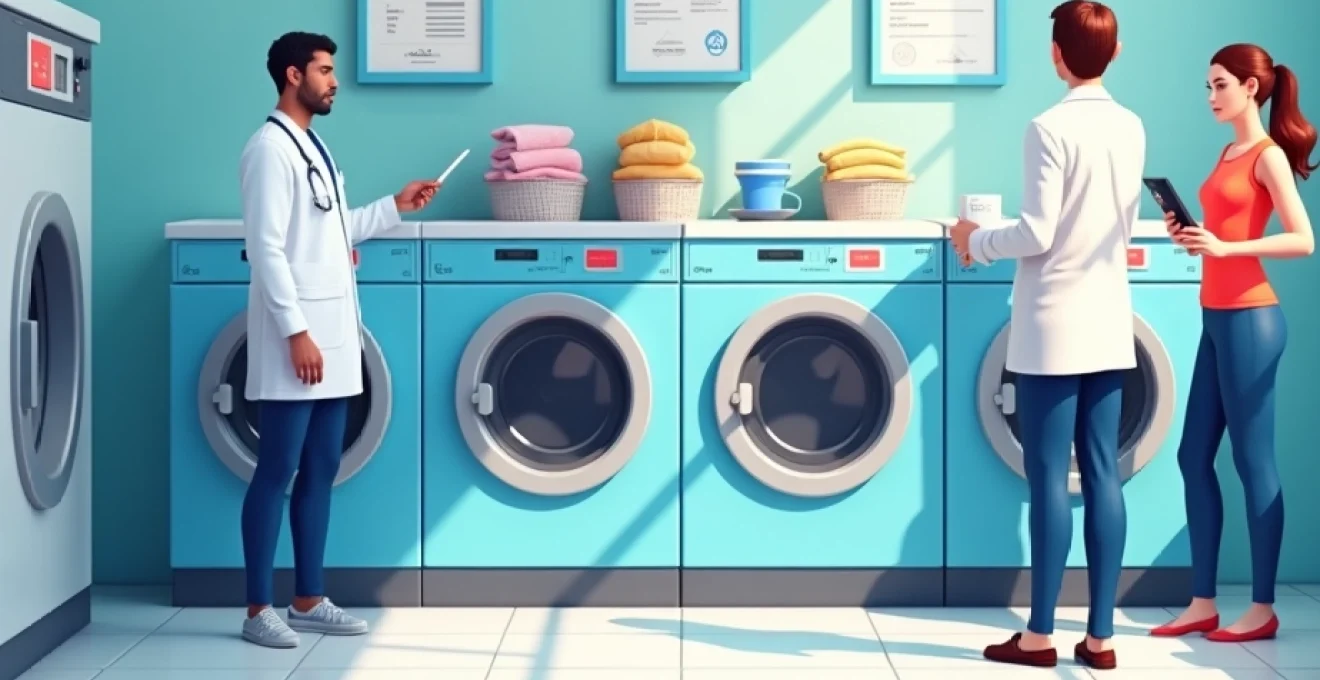
The relationship between clean clothing and personal health extends far beyond simple aesthetics. Professional laundry services have evolved into sophisticated operations that prioritise hygiene, utilise advanced technology, and implement stringent safety protocols to protect public health. Modern consumers increasingly recognise that choosing the right laundry service impacts not only the longevity of their garments but also their overall wellbeing.
Local laundromats and professional cleaning services now face heightened scrutiny regarding their sanitisation practices, equipment standards, and environmental impact. The COVID-19 pandemic has amplified awareness of contamination risks in shared spaces, whilst growing environmental consciousness drives demand for eco-friendly cleaning solutions. Understanding these factors helps you make informed decisions about which local laundry services best serve your health and sustainability goals.
Health risks associated with contaminated laundry services
Contaminated laundry services pose significant health risks that extend beyond simple aesthetic concerns. When commercial washing facilities fail to maintain proper hygiene standards, they create environments where harmful microorganisms can thrive and spread between customers’ clothing items. The consequences range from minor skin irritations to serious bacterial infections, particularly affecting individuals with compromised immune systems or sensitive skin conditions.
Cross-contamination protocols in commercial washing facilities
Commercial washing facilities must implement robust cross-contamination protocols to prevent the transfer of pathogens between different customers’ laundry loads. Proper segregation begins with the initial sorting process, where trained staff separate items based on contamination levels, fabric types, and washing requirements. Facilities that process healthcare linens or workwear from high-risk industries require particularly stringent separation protocols.
The physical design of commercial laundromats plays a crucial role in preventing cross-contamination. Effective facilities maintain clear separation between clean and dirty areas, with dedicated pathways for soiled and processed items. Colour-coded trolleys and storage systems help staff maintain these separations consistently throughout the washing process.
Dermatological reactions from inadequate detergent removal
Inadequate detergent removal during the rinse cycle creates a significant health hazard for sensitive individuals. Residual cleaning chemicals trapped in fabric fibres can cause contact dermatitis, eczema flare-ups, and other skin conditions. Professional facilities typically employ multiple rinse cycles and specific water temperature protocols to ensure complete chemical removal from garments.
The concentration of detergents used in commercial settings often exceeds household levels, making thorough rinsing even more critical. Some individuals develop allergic reactions to specific detergent formulations, particularly those containing synthetic fragrances or optical brighteners. Quality laundromats offer hypoallergenic washing options and maintain detailed records of their chemical usage protocols.
Bacterial transmission through shared washing equipment
Shared washing equipment creates potential pathways for bacterial transmission between customers’ clothing items. Washing machines that aren’t properly sanitised between loads can harbour dangerous microorganisms like Staphylococcus aureus , E. coli , and various fungal species. These pathogens can survive in moist environments and transfer to subsequently washed items, particularly when water temperatures aren’t sufficient for pathogen elimination.
Modern commercial laundromats implement equipment sanitisation protocols that include regular cleaning cycles with antimicrobial agents. Some facilities use ozone injection systems or UV sterilisation to eliminate pathogens between customer loads. The frequency and effectiveness of these sanitisation procedures directly impact the safety of the washing environment.
Chemical residue impact on respiratory health
Chemical residues from commercial washing processes can significantly impact respiratory health, particularly for individuals with asthma or chemical sensitivities. Volatile organic compounds (VOCs) from fabric softeners, bleaches, and synthetic fragrances can become trapped in clothing fibres and continue to off-gas after the washing process. These emissions contribute to indoor air pollution when contaminated garments are worn or stored in living spaces.
Quality laundromats increasingly adopt low-VOC cleaning products and implement proper ventilation systems to minimise chemical exposure risks. Some facilities offer fragrance-free washing options specifically designed for chemically sensitive customers, using enzyme-based detergents that break down without leaving harmful residues.
Professional laundry technology standards and equipment
Professional laundry facilities have embraced sophisticated technology standards that far exceed typical household washing capabilities. These advanced systems ensure superior cleaning performance whilst maintaining strict hygiene protocols and energy efficiency standards. Understanding these technological implementations helps consumers identify facilities that prioritise both cleanliness and environmental responsibility.
Industrial Washer-Extractor specifications for hygiene compliance
Industrial washer-extractors represent the backbone of professional laundry operations, incorporating features specifically designed for hygiene compliance. These machines typically operate at higher water temperatures than domestic units, reaching 71°C or higher to ensure pathogen elimination. Advanced programming allows for customised wash cycles that adjust water levels, temperature profiles, and chemical injection timing based on specific load requirements.
Modern industrial washers feature stainless steel construction that resists bacterial growth and facilitates thorough sanitisation between cycles. Many units include automatic chemical dispensing systems that precisely control detergent, bleach, and softener concentrations, reducing human error and ensuring consistent cleaning results. The extraction phase operates at higher G-forces than domestic machines, removing more moisture and reducing subsequent drying time.
Ozone treatment systems in commercial laundromats
Ozone treatment systems have revolutionised commercial laundry operations by providing powerful antimicrobial action whilst reducing chemical dependency. These systems generate ozone gas on-site and inject it directly into wash water, where it oxidises organic contaminants and eliminates bacteria, viruses, and fungi more effectively than traditional bleaching agents. Ozone treatment also breaks down organic stains and odours at the molecular level, improving overall cleaning performance.
The environmental benefits of ozone systems extend beyond reduced chemical usage. Ozone naturally decomposes back to oxygen after completing its sanitising function, leaving no harmful residues in wastewater or on clothing. This technology allows facilities to achieve superior hygiene standards whilst minimising their environmental impact and reducing operational costs associated with chemical purchases.
Temperature control mechanisms for pathogen elimination
Precise temperature control mechanisms ensure that commercial washing processes achieve the thermal conditions necessary for pathogen elimination. Professional-grade water heating systems maintain consistent temperatures throughout extended wash cycles, preventing the temperature fluctuations that can compromise sanitisation effectiveness. Many facilities employ continuous monitoring systems that record and document temperature data for quality assurance purposes.
Thermal disinfection protocols typically require sustained temperatures of 71°C for at least three minutes to achieve effective pathogen kill rates. Advanced temperature control systems can maintain these conditions whilst preventing damage to delicate fabrics through precise timing and water management. Some facilities use steam injection systems that provide instantaneous temperature elevation for particularly contaminated loads.
HEPA filtration integration in drying processes
HEPA filtration integration in commercial drying processes addresses airborne contamination concerns whilst improving overall air quality within laundromat facilities. These high-efficiency filters remove 99.97% of particles larger than 0.3 microns, including dust mites, pollen, and bacterial particles that might otherwise circulate through the drying system. The filtered air environment protects cleaned garments from recontamination during the drying phase.
Modern commercial dryers equipped with HEPA filtration systems also feature sealed air circulation paths that prevent external contamination from entering the drying chamber. This technology particularly benefits customers with allergies or respiratory sensitivities, as their cleaned garments remain free from airborne allergens throughout the drying process.
Eco-friendly laundry solutions and green cleaning methods
Environmental consciousness has transformed the laundry industry, driving innovation in eco-friendly cleaning solutions that deliver superior results whilst minimising ecological impact. Modern green cleaning methods utilise plant-based formulations, renewable energy sources, and water conservation technologies to create sustainable laundry operations. These environmentally responsible approaches benefit both individual health and broader environmental preservation efforts.
Biodegradable detergent formulations in local services
Biodegradable detergent formulations have become increasingly sophisticated, offering cleaning performance that rivals or exceeds traditional synthetic alternatives. These plant-based cleaning agents utilise enzymes derived from natural sources to break down stains and soil whilst decomposing harmlessly in wastewater treatment systems. Local services implementing these formulations demonstrate their commitment to environmental stewardship whilst providing safer options for customers with chemical sensitivities.
Modern biodegradable detergents incorporate advanced surfactant technology derived from coconut oil, palm kernel oil, and other renewable plant sources. These formulations maintain effectiveness across various water temperatures and hardness levels whilst eliminating the synthetic fragrances and optical brighteners that cause allergic reactions in sensitive individuals. Quality eco-friendly laundromats often display certification from recognised environmental organisations to verify their green cleaning credentials.
Water recycling systems in sustainable laundromats
Water recycling systems represent a crucial component of sustainable laundromat operations, addressing both environmental conservation and operational cost concerns. These sophisticated systems capture, filter, and reprocess rinse water from washing machines, removing detergent residues and contaminants before returning treated water to the washing process. Advanced filtration technologies including reverse osmosis and activated carbon ensure that recycled water meets quality standards for subsequent use.
Closed-loop water recycling systems can reduce fresh water consumption by up to 80% in commercial laundry operations. These systems incorporate multiple filtration stages, including sediment removal, chemical neutralisation, and biological treatment processes that eliminate harmful microorganisms. The treated water often exceeds municipal water quality standards, providing superior washing conditions whilst conserving precious natural resources.
Energy-efficient heat pump drying technology
Energy-efficient heat pump drying technology has revolutionised commercial drying operations by dramatically reducing energy consumption whilst maintaining superior drying performance. These systems utilise refrigeration principles to extract moisture from clothing at lower temperatures than traditional methods, preserving fabric integrity whilst reducing operational costs. Heat pump dryers can achieve energy savings of 50% or more compared to conventional electric resistance dryers.
The closed-loop design of heat pump drying systems captures and reuses thermal energy that would otherwise be lost to the environment. This technology particularly benefits delicate fabrics that require gentler drying conditions, as the lower operating temperatures reduce shrinkage and fabric damage. Progressive laundromats implementing heat pump technology demonstrate their commitment to energy conservation whilst providing superior garment care services.
Plant-based fabric softener alternatives
Plant-based fabric softener alternatives eliminate the synthetic chemicals and artificial fragrances associated with traditional fabric conditioning products. These natural alternatives utilise ingredients like white vinegar, plant-derived conditioning agents, and essential oils to achieve fabric softening effects without introducing harmful residues. Many customers report improved skin comfort and reduced allergic reactions when facilities switch to these gentler alternatives.
Natural fabric softening methods often incorporate minerals and pH balancing agents that enhance the cleaning process whilst conditioning fibres. Some eco-friendly facilities use wool dryer balls infused with natural essential oils to provide fabric conditioning and pleasant scents without synthetic additives. These alternatives prove particularly beneficial for individuals with sensitive skin or respiratory conditions.
Local laundromat quality assessment criteria
Evaluating local laundromat quality requires examining multiple factors that impact both cleaning effectiveness and health safety standards. Professional assessment criteria encompass facility cleanliness, equipment maintenance, staff training, and adherence to industry best practices. Quality indicators include visible facility maintenance, proper temperature monitoring, and transparent pricing structures that reflect the true cost of professional cleaning services.
Reputable laundromats maintain detailed cleaning logs and equipment maintenance records that demonstrate their commitment to consistent quality standards. These facilities typically display certifications from relevant industry associations and may undergo regular third-party inspections to verify compliance with health and safety regulations. Customer feedback systems and online reviews provide additional insights into service quality and reliability.
The physical condition of washing machines and dryers offers important clues about facility management quality. Well-maintained equipment features clean interiors, properly functioning door seals, and clear operating instructions. Professional facilities regularly inspect and clean their machines, replacing worn components before they compromise cleaning effectiveness or create contamination risks. Modern equipment with digital displays and programmable cycles often indicates investment in quality service delivery.
The best local laundromats combine advanced technology with meticulous attention to hygiene protocols, creating environments where customers can trust their health and garments to professional care.
Staff training standards significantly impact service quality and customer safety in commercial laundromats. Trained personnel understand proper chemical handling procedures, recognise fabric care requirements, and implement appropriate sanitisation protocols between customer loads. Quality facilities invest in ongoing staff education and maintain written procedures for handling various cleaning challenges and customer requests.
Specialty fabric care services in your area
Specialty fabric care services address the unique requirements of delicate, expensive, or technically advanced textiles that demand expert handling. These specialised services encompass everything from wedding dress preservation to leather conditioning, requiring specific knowledge, equipment, and techniques. Local facilities offering specialty care often maintain relationships with textile restoration experts and utilise advanced cleaning methods unavailable in standard operations.
Delicate fabric handling requires understanding of fibre composition, construction techniques, and appropriate cleaning methods for various materials. Silk, wool, cashmere, and designer garments each demand specific temperature, pH, and agitation parameters to prevent damage whilst achieving effective cleaning results. Specialty services typically hand-sort items and apply individualised treatment protocols based on garment construction and soiling conditions.
Technical textiles including sportswear, outdoor gear, and protective clothing require specialised cleaning approaches that preserve their functional properties. Waterproof fabrics need treatments that maintain their moisture barrier whilst removing soil and odours. Performance fabrics with moisture-wicking properties require specific detergent formulations that don’t compromise their technical functionality. Quality specialty services understand these requirements and maintain appropriate cleaning protocols.
Leather and suede cleaning represents one of the most challenging specialty services, requiring expertise in hide chemistry and appropriate conditioning treatments. These services typically involve controlled humidity environments and specialised equipment that gently removes soil whilst preserving the natural oils essential for leather flexibility and appearance. Professional leather care extends garment lifespan significantly when performed correctly.
Specialty fabric care services bridge the gap between standard cleaning and professional restoration, preserving valuable garments whilst maintaining their functional and aesthetic properties.
Vintage and historical textile preservation requires additional expertise in conservation techniques and archival storage methods. These services often collaborate with museums and textile conservators to develop appropriate cleaning and storage protocols for irreplaceable garments. Understanding historical manufacturing techniques and period-appropriate materials helps specialists make informed decisions about treatment options.
Cost-effectiveness analysis of professional vs. home laundering
Cost-effectiveness analysis of professional versus home laundering reveals complex relationships between upfront costs, time investment, equipment depreciation, and long-term garment preservation. Professional services offer superior cleaning power, specialised treatments, and time savings that may justify higher per-load costs for busy individuals or those with valuable wardrobes. Hidden costs of home laundering include equipment purchases, maintenance, utility expenses, and the opportunity cost of time spent on laundry tasks.
Professional laundry equipment achieves cleaning results that exceed typical home machine capabilities through higher water temperatures, extended cycle times, and commercial-grade detergent formulations. This superior performance extends garment lifespan by removing soil more effectively and reducing the harsh treatment cycles often necessary with home equipment. The preservation of expensive clothing items through professional care can offset service costs through extended wearability periods.
Time value calculations must consider the complete laundering process, including sorting, loading, waiting for cycles, transferring items, and folding or hanging finished garments. Professional services eliminate these time requirements whilst providing superior results, making them particularly attractive for busy professionals whose time carries high opportunity costs. Convenience factors including pickup and delivery services further enhance the value proposition for time-conscious customers.
Water and energy costs associated with home laundering continue rising as utility rates increase and environmental regulations promote conservation. High-efficiency home machines require significant upfront investments that may not be cost-effective for occasional users. Professional facilities achieve economies of scale through bulk purchasing of utilities and chemicals, often providing cost advantages even before considering convenience factors.
The environmental impact comparison between professional and home laundering reveals interesting complexities that affect long-term cost calculations. Professional facilities typically achieve better resource efficiency through optimised load sizes, advanced recycling systems, and bulk chemical purchasing that reduces packaging waste. However, transportation requirements for pickup and delivery services add environmental costs that must be considered in comprehensive analyses.
Professional laundering services increasingly demonstrate cost-effectiveness when factoring in time savings, superior cleaning results, garment preservation, and environmental efficiency achieved through commercial-scale operations.
Quality professional
services offer comprehensive solutions that extend far beyond basic washing and drying capabilities. Professional facilities invest in staff training, advanced equipment, and quality control measures that justify premium pricing structures. The initial cost comparison often overlooks these value-added services that enhance garment care and customer satisfaction.
Regular maintenance costs for home washing machines and dryers can accumulate significantly over their operational lifespan. Professional repair services, replacement parts, and eventual equipment replacement create ongoing expenses that many homeowners underestimate. Commercial laundromats spread these maintenance costs across thousands of customer loads, achieving better cost efficiency through economies of scale and professional equipment management.
Insurance considerations also factor into comprehensive cost-effectiveness analyses. Home laundry equipment failures can cause water damage, electrical hazards, or fire risks that impact homeowner insurance premiums and deductibles. Professional facilities carry commercial liability insurance that protects customers from equipment-related damages whilst maintaining strict safety protocols that reduce risk exposure.
The seasonal variation in utility costs affects home laundering expenses differently than professional services. Winter heating costs for warm wash water and extended drying cycles can dramatically increase home laundry expenses, whilst professional facilities often negotiate fixed-rate utility contracts that provide predictable pricing year-round. Energy efficiency improvements in commercial equipment typically outpace residential innovations, providing ongoing cost advantages to professional services.
The true cost-effectiveness of professional laundering emerges when considering the total lifecycle value including time savings, garment preservation, environmental impact, and superior cleaning results that extend clothing lifespan and maintain appearance standards.
Geographic factors significantly influence the cost-effectiveness equation between professional and home laundering options. Urban areas with high real estate costs make in-home laundry facilities expensive to maintain, whilst dense populations support competitive professional laundry markets. Rural areas may lack professional options but benefit from lower utility costs and space availability for home equipment. Understanding your local market conditions helps determine the most cost-effective approach for your specific circumstances.
Frequency of use calculations reveal different cost-effectiveness thresholds for various household sizes and laundry volumes. Professional services become increasingly attractive for single-person households or couples who generate insufficient laundry volume to justify home equipment investments. Large families may find home laundering more cost-effective despite the time investment and quality trade-offs. The breakeven point typically occurs around 8-10 loads per month, depending on local service pricing and utility costs.
Professional laundry services also eliminate the need for expensive specialty cleaning products, stain removers, and fabric care treatments that accumulate costs for home laundering. Commercial facilities purchase these products in bulk quantities and apply them expertly, often achieving better results than home users who may misuse or waste expensive specialty treatments. This professional expertise adds significant value to the cost-effectiveness equation for challenging cleaning situations.