
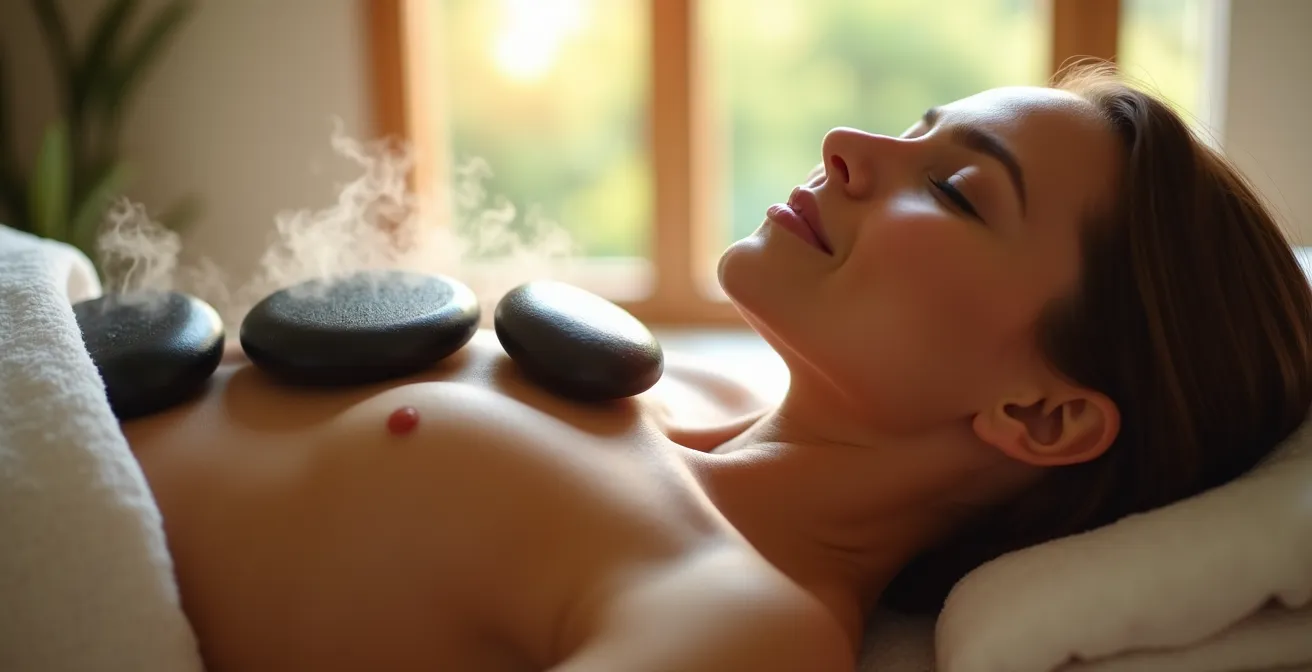
Deep muscle relief doesn’t have to be painful; the solution lies not in aggressive pressure, but in precise thermal science.
- Hot stones use thermal conduction to relax muscles at a cellular level, reducing tissue stiffness more effectively than manual force.
- This allows therapists to work on deep knots without triggering the body’s pain and tension response, making it ideal for sensitive clients.
Recommendation: If you find traditional deep tissue massage too intense, consider hot stone therapy as a scientifically superior method for achieving profound relaxation without discomfort.
For those with dense, chronically tight muscles, the search for relief often leads to a paradox: you crave the deep release that promises to unknot stubborn tension, yet you flinch at the thought of the painful pressure required to achieve it. Traditional deep tissue massage, while effective for some, can feel like an assault on already sensitive areas, causing the body to tense up in defense. This guarding reflex can counteract the very goal of the therapy. What if there was a way to bypass this pain response and persuade the muscles to release, rather than forcing them into submission?
The answer lies not in more force, but in a fundamental principle of physics: heat. Hot stone massage, or thermotherapy, is often misunderstood as a purely superficial, relaxing spa treatment. In reality, it is a sophisticated biomechanical tool. It leverages the power of thermal conduction to fundamentally alter the state of your muscle and fascial tissues. The sustained, radiating warmth from volcanic basalt stones does more than just feel pleasant; it initiates a cascade of physiological responses, from vasodilation to a significant decrease in tissue viscosity.
This approach allows a therapist to achieve results that can feel deeper than a standard massage but with a fraction of the pressure. It’s a negotiation with the nervous system, not a battle. This article will deconstruct the science behind this powerful modality. We will explore how heat penetrates tissue, why the choice of stone is critical, and how this therapy can be adapted for everything from post-exercise recovery to improving your sleep, offering a path to profound relief without the pain.
To fully understand how this therapy works on a cellular level, we will break down the key mechanisms, safety protocols, and optimal applications that transform a simple warm rock into a precise therapeutic instrument.
Summary: Unlocking Deep Relaxation Through Thermal Science
- Why Heat Penetrates 3cm Deeper Than Manual Pressure Alone?
- Hot Stones or Cold Marble: Which Is Best for Acute Inflammation?
- How to Ensure Stones Are Sanitized to Prevent Bacterial Transfer?
- The Mistake of Placing Stones Directly on Bare Skin Without Oil
- When to Choose Hot Stone Therapy: Winter Blues vs Summer Recovery
- Why Cooling Your Mattress to 18°C Doubles Deep Sleep Duration?
- Why Gentle Strokes Reduce Cortisol More Effectively Than Painful Ones?
- Why Basalt Is the Only Stone Type Suitable for Sustained Heat Retention
Why Heat Penetrates 3cm Deeper Than Manual Pressure Alone?
The core magic of hot stone therapy lies in a process called thermal conduction. When a therapist applies manual pressure, the force is distributed across the surface and can struggle to reach the deepest layers of dense, guarded muscle. The muscle may even contract further in response to the perceived threat of intense pressure. Heat, however, operates differently. It doesn’t push; it permeates. The sustained warmth from a basalt stone radiates through the epidermis and dermis, reaching the underlying muscle and fascia.
This thermal energy increases kinetic energy at the molecular level, causing a decrease in the viscosity—or “thickness”—of the connective tissues. Imagine cold honey versus warm honey; the warmed honey flows freely. Similarly, heated muscle and fascia become more pliable and fluid, allowing them to release their chronic holding patterns without being forced. This effect was central to the development of standardized methods like LaStone Therapy, which demonstrated how this deep heat creates a level of tissue release that manual pressure alone simply cannot replicate.
This process of vasodilation, the widening of blood vessels, further enhances the effect. Increased blood flow brings more oxygen and nutrients to the tissues while helping to flush out metabolic waste products, contributing to a deeper and longer-lasting state of relaxation. The heat essentially “melts” the tension from the inside out, allowing the therapist to work deeply and effectively with much less physical force.
Hot Stones or Cold Marble: Which Is Best for Acute Inflammation?
While hot stone therapy is renowned for its ability to melt chronic tension, its application must be precise, especially when dealing with inflammation. Heat is a vasodilator, meaning it increases blood flow. For chronic, non-acute muscle stiffness, this is highly beneficial. However, for an acute injury—like a fresh sprain or muscle tear characterized by swelling, redness, and sharp pain—applying heat can be counterproductive, potentially increasing swelling and discomfort.
This is where contrast therapy, alternating between hot and cold, becomes a powerful tool. Cold therapy, often using chilled marble stones, acts as a vasoconstrictor. It narrows blood vessels, which helps to reduce swelling, numb pain receptors, and curb the inflammatory process. A therapist might use cold stones on a specific area of acute inflammation before or after using hot stones on surrounding, chronically tight muscles to create a “vascular flush.” This rapid cycling between vasodilation and vasoconstriction acts like a pump for the circulatory and lymphatic systems, effectively moving stagnant fluid out of the injured area.
The decision depends entirely on the nature of the condition. For the deep, achy tension of overworked muscles without active inflammation, hot stones are ideal. For a new injury or a flare-up of an inflammatory condition like arthritis, cold stones or a carefully managed contrast therapy are the superior choice. Professional clinical protocols specify that stones should be heated in 120-150 degree Fahrenheit water to ensure they are therapeutic but safe, a temperature far too high for acutely inflamed tissue.
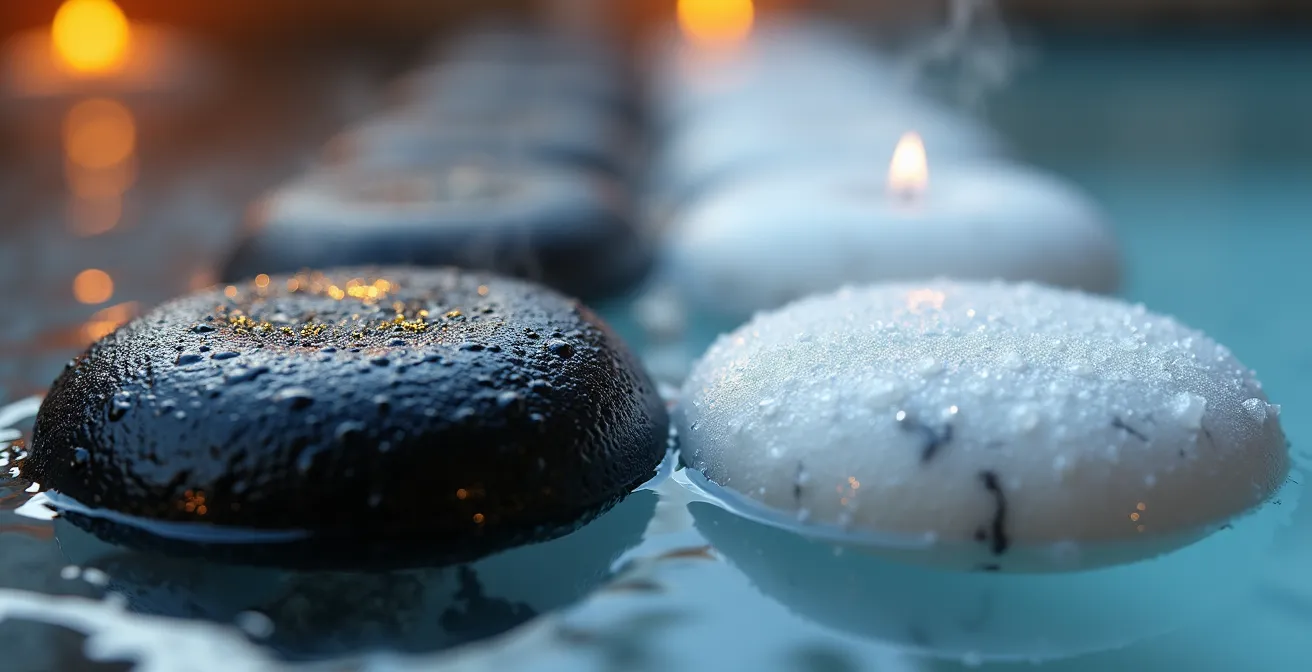
As the image demonstrates, the visual and textural difference between the steaming basalt and frosted marble represents two opposing but complementary therapeutic actions. Mastering their use is key to addressing a wide range of musculoskeletal issues, from chronic stiffness to acute recovery.
How to Ensure Stones Are Sanitized to Prevent Bacterial Transfer?
The therapeutic power of hot stones comes with a critical responsibility: impeccable hygiene. Because stones are used on multiple clients and are placed in a warm, moist environment—the ideal breeding ground for bacteria—sanitization is not just a best practice; it is an absolute necessity for client safety. A professional therapist will follow a strict protocol to eliminate any risk of cross-contamination or skin infections.
The process begins before the stones even enter the heater. Each stone must be thoroughly washed with soap and water to remove any oil, skin cells, or debris from the previous session. Only after this initial cleaning are they placed in a professional-grade heating unit. These are not slow cookers; they are specialized devices designed to maintain a consistent water temperature, which is crucial for sanitization. Maintaining the water at the correct therapeutic and sanitizing temperature ensures that most common pathogens cannot survive.
Furthermore, the water in the heating unit must be changed daily, and the unit itself must be scrubbed and disinfected regularly to prevent the formation of biofilm. After the session, the stones are removed, and the entire cleaning process begins again. This meticulous attention to detail ensures that the only thing transferred during the massage is soothing, therapeutic heat, providing peace of mind alongside muscle relief.
Your Checklist for Verifying Stone Sanitization
- Stones are cleaned thoroughly with soap and water before being placed in the heating unit.
- Water temperature is maintained consistently within the professional range to ensure proper sanitization.
- A professional-grade heating unit designed specifically for stone therapy is used.
- The water is replaced daily and the heating unit is scrubbed to prevent bacterial growth.
- Stones are dried with a clean towel before they are placed, ensuring no contaminated water touches the skin.
The Mistake of Placing Stones Directly on Bare Skin Without Oil
One of the most critical safety protocols in hot stone massage is the absolute rule against placing a hot stone directly on bare skin without a protective buffer. While the goal is to transfer heat, direct contact can be dangerous, leading to burns. The skin needs time to acclimate to the temperature, and a medium is required to both protect the skin and facilitate the even distribution of heat. This buffer is typically high-quality massage oil or, in some cases of stationary placement, a thin towel or sheet.
The American Massage Therapy Association is unequivocal on this point, as their guidelines state:
You must remember to use a sheet, towel or clothing between the client’s bare skin and the hot stone.
– American Massage Therapy Association, Hot Stone Massage Safety Guidelines
Oil serves a dual purpose. First, it acts as a thermal buffer, ensuring the heat is transferred effectively but not so rapidly that it shocks or burns the tissue. In fact, thermal safety research shows it takes 3 to 4 minutes for heat to fully penetrate through these protective layers and begin its therapeutic work on deeper muscle. Second, the oil provides the necessary “glide” for the therapist to use the stones as a massage tool, smoothly working them over tight muscles without friction or pulling on the skin. This combination of protection and lubrication is essential for both the safety and efficacy of the treatment.
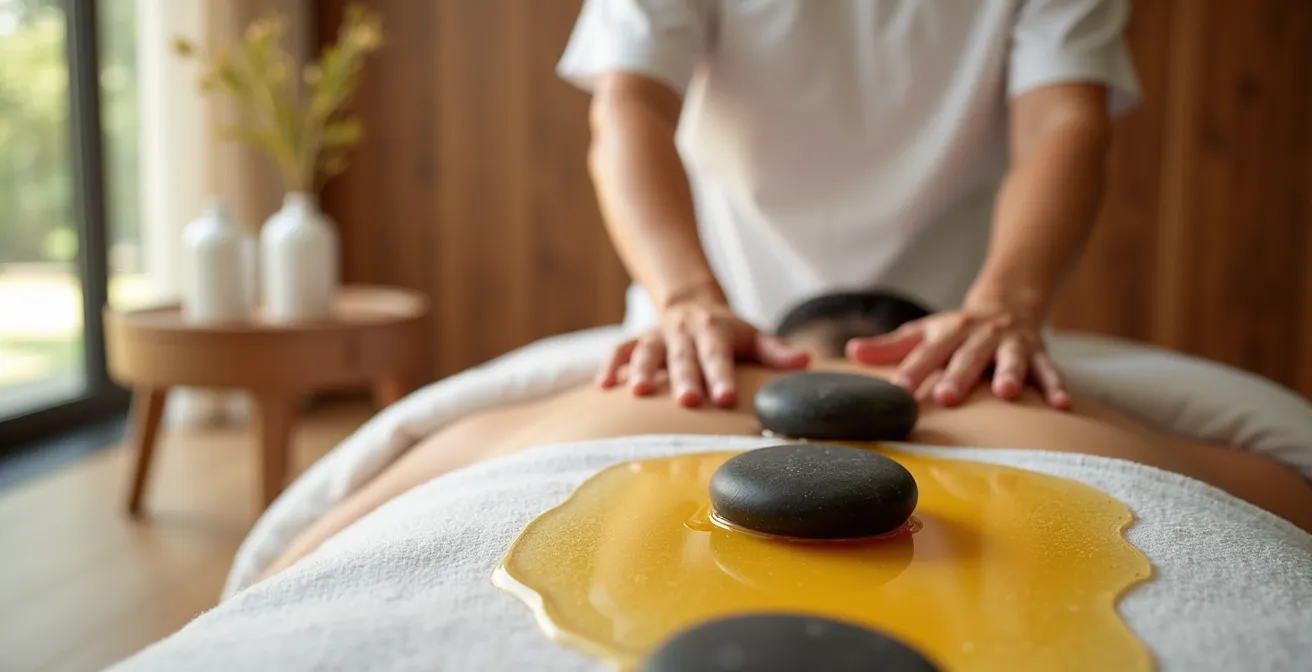
The application of oil is not merely a preparatory step; it is an integral part of the therapy itself, creating the perfect interface between the heated tool and the body to ensure a safe, comfortable, and deeply effective experience.
When to Choose Hot Stone Therapy: Winter Blues vs Summer Recovery
Hot stone therapy is not a one-size-fits-all treatment; its benefits can be strategically applied based on the season and your activities. The choice of when to receive this therapy can significantly enhance its effects, whether you’re combating the chill of winter or recovering from summer exertions.
During the cold, damp months of winter, the body naturally craves warmth. The penetrating heat of the stones can be profoundly comforting, helping to combat the physical and mental sluggishness often associated with “winter blues.” The heat boosts circulation, which can feel sluggish in colder weather, and provides a deep sense of grounding and comfort. The optimal temperature for this deep relaxation is key; research on seasonal therapy applications shows 45-50°C is the optimal stone temperature for inducing profound muscle relaxation and a sense of well-being.
Conversely, in the summer, hot stone therapy becomes an invaluable tool for athletic recovery. After activities like hiking, cycling, or swimming, muscles can become tight and sore from overuse. The heat helps to loosen these overworked muscles, ease delayed onset muscle soreness (DOMS), and improve flexibility, accelerating the recovery process so you can get back to your activities faster.
Case Study: Athletic Recovery Applications
Pippa’s Movement Therapy reports that many of their clients are sports enthusiasts who specifically use hot stone massage to wind down after strenuous activity. The therapy is particularly effective for summer athletic recovery, as the heat from the stones helps to effectively loosen tight muscles and ease the pains associated with excessive exercise, directly improving post-activity flexibility.
Why Cooling Your Mattress to 18°C Doubles Deep Sleep Duration?
The relaxing power of hot stone therapy extends beyond the massage table, playing a surprising role in improving sleep quality through a process known as thermoregulation. Our bodies are programmed to initiate sleep as our core temperature begins to drop. A hot stone massage, received an hour or two before bed, can strategically kickstart this process.
How does applying heat lead to cooling? The warmth of the stones on the skin causes peripheral vasodilation—an expansion of blood vessels in your hands, feet, and limbs. This brings a large volume of blood to the surface of the skin, where the heat can dissipate into the environment. As this surface heat radiates away, your internal core body temperature begins to fall. This drop in core temperature is a powerful biological signal to the brain that it is time to sleep.
This pre-sleep “priming” works in perfect synergy with maintaining a cool sleep environment. Once you are in bed, a cool room temperature, ideally around 18°C (65°F), helps your body maintain that lowered core temperature throughout the night. This sustained coolness is critical for maximizing the time spent in the most restorative phases of sleep: deep sleep and REM sleep. The hot stone massage initiates the cool-down, and the cool room maintains it.
This combined protocol creates an optimal environment for high-quality, uninterrupted sleep, as outlined in the following comparison.
| Temperature Application | Physiological Effect | Sleep Impact |
|---|---|---|
| Hot Stone Pre-Sleep (45-50°C) | Peripheral vasodilation | Initiates core cooling |
| Cool Room (18°C) | Maintains lowered core temp | Enhances deep sleep stages |
| Combined Protocol | Optimal thermoregulation | Improved sleep quality |
Why Gentle Strokes Reduce Cortisol More Effectively Than Painful Ones?
The primary reason hot stone therapy is so effective for individuals sensitive to pressure is that it works with the nervous system, not against it. When a massage becomes painful, the body’s sympathetic nervous system—our “fight or flight” response—kicks in. This triggers the release of stress hormones like cortisol and causes muscles to tense up as a protective measure, undermining the goal of the session. Gentle, warm strokes do the opposite; they activate the parasympathetic nervous system, our “rest and digest” mode.
The heat from the stones does the “deep” work, allowing the therapist to use much lighter pressure. This avoids triggering the body’s guarding response. As the Secret Spa UK Research Division explains, this is the central advantage of the modality:
The heat from the stones penetrates your body, bringing many of the benefits of massage at a deeper level. It allows intense muscle relaxation which enables the massage therapist to actually work very deeply, without the same pressure.
– Secret Spa UK Research Division, Hot Stone Massage Benefits Analysis
This state of deep, non-threatened relaxation allows for a significant reduction in stress hormones. While it’s difficult to quantify precisely for every individual, clinical studies have demonstrated a scientifically proven reduction in stress and anxiety through this form of therapy. By melting muscle tension with warmth, the therapist can address deep-seated knots without causing the pain that elevates cortisol. The result is a profound sense of mental calm and physical release that is simply not achievable when the body is bracing for impact.
Key takeaways
- Hot stone therapy uses thermal conduction to reduce muscle and fascia stiffness, allowing for deep work without painful pressure.
- The choice of stone is not aesthetic; basalt is used for its unique mineral composition, which provides superior, sustained heat retention.
- Safety is paramount, involving strict sanitization protocols and the use of oil as a protective thermal buffer to prevent burns.
Why Basalt Is the Only Stone Type Suitable for Sustained Heat Retention
The choice of stone in thermotherapy is not arbitrary or based on aesthetics; it is a matter of pure material science. The industry standard, basalt, is chosen for one primary reason: its exceptional ability to retain and radiate heat evenly over a sustained period. Basalt is a dark, fine-grained igneous rock formed from the rapid cooling of lava. Its dense, non-porous nature and high iron content are what give it its superior thermal properties.
Unlike other types of rock, such as marble or river stones, basalt can absorb a significant amount of heat and then release it slowly and consistently. This is crucial for a therapeutic session. If the stones were to cool too quickly, the therapist would need to constantly swap them out, interrupting the flow of the massage and failing to provide the deep, penetrating warmth needed to alter tissue viscosity. The sustained heat from basalt allows for long, gliding strokes and stationary placements that give the thermal energy time to work its magic on deep muscle layers.
This consistent temperature is a cornerstone of the therapy’s effectiveness, and thermal retention studies confirm the 100 to 130 degrees Fahrenheit optimal basalt stone temperature range for safe and effective treatment. The smooth, water-worn texture of therapy-grade basalt stones is also a functional benefit, allowing them to glide smoothly over oiled skin without causing friction. This combination of high thermal mass and a non-porous, smooth surface makes basalt the only truly suitable tool for professional hot stone massage.
By understanding the science—from thermal conduction and tissue viscosity to thermoregulation and material properties—it becomes clear that hot stone therapy is far more than a simple luxury. It is a precise, powerful, and gentle modality for anyone seeking profound muscle relief without the pain of deep pressure. To fully benefit, the next step is to seek out a qualified therapist who understands and respects these principles. Start your journey toward pain-free relaxation today by finding a certified thermotherapy practitioner in your area.