
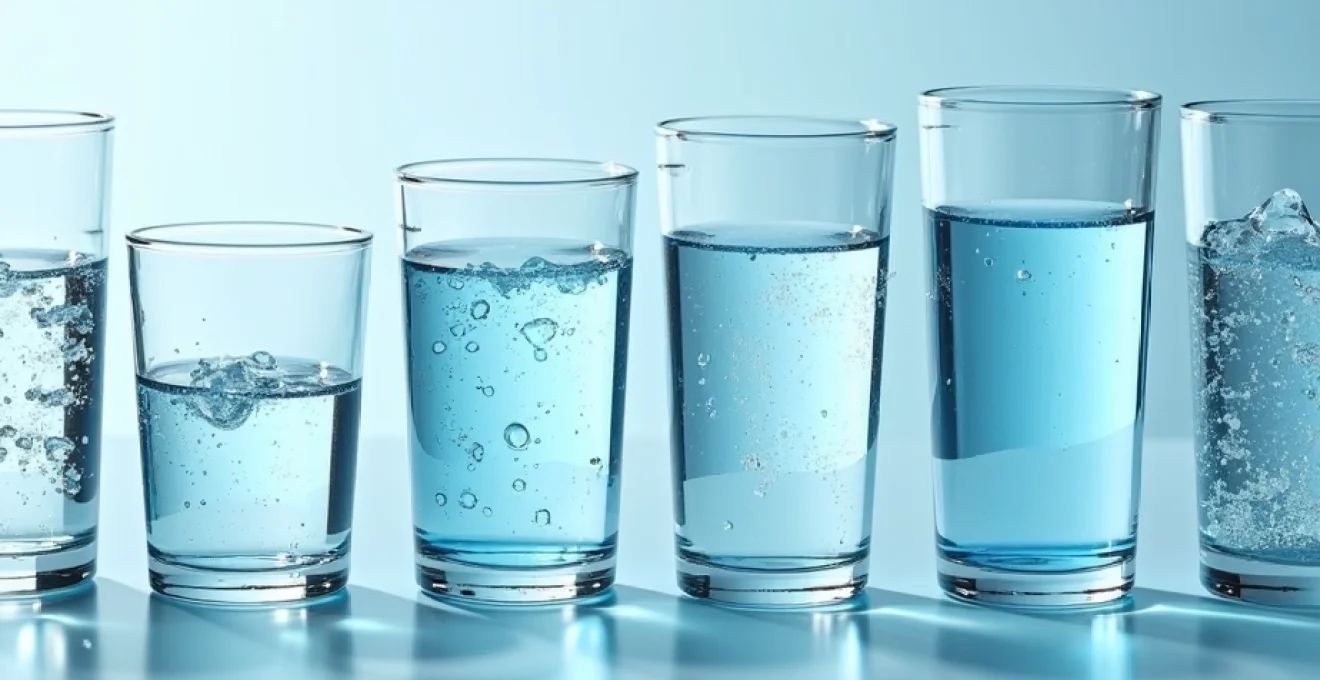
Understanding the precise volume of water in eight glasses requires more than simple arithmetic. The traditional “8×8 rule” suggests consuming eight 8-ounce glasses daily, totaling 64 fluid ounces. However, glass sizes vary dramatically across different contexts, measurement systems, and cultural preferences. Modern hydration science reveals that this seemingly straightforward calculation becomes complex when considering imperial versus US customary measurements, standard serving sizes, and individual hydration needs. The answer depends on which measurement system you’re using and what constitutes a “standard” glass in your region.
Standard water glass volume measurements and fluid ounce conversions
The concept of a “standard” glass varies significantly depending on geographical location and measurement system. In most commercial settings, water glasses typically range from 6 to 12 fluid ounces, with 8-ounce glasses being the most common baseline for hydration calculations. This standardisation emerged from the mid-20th century health recommendations that suggested easy-to-remember portions for daily water intake.
When calculating eight glasses of water, the total volume depends entirely on the glass size being referenced. Using the traditional 8-ounce standard, eight glasses equal 64 fluid ounces. However, restaurants often serve water in 10-12 ounce glasses, which would result in 80-96 fluid ounces for eight servings. Understanding these variations becomes crucial when monitoring daily hydration levels or following medical recommendations for fluid intake.
Imperial fluid ounce specifications in british measurement standards
The imperial fluid ounce, used primarily in the United Kingdom and some Commonwealth countries, contains approximately 28.41 millilitres. This measurement system affects calculations significantly when determining total water volume. Eight glasses of 8 imperial fluid ounces each would total 64 imperial fluid ounces, equivalent to approximately 1,818 millilitres or 1.82 litres.
Imperial measurements create interesting discrepancies in hydration recommendations. The slightly larger imperial fluid ounce means that eight 8-ounce glasses provide more water than their US counterparts. This difference becomes particularly relevant for individuals following international health guidelines or using measurement tools calibrated to different systems.
US customary fluid ounce variations and international differences
The US customary fluid ounce measures exactly 29.5735 millilitres, creating a notable difference from imperial measurements. Eight glasses of 8 US fluid ounces total 64 US fluid ounces, equaling approximately 1,892 millilitres or 1.89 litres. This 74-millilitre difference between measurement systems might seem minimal but accumulates over daily consumption patterns.
These variations explain why hydration recommendations differ between countries using different measurement systems. Health organisations must specify which fluid ounce measurement they’re referencing to provide accurate guidance. The discrepancy becomes more pronounced when considering larger serving sizes or multiple daily measurements.
Typical drinking glass capacities: 6oz, 8oz, and 12oz variants
Commercial glassware comes in standardised sizes that affect hydration calculations. Six-ounce glasses, common in formal dining settings, would provide 48 fluid ounces across eight servings. Standard 8-ounce glasses deliver the traditional 64 fluid ounces, while larger 12-ounce glasses result in 96 fluid ounces total.
Restaurant and hospitality industries often use these varied glass sizes strategically. Smaller glasses encourage frequent refills , while larger glasses reduce service demands. Understanding these industry practices helps individuals accurately track their water consumption when dining out or using different glassware at home.
Metric millilitre to fluid ounce conversion calculations
Converting between metric and imperial measurements requires precise calculations. One US fluid ounce equals 29.5735 millilitres, while one imperial fluid ounce equals 28.4131 millilitres. These conversions become essential when using international hydration apps or following medical recommendations specified in different measurement systems.
For practical purposes, many people use rounded conversions: 30 millilitres per US fluid ounce and 28 millilitres per imperial fluid ounce. While these approximations introduce minor errors, they simplify daily calculations. Eight 8-ounce glasses using US measurements equal approximately 1,900 millilitres, while imperial measurements result in roughly 1,800 millilitres.
Daily water intake calculations using the 8×8 hydration rule
The 8×8 rule represents one of healthcare’s most persistent myths, despite lacking robust scientific foundation. This recommendation suggests consuming eight 8-ounce glasses of water daily, totaling 64 fluid ounces or approximately 1.9 litres. However, modern hydration science reveals that individual water needs vary dramatically based on body weight, activity level, climate, and overall health status.
Research indicates that the original 8×8 recommendation may have originated from a 1945 Food and Nutrition Board suggestion to consume one millilitre of water per calorie consumed. For a 2,000-calorie diet, this calculation results in 2,000 millilitres of water – remarkably close to the 8×8 rule’s 1,900 millilitres. However, the original recommendation specifically noted that much of this water intake comes from food sources, a detail often overlooked in popular interpretations.
Contemporary hydration needs assessment considers multiple factors beyond simple glass counting. Body weight serves as the primary determinant, with recommendations typically ranging from 30-40 millilitres per kilogram of body weight. Environmental conditions significantly impact these baseline requirements , with hot weather, high altitude, and intense physical activity necessitating substantial increases in fluid intake.
NHS recommended daily fluid intake guidelines for adults
The National Health Service recommends approximately 1.2 litres of fluid daily for adults, equivalent to roughly 6-8 glasses depending on glass size. This recommendation encompasses all fluid sources, including water, tea, coffee, and water-rich foods. The NHS guidelines emphasise that individual needs vary based on physical activity, weather conditions, and overall health status.
NHS recommendations differ slightly from the traditional 8×8 rule, reflecting evidence-based approaches to hydration. The guidelines acknowledge that thirst serves as an adequate indicator for most healthy adults , contradicting popular beliefs about chronic dehydration. These recommendations also recognise that caffeinated beverages contribute to daily fluid intake, despite their mild diuretic effects.
European food safety authority adequate intake values
The European Food Safety Authority establishes more specific intake recommendations: 2.5 litres daily for men and 2.0 litres for women. These values include water from all sources, with approximately 20% derived from food. The remaining 2.0 litres for men and 1.6 litres for women should come from beverages, translating to roughly 10-13 glasses of 8-ounce water for men and 8-10 glasses for women.
EFSA guidelines consider physiological differences between sexes, accounting for variations in body composition and metabolic water production. These recommendations provide more nuanced guidance than the universal 8×8 rule, acknowledging that hydration needs aren’t one-size-fits-all solutions.
Mayo clinic hydration recommendations and medical studies
The Mayo Clinic suggests approximately 2.7 litres of fluids daily for women and 3.7 litres for men, including water from food sources. These recommendations align closely with the Institute of Medicine guidelines and reflect comprehensive analysis of hydration research. The clinic emphasises that these figures represent general guidelines rather than strict requirements.
Mayo Clinic research highlights several factors that increase hydration needs beyond the basic 8×8 calculation. Pregnancy, breastfeeding, illness, and intense exercise all elevate fluid requirements substantially. The clinic’s approach emphasises monitoring urine colour and frequency as practical hydration indicators, moving beyond simple glass counting methods.
Institute of medicine dietary reference intake classifications
The Institute of Medicine established Adequate Intake levels rather than Recommended Daily Allowances for water, acknowledging the complexity of individual hydration needs. Their guidelines suggest 3.7 litres total fluid intake for men and 2.7 litres for women, with approximately 80% coming from beverages and 20% from food.
These recommendations translate to roughly 13 cups of beverages for men and 9 cups for women, assuming 8-ounce servings. The Institute’s approach recognises that healthy individuals can maintain adequate hydration through varied approaches , emphasising flexibility rather than rigid adherence to specific consumption patterns.
Precise mathematical calculations for 8 glasses water volume
Calculating the exact volume of eight glasses requires considering multiple variables that affect the final measurement. The fundamental calculation multiplies eight glasses by the volume per glass, but this seemingly simple arithmetic becomes complex when accounting for measurement system variations, glass size differences, and rounding conventions used in different contexts.
Using US customary measurements, eight 8-ounce glasses equal exactly 64 US fluid ounces, which converts to 1,892.71 millilitres or 1.893 litres when calculated precisely. Imperial measurements yield eight 8-ounce glasses totaling 64 imperial fluid ounces, equivalent to 1,818.44 millilitres or 1.818 litres. This 74-millilitre difference represents nearly 2.5 additional fluid ounces in the US system.
The mathematical precision becomes particularly relevant in medical contexts where accurate fluid monitoring is essential. Healthcare providers often specify exact millilitre targets rather than relying on glass-based estimates. Clinical hydration protocols typically use weight-based calculations , recommending 30-35 millilitres per kilogram of body weight, which provides more accurate individual targets than universal glass counting methods.
| Measurement System | 8 Glasses (8oz each) | Millilitres | Litres |
|---|---|---|---|
| US Customary | 64 US fl oz | 1,892.7 ml | 1.89 L |
| Imperial | 64 Imperial fl oz | 1,818.4 ml | 1.82 L |
| Common Restaurant Glass | 8 × 10 oz | 2,366 ml | 2.37 L |
| Large Water Glass | 8 × 12 oz | 2,839 ml | 2.84 L |
Glass size variables affecting total fluid ounce measurements
Real-world glass sizes vary significantly from the theoretical 8-ounce standard, creating substantial differences in total water consumption. Restaurant water glasses typically range from 10-16 ounces, while home glassware spans an even broader spectrum from 6-20 ounces. These variations mean that following the “8 glasses daily” rule can result in wildly different hydration levels depending on the glassware used.
Understanding these variations becomes crucial for accurate hydration monitoring. A person drinking eight 12-ounce glasses consumes 96 fluid ounces, significantly exceeding traditional recommendations. Conversely, someone using 6-ounce glasses achieves only 48 fluid ounces, falling well below most medical guidelines. This variability explains why many hydration experts recommend measuring by volume rather than counting glasses .
Commercial establishments often exploit these size differences strategically. Coffee shops frequently use smaller cups to encourage multiple purchases, while restaurants may serve larger water glasses to reduce refill requests. These business practices affect consumer hydration patterns, often without conscious awareness of the volume differences involved.
Home glassware collections typically include multiple sizes, creating inconsistency in daily measurements. Wine glasses, tumbler glasses, and specialty drinkware all have different capacities that affect hydration calculations. Many people unconsciously vary their glass choices throughout the day, making accurate consumption tracking challenging without specific volume measurements.
Hydration monitoring tools and mobile applications for water tracking
Modern technology offers sophisticated solutions for accurate hydration tracking beyond traditional glass counting methods. Digital tools eliminate guesswork by allowing users to log precise volumes, set personalised targets based on body weight and activity levels, and receive timely reminders throughout the day. These applications often integrate with fitness trackers and health monitoring systems to provide comprehensive wellness insights.
Contemporary hydration apps utilise various tracking methodologies, from simple tap counters to barcode scanning for bottled beverages. Advanced features include weather-based adjustments, exercise compensation calculations, and integration with smart water bottles that automatically log consumption. These technological solutions address the inherent inaccuracies of glass-based estimation methods while providing personalised recommendations that adapt to individual circumstances.
The gamification elements in many hydration apps significantly improve user engagement and long-term adherence to healthy water consumption habits. Virtual pet care, achievement systems, and social challenges transform mundane water tracking into engaging activities. Research indicates that users of gamified hydration apps increase their daily water intake by 15-25% compared to traditional tracking methods.
Myfitnesspal water logging features and measurement options
MyFitnessPal offers comprehensive water tracking capabilities with flexible measurement options accommodating various glass sizes and beverage types. Users can log water intake using cups, ounces, millilitres, or custom serving sizes, eliminating the ambiguity associated with generic “glass” measurements. The platform automatically calculates daily totals and provides progress visualisation through intuitive charts and graphs.
The application’s database includes thousands of beverages with pre-calculated water content, enabling users to track hydration from coffee, tea, soups, and other fluid sources. This comprehensive approach aligns with modern nutritional science recognising that total fluid intake extends beyond plain water consumption. MyFitnessPal’s integration with fitness tracking provides automatic hydration adjustments based on exercise intensity and duration.
Waterllama and plant nanny gamification tracking systems
Waterllama transforms hydration tracking into an engaging pet care simulation where users nurture virtual animals through consistent water consumption. The application calculates personalised hydration goals based on user weight, activity level, and environmental factors, moving beyond the simplistic 8-glass approach. Each water logging session feeds and cares for the virtual pet, creating emotional investment in maintaining healthy hydration habits.
Plant Nanny employs similar gamification principles through virtual plant care, where adequate water intake enables users’ digital gardens to flourish. Both applications demonstrate significant success in improving long-term hydration compliance through psychological engagement techniques. These gamified approaches prove particularly effective for younger users who might struggle with traditional tracking methods.
Apple health and google fit hydration data integration
Apple Health and Google Fit serve as centralised platforms for hydration data collection from multiple sources, including manual entry, connected apps, and smart water bottles. These platforms aggregate hydration information alongside other health metrics, providing comprehensive wellness insights that consider the relationship between water intake, physical activity, and overall health indicators.
The integration capabilities of these platforms eliminate data silos by synchronising information across multiple tracking applications and devices. Users can input water consumption through voice commands, quick-add shortcuts, or detailed manual entry specifying exact volumes. Advanced analytics features identify patterns in hydration behaviour, correlating water intake with sleep quality, exercise performance, and other health metrics to provide actionable insights for optimising daily fluid consumption habits.