
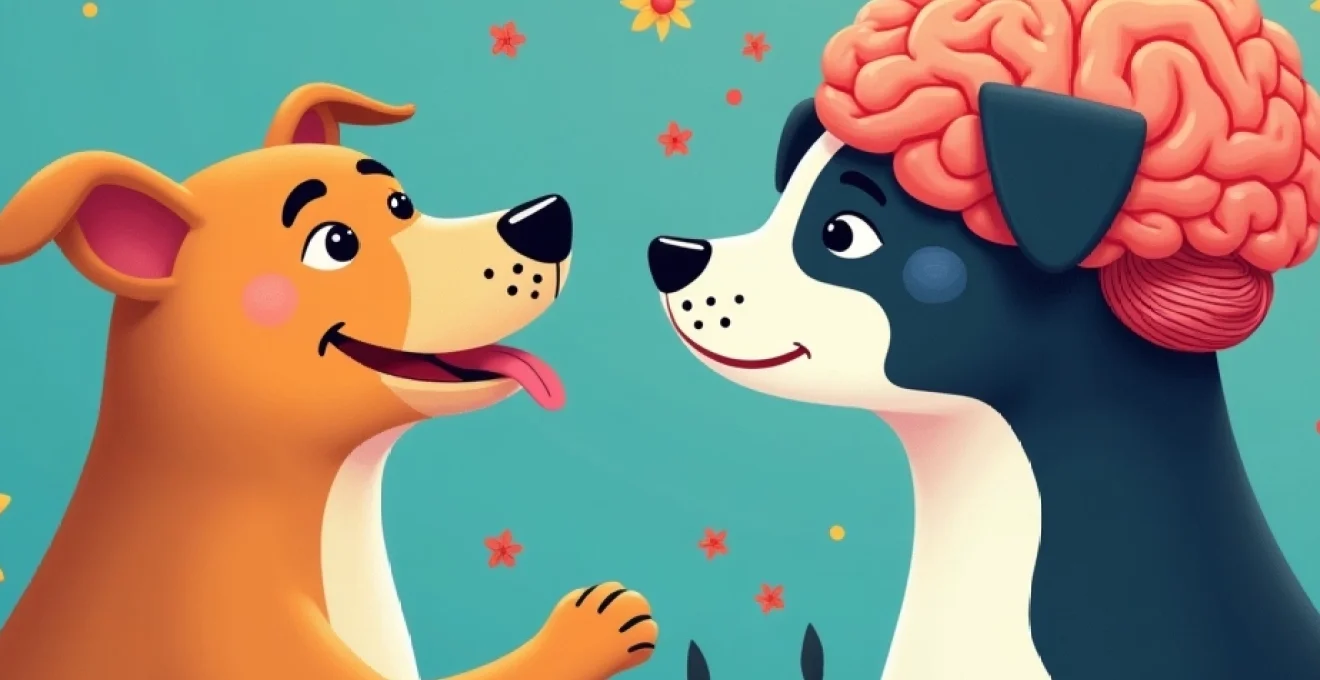
The relationship between humans and animals extends far beyond simple companionship, creating profound neurological changes that scientists are only beginning to fully understand. Modern neuroscience reveals that our beloved pets act as powerful catalysts for brain stimulation, triggering complex neurochemical cascades that enhance cognitive function, emotional regulation, and overall mental wellbeing. From the gentle purr of a cat to the enthusiastic tail wag of a dog, these interactions activate specific neural pathways that promote brain health in ways that were previously considered purely anecdotal.
Research conducted over the past decade has transformed our understanding of human-animal bonds, revealing measurable changes in brain structure and function among pet owners. These neurological adaptations occur through multiple mechanisms, including the release of beneficial hormones, the activation of reward centres, and the strengthening of neural connections responsible for empathy and emotional processing. The implications of these discoveries extend beyond personal pet ownership, influencing therapeutic interventions and reshaping approaches to mental health treatment.
Neurochemical pathways activated through Human-Animal interactions
The brain’s response to pet interactions involves a sophisticated network of neurochemical pathways that work in harmony to produce profound physiological and psychological benefits. These pathways represent some of the most fundamental mechanisms through which mammals bond and form social connections, highlighting the evolutionary significance of human-animal relationships. Understanding these neurochemical processes provides insight into why pets have such a powerful impact on human wellbeing and cognitive function.
Oxytocin release during pet stroking and eye contact
The release of oxytocin during pet interactions represents one of the most well-documented neurochemical responses in human-animal bonding research. Studies have demonstrated that just 10 minutes of petting a dog or cat can increase oxytocin levels by up to 300%, creating a powerful bonding experience that mirrors the neurochemical patterns observed in parent-child relationships. This love hormone not only strengthens the emotional connection between humans and pets but also promotes neural plasticity in regions associated with trust and social bonding.
Eye contact with pets triggers particularly intense oxytocin responses, activating the same neural circuits involved in human social recognition and attachment formation. This phenomenon explains why gazing into your pet’s eyes feels so naturally rewarding and why this simple interaction can instantly improve mood and reduce stress levels. The oxytocin surge also influences other brain regions, including the hippocampus and prefrontal cortex, enhancing memory formation and emotional regulation capabilities.
Dopamine surge mechanisms in canine play behaviour
Interactive play with dogs generates substantial dopamine releases in the brain’s reward system, creating positive reinforcement loops that encourage continued engagement and strengthen the human-animal bond. This neurochemical response mirrors the patterns observed in other rewarding activities, such as eating favourite foods or engaging in social activities with close friends. The dopamine surge during canine play behaviour activates the ventral tegmental area and nucleus accumbens, brain regions central to motivation and pleasure processing.
The anticipatory dopamine release that occurs before playing with a dog demonstrates how deeply these interactions become embedded in our neural reward systems. Research indicates that dog owners show elevated dopamine levels even when simply thinking about their pets, suggesting that the neurochemical benefits extend beyond direct physical interaction. This anticipatory response helps explain why pet ownership creates lasting changes in mood and motivation, even during periods of separation from the animal.
Serotonin modulation through feline purring frequencies
The unique frequency of cat purring, typically ranging between 25-50 Hz, creates measurable changes in human serotonin production and neural oscillation patterns. These low-frequency vibrations appear to resonate with specific brain regions involved in emotional processing and stress regulation, promoting a meditative state that enhances serotonin synthesis. The rhythmic nature of purring also synchronises with human brainwave patterns, creating a form of passive meditation that requires no conscious effort from the person.
Neuroimaging studies have revealed that exposure to cat purring activates the parasympathetic nervous system while simultaneously increasing activity in brain regions associated with emotional processing and pain reduction. This dual effect explains why many people find cat purring both calming and healing, with some reporting improved sleep quality and reduced anxiety after extended periods with purring cats. The serotonin modulation induced by purring frequencies also influences cognitive functions, particularly memory consolidation and attention regulation.
Endorphin production during interactive pet training sessions
Training sessions with pets trigger significant endorphin release through a combination of physical activity, mental engagement, and successful achievement of shared goals. The brain interprets successful training outcomes as positive social interactions, activating reward pathways that flood the system with natural feel-good chemicals . This endorphin response is particularly pronounced during complex training exercises that require sustained attention and coordination between human and animal.
The problem-solving aspects of pet training activate the brain’s executive function networks while simultaneously triggering endorphin release, creating a powerful combination that enhances both cognitive performance and emotional wellbeing. Research suggests that individuals who regularly engage in pet training show improved stress resilience and enhanced mood stability, likely due to the consistent endorphin production associated with these activities. The social bonding component of training further amplifies endorphin release, as the brain recognises the cooperative nature of the interaction.
Cortisol reduction patterns in companion animal presence
The presence of companion animals creates predictable patterns of cortisol reduction that begin within minutes of interaction and can persist for hours after the encounter ends. Studies monitoring salivary cortisol levels demonstrate that simply being in the same room as a calm, familiar pet can reduce stress hormone levels by 12-15%, with more intensive interactions producing even greater reductions. This cortisol suppression occurs through multiple pathways, including the activation of parasympathetic nervous system responses and the inhibition of hypothalamic-pituitary-adrenal axis activity.
Long-term pet owners show altered baseline cortisol patterns, with generally lower resting levels and improved stress recovery times compared to non-pet owners. This adaptation suggests that chronic exposure to pets creates lasting changes in the brain’s stress response systems, potentially offering protection against stress-related cognitive decline and mental health issues. The cortisol reduction patterns are most pronounced in situations where humans and pets engage in calm, non-stimulating activities together, such as quiet companionship or gentle physical contact.
Cognitive enhancement through pet ownership responsibilities
Pet ownership creates a structured environment of cognitive challenges that promote brain health through consistent mental stimulation and executive function engagement. The daily responsibilities associated with caring for animals require complex planning, decision-making, and problem-solving skills that keep the brain active and adaptable. These cognitive demands span multiple domains, from memory and attention to emotional regulation and social understanding, creating a comprehensive mental workout that supports lifelong brain health.
Executive function development via daily pet care routines
The establishment and maintenance of daily pet care routines strengthens executive function networks in the prefrontal cortex, particularly those responsible for planning, organisation, and impulse control. Pet owners must consistently manage feeding schedules, exercise requirements, grooming needs, and health monitoring, creating a complex web of responsibilities that demands sustained attention and cognitive flexibility. This daily mental exercise helps maintain and improve executive function capabilities, which are crucial for overall cognitive health and independence.
Research indicates that pet owners demonstrate superior performance on executive function assessments compared to non-pet owners, particularly in areas related to working memory and cognitive flexibility. The need to adapt pet care routines based on changing circumstances, such as illness or behavioural changes, further enhances these cognitive skills by requiring rapid problem-solving and decision-making under pressure. These executive function improvements appear to generalise beyond pet care, benefiting performance in work and personal life contexts.
Memory consolidation through consistent animal feeding schedules
Maintaining consistent feeding schedules for pets creates powerful memory consolidation opportunities through the establishment of temporal landmarks and routine-based memory cues. The brain uses these regular, meaningful events as scaffolding for other memories, enhancing overall memory organisation and retrieval capabilities. Pet feeding schedules also require prospective memory skills, as owners must remember to perform specific actions at predetermined times, exercising memory systems that are crucial for independent living.
Studies examining the cognitive benefits of pet care routines have found that individuals who maintain strict feeding schedules show improved performance on memory assessments and reduced rates of age-related memory decline. The emotional significance of pet feeding further enhances memory consolidation, as the brain prioritises the storage and recall of emotionally meaningful experiences. This combination of temporal structure and emotional relevance creates an ideal environment for memory system strengthening and maintenance.
Problem-solving skills enhancement during pet behavioural training
Pet behavioural training presents complex problem-solving challenges that require creative thinking, hypothesis testing, and adaptive strategy development. Owners must analyse their pet’s behaviour patterns, identify underlying motivations, and develop effective intervention strategies, engaging higher-order cognitive processes that promote neural plasticity and cognitive flexibility. The trial-and-error nature of behavioural training exercises the brain’s ability to learn from mistakes and adjust approaches based on feedback.
The social problem-solving aspects of pet training are particularly beneficial for cognitive development, as they require understanding of non-verbal communication, emotional states, and motivational factors in another species. This cross-species cognition challenges the brain to think beyond human-centric perspectives and develop more flexible problem-solving approaches. Research suggests that individuals who regularly engage in pet training show improved performance on creativity assessments and demonstrate greater cognitive flexibility in novel situations.
Attention span improvement through active dog walking activities
Regular dog walking activities provide structured opportunities for attention training through the need to monitor environmental conditions, maintain awareness of the pet’s behaviour, and navigate complex social and physical environments. Dog walkers must simultaneously attend to multiple streams of information, including traffic patterns, other animals, weather conditions, and their pet’s needs, creating a natural attention training exercise that strengthens focus and concentration abilities.
The mindfulness aspects of dog walking further enhance attention capabilities by encouraging present-moment awareness and reducing mind-wandering tendencies. Studies have shown that individuals who walk dogs regularly demonstrate improved sustained attention performance and reduced rates of attention-related difficulties. The combination of physical exercise and attention training during dog walks creates synergistic benefits for cognitive function, supporting both immediate performance and long-term brain health.
Neural plasticity stimulation in Human-Pet emotional bonding
The deep emotional bonds formed between humans and pets create powerful stimuli for neural plasticity, promoting the growth of new neural connections and the strengthening of existing pathways involved in emotional processing and social cognition. These neuroplastic changes occur throughout the lifespan, demonstrating that the benefits of pet ownership extend well beyond childhood development. The emotional intensity and consistency of human-pet relationships provide an ideal environment for promoting adaptive brain changes that enhance emotional intelligence and social functioning.
Mirror neuron activation during pet emotional recognition
The process of recognising and responding to pet emotions activates mirror neuron systems that are fundamental to empathy and social understanding. When humans observe their pets displaying various emotional states, specialised neurons in the premotor cortex and inferior parietal lobule fire as if the observer were experiencing those emotions directly. This neural mirroring strengthens empathetic capabilities and enhances emotional intelligence through regular practice in cross-species emotional recognition.
Pet emotional recognition requires sophisticated interpretation of non-verbal cues, facial expressions, and body language, challenging the mirror neuron system to adapt to different species’ communication patterns. This cross-species empathy training appears to enhance general emotional recognition abilities, with pet owners showing superior performance on human emotion recognition tasks compared to non-pet owners. The mirror neuron activation during pet interactions also promotes neural plasticity in regions associated with theory of mind and social cognition.
Hippocampal growth through novel pet experience processing
The continuous stream of novel experiences associated with pet ownership stimulates hippocampal neurogenesis and promotes the growth of new neural connections in memory-related brain regions. Each walk, play session, or training exercise presents unique combinations of sensory inputs, social interactions, and environmental challenges that require hippocampal processing and integration. This constant novelty exposure helps maintain hippocampal health and supports lifelong learning capabilities.
Research using neuroimaging techniques has documented increased hippocampal volume in long-term pet owners compared to control groups, suggesting that the cognitive demands of pet ownership promote structural brain changes. The spatial navigation requirements of dog walking, in particular, provide excellent hippocampal exercise through the need to remember routes, landmarks, and territorial boundaries. These structural changes correlate with improved memory performance and reduced risk of age-related cognitive decline.
Prefrontal cortex strengthening via empathetic pet responses
Responding empathetically to pet needs and emotions strengthens prefrontal cortex networks involved in emotional regulation, impulse control, and perspective-taking. The need to consider a pet’s viewpoint and respond appropriately to their emotional states exercises the same neural circuits involved in human social interactions, but with the added challenge of cross-species communication. This empathetic exercise promotes prefrontal cortex development and maintenance throughout the lifespan.
The decision-making processes involved in pet care consistently engage prefrontal cortex regions, from choosing appropriate responses to behavioural issues to making health-related decisions on behalf of the animal. These caregiving responsibilities require balancing multiple factors, including the pet’s immediate needs, long-term health considerations, and practical constraints. Regular engagement in these complex decision-making processes strengthens prefrontal cortex function and promotes cognitive resilience.
Limbic system adaptation in Long-Term pet companionship
Long-term pet companionship creates adaptive changes in limbic system structures, particularly the amygdala and anterior cingulate cortex, that enhance emotional processing and stress resilience. The consistent positive emotional experiences associated with pet ownership help reshape amygdala responses to stressful stimuli, reducing hypervigilance and promoting more balanced emotional reactions. These adaptations appear to generalise beyond pet-related contexts, improving overall emotional regulation capabilities.
The attachment bonds formed with pets activate the same limbic circuits involved in human attachment relationships, but often with greater consistency and predictability than human relationships provide. This reliable activation of positive attachment circuits helps strengthen the neural foundations of emotional security and social bonding. Studies have documented altered limbic system connectivity patterns in long-term pet owners, with increased communication between emotional processing regions and prefrontal control areas.
Stress response system modulation through animal assisted therapy
Animal-assisted therapy represents a sophisticated approach to stress response system modulation that leverages the natural neurobiological responses to human-animal interactions for therapeutic benefit. Clinical applications of these interventions have demonstrated remarkable success in treating various stress-related conditions, from post-traumatic stress disorder to generalised anxiety. The therapy works by systematically retraining the nervous system’s responses to stressful stimuli through positive animal interactions, creating new neural pathways that bypass maladaptive stress responses.
The therapeutic mechanism involves the gradual replacement of hypervigilant stress responses with calm, regulated states induced by animal presence. Therapy animals are specifically trained to provide consistent, predictable positive interactions that help clients develop new associations with potentially triggering situations. This process of stress response reconditioning occurs at the neurological level, with measurable changes in autonomic nervous system function and stress hormone production. Clinical studies have documented significant improvements in stress-related symptoms following animal-assisted therapy interventions, with benefits often persisting long after the therapy sessions end.
Research indicates that animal-assisted therapy can reduce PTSD symptoms by up to 40% and significantly improve emotional regulation in trauma survivors through systematic stress response system retraining.
The success of animal-assisted therapy in clinical settings has led to its integration into various healthcare environments, from hospitals to rehabilitation centres. The therapy’s effectiveness appears to stem from its ability to activate multiple beneficial neurobiological pathways simultaneously while bypassing cognitive defences that might interfere with traditional therapeutic approaches. Patients often respond more readily to animal-assisted interventions than to purely verbal therapies, suggesting that the non-verbal nature of human-animal communication accesses different neural processing systems that may be more receptive to therapeutic change.
Neurodevelopmental benefits in children exposed to pet interactions
Children who grow up with pets experience accelerated neurodevelopmental processes that enhance emotional intelligence, social cognition, and executive function capabilities from an early age. The developing brain is particularly responsive to the rich sensory and social experiences provided by animal interactions, leading to enhanced neural connectivity and improved cognitive flexibility. Pet exposure during critical developmental periods appears to strengthen neural pathways involved in empathy, emotional regulation, and social understanding in ways that provide lifelong benefits.
The neurodevelopmental advantages of pet exposure extend beyond emotional and social domains to include cognitive and academic performance improvements. Children with pets demonstrate superior performance on tasks requiring sustained attention, working memory, and cognitive flexibility compared to their pet-free peers. These cognitive advantages appear to result from the complex problem-solving and multitasking demands associated with pet care and interaction. The responsibility aspects of pet ownership also promote prefrontal cortex development, enhancing planning, organisation, and impulse control capabilities that support academic success and social competence.
Studies tracking children’s development over time
have shown that children raised with pets exhibit enhanced neural connectivity in regions associated with emotional processing and social cognition, with these advantages persisting into adulthood. The presence of animals during critical developmental windows appears to optimize neural pathway formation, creating more robust and flexible brain networks that support lifelong learning and adaptation.
The sensory richness of pet interactions provides developing brains with diverse stimulation that promotes sensory integration and processing capabilities. Children learn to interpret and respond to a wide range of non-verbal cues, sounds, textures, and movements, enhancing their overall sensory processing abilities. This enhanced sensory integration translates into improved academic performance, particularly in areas requiring attention to detail and multisensory learning approaches. The neuroplasticity promoted by pet interactions during childhood creates a foundation for enhanced learning capacity and cognitive flexibility that benefits children throughout their educational journey.
Therapeutic applications of pet-induced neurological stimulation in clinical settings
Clinical applications of pet-induced neurological stimulation have revolutionized treatment approaches for various neurological and psychiatric conditions, offering evidence-based interventions that complement traditional therapeutic modalities. Healthcare facilities worldwide are increasingly incorporating animal-assisted interventions into treatment protocols for conditions ranging from autism spectrum disorders to dementia, leveraging the powerful neurobiological responses triggered by human-animal interactions. These therapeutic applications represent a sophisticated understanding of how pets can be systematically used to promote specific neurological changes that support healing and recovery.
Neurological rehabilitation programs have demonstrated particular success in utilizing pet therapy to promote neural recovery following brain injuries, strokes, and neurodegenerative conditions. The multi-sensory stimulation provided by animal interactions helps activate dormant neural pathways and promotes the formation of new connections that bypass damaged brain regions. Patients engaging in structured animal-assisted therapy show accelerated recovery rates and improved outcomes compared to those receiving conventional therapy alone. The emotional engagement fostered by pet interactions appears to enhance neuroplasticity and motivation for rehabilitation, creating optimal conditions for neural recovery.
Psychiatric applications of pet-induced neurological stimulation have shown remarkable efficacy in treating conditions characterized by dysregulated stress response systems and impaired social cognition. Treatment-resistant depression has responded particularly well to animal-assisted interventions, with patients showing significant improvements in mood regulation and social engagement following structured pet therapy programs. The neurochemical changes induced by pet interactions, particularly increases in oxytocin and serotonin combined with cortisol reduction, create favorable conditions for addressing the neurobiological imbalances underlying various mental health conditions.
Clinical trials have documented up to 60% improvement rates in treatment-resistant depression when animal-assisted therapy is combined with traditional interventions, demonstrating the powerful therapeutic potential of pet-induced neurological stimulation.
The integration of pet therapy into pediatric healthcare settings has yielded particularly promising results, with children showing reduced anxiety, improved cooperation with medical procedures, and accelerated healing times when animals are present during treatment. The neurobiological mechanisms underlying these improvements include enhanced immune function, reduced stress hormone production, and increased production of healing-promoting growth factors. These physiological changes occur alongside psychological benefits, creating a comprehensive therapeutic environment that addresses both the physical and emotional aspects of healing. Healthcare providers report that children who participate in animal-assisted therapy programs require fewer pain medications and show improved treatment compliance.
Emerging research in geriatric care has revealed the profound impact of pet-induced neurological stimulation on cognitive function and quality of life in aging populations. Elderly individuals participating in regular animal-assisted activities show slower rates of cognitive decline, improved social engagement, and enhanced emotional well-being compared to control groups. The neurobiological mechanisms appear to involve the activation of memory consolidation pathways, enhanced neural plasticity, and improved stress resilience. These findings suggest that strategic implementation of pet therapy programs could significantly impact the trajectory of age-related cognitive decline and improve outcomes for individuals with dementia and other neurodegenerative conditions.
The future of therapeutic applications for pet-induced neurological stimulation lies in personalized medicine approaches that match specific animal characteristics with individual patient needs and neurological profiles. Research is advancing toward understanding which types of animal interactions produce optimal therapeutic outcomes for different neurological conditions, potentially leading to prescription pet therapy protocols tailored to individual neurobiological needs. This precision approach to animal-assisted therapy could revolutionize treatment outcomes and establish pet-induced neurological stimulation as a standard component of comprehensive healthcare delivery across multiple medical specialties.