
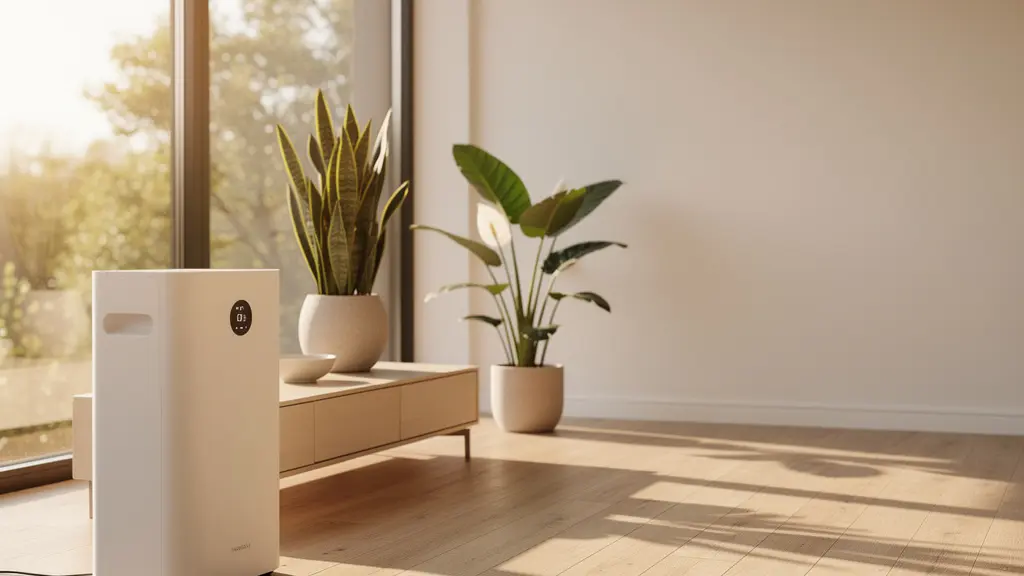
Your home is not a passive shelter; it’s an active biological system whose invisible inputs are constantly programming your body’s inflammatory response.
- Chronic inflammation is often driven by low-grade environmental signals like airborne chemicals, artificial light, and accumulated allergens, not just diet.
- Systematic changes to your home’s air, light, and materials can significantly lower your body’s total inflammatory load and reduce long-term disease risk.
Recommendation: Begin by auditing a single system—like your cleaning supplies or bedroom lighting—using a tiered, “good, better, best” approach to make immediate, impactful changes without feeling overwhelmed.
For the health-conscious homeowner, the mission to reduce chronic inflammation often starts in the kitchen. We swap processed foods for whole ones, focus on anti-inflammatory spices, and filter our water. While these steps are foundational, they overlook a critical truth: we spend over 90% of our lives indoors, and our homes are far from neutral spaces. They are complex ecosystems filled with invisible environmental signals that can either support our health or silently contribute to systemic inflammation.
The common advice to “clean more” or “get an air purifier” barely scratches the surface. It fails to address the root mechanisms by which our environment interacts with our biology. What if the real triggers aren’t just the dust you can see, but the chemicals leaching from your mattress, the specific wavelength of light from your bathroom fixture, or the microscopic toxins thriving in a wall after a minor, long-forgotten leak? These are the factors that create a high “inflammatory load,” putting your body in a constant state of low-grade alert.
This guide moves beyond the platitudes. Instead of treating symptoms, we will address the source by decoding your home’s hidden language. The guiding principle is epigenetic optimization: modifying your environment to send the right signals to your genes, encouraging them to express health and resilience rather than inflammation and disease. We will treat your home as a dynamic system to be managed, not just a space to be cleaned.
This article provides a science-backed, room-by-room blueprint for this process. We will dissect the most impactful environmental inputs—from air quality and chemical exposure to light hygiene and sensory inputs—and provide tiered, actionable protocols to systematically de-risk your living space. Prepare to see your home not just as a place of comfort, but as your most powerful tool for long-term health.
Table of Contents: A Blueprint for a Low-Inflammation Home
- Why Poor Ventilation Increases Respiratory Infection Risk by 30% in Winter?
- How to Replace Endocrine-Disrupting Cleaners With Safe Alternatives Under $20?
- HEPA Filters or Houseplants: Which Actually Removes VOCs Effectively?
- The Minor Leak That Can Trigger Autoimmune Issues After 3 Months
- When to Replace Mattresses and Pillows to Prevent Dust Mite Accumulation
- Why Your Bathroom Light Is Waking You Up More Than Espresso?
- Why Synthetic Sheets Trap Heat and Bacteria Affecting Acne?
- How to Design a Home That Lowers Sensory Overload for HSPs
Why Poor Ventilation Increases Respiratory Infection Risk by 30% in Winter?
In winter, we seal our homes to conserve heat, but in doing so, we create a trap for indoor pollutants. The most basic of these is carbon dioxide (CO2), which we exhale with every breath. While not a toxin in low concentrations, elevated CO2 is a powerful proxy for poor ventilation and the buildup of other contaminants, including viruses, bacteria, and volatile organic compounds (VOCs). When multiple people share an unventilated space, they are essentially rebreathing a small percentage of the same air, dramatically increasing the transmission risk for airborne pathogens.
The impact goes beyond infection risk. Stale, high-CO2 air directly impairs cognitive function and physiological well-being. In fact, research reveals that elevated indoor CO2 significantly impacts our ability to focus, with attention test performance decreasing sharply as levels rise. This “brain fog” is an environmental signal that your body’s operating system is being compromised by its immediate surroundings. The goal is to maintain an indoor environment that mimics the fresh, clean air of the outdoors.
Achieving this requires a proactive strategy. According to ASHRAE, the leading authority on building systems, maintaining healthy indoor air involves keeping CO2 levels within a specific range. A simple monitoring and ventilation plan is the first step in reducing your home’s inflammatory load. The following guidelines provide a professional framework for managing your indoor air quality:
- Monitor CO2 levels to ensure they remain below 800 ppm (parts per million), which is considered the threshold for clean indoor air.
- Aim to maintain indoor CO2 concentrations no more than 650 ppm above outdoor levels, as per ASHRAE standards for optimal health.
- Place CO2 monitors at breathing height (approximately 1.2-1.5 meters) and at least 20cm away from occupants to get an accurate reading of the room’s air.
- If CO2 levels consistently exceed your baseline by 10% or more, it’s a clear signal to investigate and improve your home’s ventilation system.
- For advanced air purification, consider technologies like negative ion restoration, which go beyond simple filtration to actively improve air composition.
By treating your home’s air as a vital nutrient, you shift from a passive occupant to an active manager of your health environment, directly influencing your body’s resilience.
How to Replace Endocrine-Disrupting Cleaners With Safe Alternatives Under $20?
Many conventional cleaning products introduce a barrage of synthetic chemicals into our homes, contributing to an invisible chemical soup. The marketing promises a “clean” home, but the reality is often a layer of endocrine-disrupting chemicals (EDCs) like phthalates, parabens, and phenols. These compounds can interfere with the body’s hormonal systems, contributing to a state of chronic inflammation. The irony is stark: in our attempt to create a hygienic space, we may be increasing our toxic load. Shockingly, EPA studies indicate that indoor pollutant levels can be up to five times higher than outdoor air, with cleaning products being a major contributor.

The solution is not to stop cleaning, but to make a conscious switch to safer alternatives. This doesn’t require a huge budget or access to specialty stores. Effective, non-toxic cleaning can be achieved by adopting a tiered approach, allowing you to choose the level of investment and convenience that suits your lifestyle. The goal is to systematically replace every endocrine-disrupting product with a benign or beneficial alternative, thereby lowering your body’s daily chemical burden.
The following framework provides a clear pathway, from simple DIY recipes to advanced, hospital-grade technology, proving that a non-toxic home is accessible to everyone.
| Level | Solution | Cost | Effectiveness |
|---|---|---|---|
| Good | DIY vinegar/baking soda recipes | Under $5 | Basic cleaning, safe |
| Better | EWG/MADE SAFE certified cleaners | $10-20 | Professional-grade, verified safe |
| Best | Hypochlorous acid generator | $80+ initial | Hospital-grade disinfection, infinite supply |
By making this shift, you’re not just cleaning your countertops; you are actively curating the chemical signals your body receives, promoting hormonal balance and reducing a key source of inflammation.
HEPA Filters or Houseplants: Which Actually Removes VOCs Effectively?
The idea that a few houseplants can purify the air in a home is a popular and appealing one. It stems from a 1989 NASA study that has been widely misinterpreted. While plants do absorb volatile organic compounds (VOCs), the reality of their impact in a typical home environment is negligible. To make a meaningful difference, the scale required is simply impractical; debunking the NASA Clean Air Study myth, research shows you would need between 600 and 800 plants to match the VOC removal capacity of a single medium-sized air purifier. Plants are wonderful for aesthetics and mental well-being, but they are not a viable air purification strategy for mitigating inflammatory triggers.
The true workhorses of air purification are mechanical filters. A High-Efficiency Particulate Air (HEPA) filter is the baseline standard, designed to capture 99.97% of particles down to 0.3 microns, including dust, pollen, mold spores, and bacteria. However, for a home focused on epigenetic optimization, HEPA is only the first step. HEPA filters trap particles but do not eliminate gases like VOCs, which are a primary driver of inflammation from sources like paint, furniture, and cleaners. For individuals with high sensitivity or diagnosed conditions like Chronic Inflammatory Response Syndrome (CIRS), a more robust solution is non-negotiable.
Case Study: Multi-Stage Filtration for VOC Destruction
Clinical treatment protocols for CIRS patients emphasize that simple HEPA filters are insufficient for epigenetic concerns. The goal is not just to trap pollutants but to destroy them. This requires multi-stage systems that incorporate a substantial activated carbon filter, which adsorbs VOCs and other gaseous pollutants. The most advanced systems utilize Photoelectrochemical Oxidation (PECO) technology, which uses a catalyst and light to break down VOCs, mold, and viruses at a molecular level. Patients undergoing these environmental interventions show measurable improvements in oxidative stress markers, demonstrating a direct link between advanced air filtration and reduced systemic inflammation.
Therefore, when designing a low-inflammation home, prioritize a high-quality air purifier with both HEPA and significant carbon or PECO capabilities over scattering a few decorative ferns.
The Minor Leak That Can Trigger Autoimmune Issues After 3 Months
Water damage in a home is often seen as a structural or cosmetic problem, but its most insidious effects are biological. A small, undetected leak behind a wall or under a sink can create the perfect breeding ground for mold within 24-48 hours. While the mold itself is problematic, the real danger to your inflammatory system comes from the invisible chemicals it releases: mycotoxins. These are toxic secondary metabolites that can become airborne and circulate throughout your home’s HVAC system.
The most dangerous aspect of mycotoxins is their persistence. Even after mold has been killed and removed, these chemical compounds can remain. In fact, research on heat-stable mycotoxins shows they can persist for years, binding to dust, furniture, and carpets, creating a long-term source of exposure. Inhaling or ingesting these mycotoxins places an immense burden on the body’s detoxification systems and can trigger a powerful and chronic inflammatory cascade.
This cascade is not a vague or hypothetical illness. As one comprehensive research review notes, it’s a recognized clinical condition:
Mycotoxins can cause inflammation and oxidative stress throughout the body, leading to a chronic disease often called Chronic Inflammatory Response Syndrome (CIRS)
– Published research review, Understanding Mycotoxin-induced Illness
CIRS is an autoimmune condition where the body is stuck in a perpetual, misfiring inflammatory loop, triggered by these persistent biotoxins. Preventing this requires a level of vigilance that goes far beyond simply wiping away visible mold. It demands a proactive, investigative protocol.
Your Advanced Mold and Mycotoxin Detection Protocol
- Moisture Mapping: Use a moisture meter to systematically check drywall and baseboards, especially in bathrooms and basements. Scan at 6-inch intervals, investigating any readings above 15% as a potential hidden water source.
- Dust Analysis: Conduct an Environmental Relative Moldiness Index (ERMI) test annually. This dust-sampling test analyzes DNA to identify the types and concentrations of mold species in your home, providing a clear picture of your indoor environment’s history.
- Humidity Control: Monitor indoor humidity levels with a hygrometer, aiming to keep them consistently below 55%. Use dehumidifiers in damp areas like basements to prevent the conditions that allow mold to thrive.
- Post-Remediation Cleaning: After any mold remediation, it’s crucial to HEPA vacuum all surfaces—including walls and ceilings—to remove residual spores and contaminated dust.
- Mycotoxin Neutralization: Standard cleaners are ineffective against mycotoxins. Use specific binding agents and cleaning protocols designed for biotoxin removal to truly decontaminate the space after a water event.
By adopting this forensic mindset, you can intervene before a minor leak escalates into a major trigger for chronic autoimmune issues.
When to Replace Mattresses and Pillows to Prevent Dust Mite Accumulation
The bedroom should be a sanctuary for rest and repair, but for many, it’s the primary site of exposure to one of the most common inflammatory triggers: dust mites. These microscopic arachnids thrive in warm, humid environments and feed on shed human skin cells. Mattresses and pillows, with their porous structure and accumulation of organic material, are ideal habitats. The problem isn’t the mites themselves, but their waste particles, which contain highly allergenic proteins that trigger an inflammatory response in a significant portion of the population.
Over time, the weight of a pillow or mattress can increase significantly due to the accumulation of skin cells, dust mites, and their allergenic waste. This bio-accumulation turns your sleep surface into a reservoir of inflammatory triggers that you inhale for eight hours every night. While regular cleaning, such as vacuuming and using allergen-proof covers, can help manage the issue, all materials have a finite lifespan. The structure of conventional mattresses, particularly innerspring and memory foam, eventually breaks down, creating more pockets for allergens to accumulate and making effective cleaning nearly impossible.
Knowing when to deep clean and when to replace is key to managing this environmental exposure. The decision depends heavily on the type and age of your mattress, as different materials degrade at different rates and harbor allergens in different ways.
The following decision tree provides a clear guide for managing the lifecycle of your mattress to minimize inflammatory load from dust mites and material degradation.
| Mattress Type | Clean (Years 0-5) | Deep Clean (Years 5-8) | Replace (8+ Years) |
|---|---|---|---|
| Innerspring | Vacuum monthly, rotate quarterly | UV-C treatment + steam clean | Metal fatigue, dust accumulation |
| Memory Foam | Spot clean, air out monthly | Check for VOC emissions | Compression, chemical breakdown |
| Natural Latex | Basic maintenance | Surface refresh only | 10-15 years lifespan |
Investing in a high-quality, naturally hypoallergenic material like latex and adhering to a replacement schedule is a powerful, passive intervention to reduce your nightly inflammatory burden.
Why Your Bathroom Light Is Waking You Up More Than Espresso?
A middle-of-the-night trip to the bathroom can have a surprisingly disruptive effect on your sleep quality, and the culprit is often the light switch. Our brains are exquisitely sensitive to light, which acts as the primary signal for regulating our internal 24-hour clock, or circadian rhythm. Specialized cells in our retinas, called melanopsin photoreceptors, are particularly responsive to blue and green wavelengths of light—the very kind found in standard cool-white LEDs and fluorescent bulbs common in bathrooms.
When these receptors are exposed to bright, blue-rich light, they send a powerful “daytime” signal to the brain’s master clock. This signal immediately halts the production of melatonin, the hormone of darkness and sleep. The effect is profound and long-lasting; circadian rhythm research demonstrates that melanopsin photoreceptors suppress melatonin for hours after just a few minutes of exposure. This means that flicking on that bright bathroom light at 2 a.m. is like drinking a shot of espresso—it jolts your system awake, making it difficult to fall back asleep and fragmenting the deep, restorative sleep cycles crucial for controlling inflammation.
Protecting your sleep requires creating a “circadian-friendly” lighting environment for the night. This involves eliminating exposure to blue-light signals after sundown and especially during the night. A tiered approach can make this accessible for any home and budget:
- Tier 1 (Good): The simplest and cheapest solution is to install a dedicated red-light bulb in a small bathroom lamp. Red light has the longest wavelength and is the least disruptive to melatonin production. Cost: $10-15.
- Tier 2 (Better): Use dimmable, warm-white smart bulbs that can be programmed to shift to a very warm, dim setting after a certain hour (e.g., 8 PM). Set them to 2700K or lower and at minimum brightness for nighttime use. Cost: $30-50.
- Tier 3 (Optimal): Install a dual-circuit lighting system. One circuit powers bright, daylight-mimicking lights for morning use, while a separate switch controls ultra-warm amber or red lights for evening and night. Positioning night lights low to the ground, below eye level, further minimizes melanopsin activation. Cost: $200+.
By managing the light signals in your home, you are performing a critical act of biological hygiene, ensuring your body’s internal repair-and-rest systems can function without interruption.
Why Synthetic Sheets Trap Heat and Bacteria Affecting Acne?
The choice of bedding material extends far beyond simple comfort; it directly influences the microclimate of your skin. For eight hours each night, your skin is in direct contact with your sheets, which play a critical role in regulating temperature, moisture, and microbial balance. Synthetic fibers like polyester and microfiber, while often marketed as soft and durable, are fundamentally non-breathable. They are essentially plastics, and they trap heat and moisture against the skin.
This trapped humidity creates a perfect breeding ground for bacteria, including Propionibacterium acnes, the bacteria linked to acne breakouts. Textile research indicates that synthetic fibers can create a microclimate with significantly higher humidity compared to natural fibers. This moisture, combined with the heat and the skin’s natural oils, fosters an environment where bacteria can proliferate, leading to skin inflammation, clogged pores, and conditions like “bacne” (back acne) or facial breakouts. The smooth, non-absorbent nature of synthetic fibers also means that oils and sweat sit on the surface, further contributing to the problem.
In contrast, natural fibers like organic cotton, linen, and Tencel™ (lyocell) are highly breathable and moisture-wicking. They absorb perspiration and allow it to evaporate, keeping the skin cooler and drier. This helps maintain a balanced skin microbiome and reduces the inflammatory potential of your sleep environment. A European cohort study of 845 children provided strong evidence for this, finding that natural fiber bedding materials were associated with better sleep quality markers and, crucially, reduced inflammatory signatures. These benefits were most pronounced during deep sleep stages, which are vital for the body’s cellular repair and inflammation control processes.
Switching from synthetic sheets to natural, breathable fibers is a simple, passive way to support skin health and lower the inflammatory burden on your body while you sleep.
Key Takeaways
- Your home environment is a primary source of “inflammatory load” through invisible inputs like VOCs, mycotoxins, and artificial light.
- A systematic, tiered approach (“good, better, best”) to upgrading air filtration, cleaning supplies, and lighting is more effective than random changes.
- True air purification requires destroying pollutants (with carbon/PECO filters), not just trapping them (HEPA) or using cosmetic solutions (houseplants).
How to Design a Home That Lowers Sensory Overload for HSPs
For a Highly Sensitive Person (HSP) or anyone prone to sensory overload, the home can feel less like a sanctuary and more like a source of constant, low-grade stress. The hum of appliances, the flicker of a fluorescent light, the visual clutter of a messy room, and the artificial scent from a plugin air freshener are not just minor annoyances; they are environmental signals that can overwhelm the nervous system. This state of sensory overload triggers a physiological stress response, releasing cortisol and contributing to systemic inflammation. Designing a low-inflammation home for an HSP is about curating sensory inputs as carefully as one would curate a diet.
The key is to create “sanctuary zones” and implement a “sensory diet” for the entire home. This framework involves intentionally managing the inputs for each of the senses to reduce the overall load on the nervous system. Instead of reacting to overwhelming stimuli, you proactively create an environment of calm and predictability. This might involve replacing a jarring alarm clock with a gentle sunrise-simulating one or swapping a noisy refrigerator for a model with a lower decibel rating. The goal is to reduce the number of “threat” signals the nervous system has to process, allowing it to remain in a parasympathetic (rest-and-digest) state.
The following framework provides a structured approach to implementing a sensory diet in your home design:
- Sound: Reduce ambient noise by installing sound-dampening textiles like heavy curtains, rugs, and acoustic panels. In dedicated quiet zones, use a pink noise machine to create a consistent, soothing auditory backdrop that masks jarring sounds.
- Sight: Control visual chaos with the “one-touch rule” for clutter—deal with an item once instead of moving it around. Implement zone-specific lighting with dimmers, allowing you to create pools of soft, warm light rather than illuminating an entire room with harsh overhead fixtures.
- Touch: Layer natural, calming textures throughout your living spaces. The feel of wool, organic cotton, soft linen, and smooth wood can be deeply regulating for the nervous system. Avoid scratchy synthetic materials.
- Smell: Eliminate artificial fragrances from cleaners, laundry detergents, and air fresheners, which are a major source of sensory assault. Instead, use an essential oil nebulizer (which doesn’t use heat) to diffuse pure, natural scents for short periods.
- Predictability: Use smart home technology to create predictable routines, such as lights that automatically dim in the evening, blackout shades that lower at a set time, and the thermostat adjusting to a perfect sleep temperature, reducing decision fatigue and sensory surprises.
As a final thought from the ISGlobal Exposome Hub Study, it’s clear that these efforts are part of a larger, holistic strategy. Léa Maitre notes:
Improving indoor air quality, supporting healthy diets, preserving access to natural spaces, and strengthening community support systems are actionable strategies that can promote better key inflammatory processes
– Léa Maitre, ISGlobal Exposome Hub Study
Begin today by choosing one sensory input to modify. By systematically reducing the sensory load, you lower the baseline stress on your nervous system and, in turn, create a profoundly anti-inflammatory environment in which to thrive.