
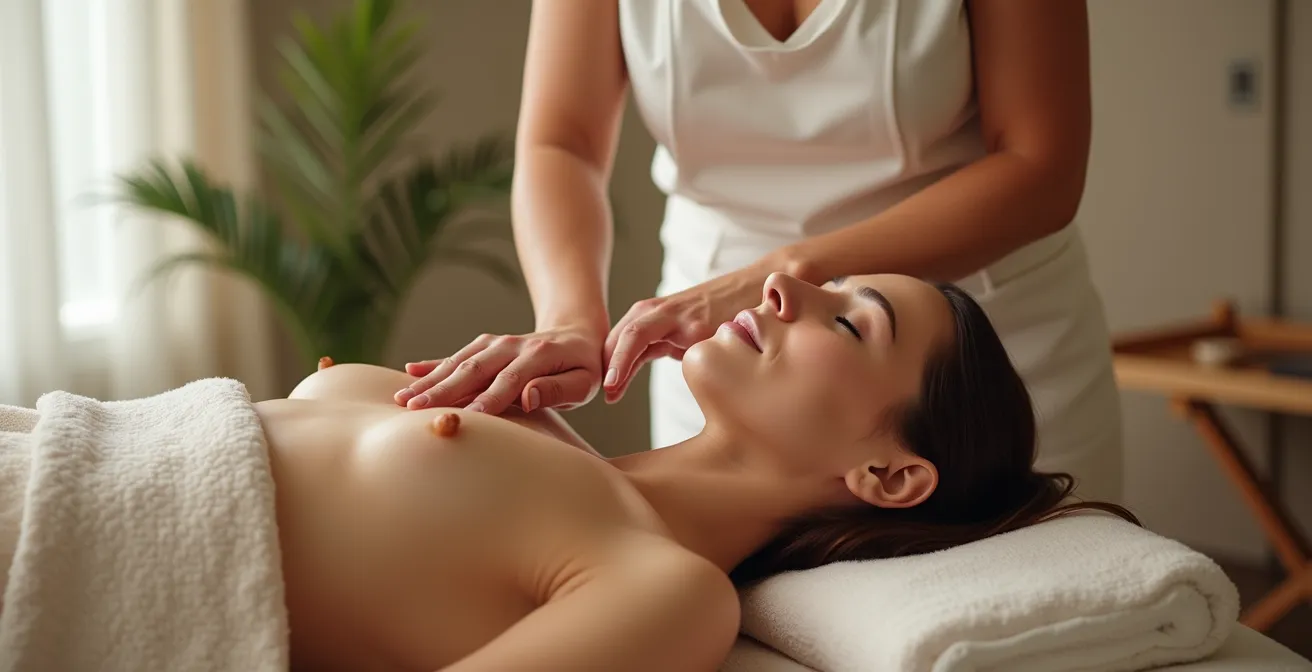
The thought of a relaxing massage shouldn’t be stressful, yet many first-timers fear the pain associated with deep bodywork. Swedish massage offers a powerful, science-backed solution.
- Gentle, gliding strokes are scientifically more effective at reducing the stress hormone cortisol than painful pressure.
- This technique is a precise tool for intentionally activating the body’s ‘rest and digest’ state, making it far more than just a “lighter” massage.
Recommendation: Begin with Swedish massage to safely retrain your nervous system’s response to stress before exploring more intense therapies.
Welcome. If you’re reading this, you’re likely searching for a way to quiet the noise—both in your mind and in your body. Many people come to us feeling wound-up, exhausted, and intrigued by the idea of massage, but also hesitant. They’ve heard stories of deep tissue work that sounds more like an ordeal than a relief. There’s a common belief that to undo serious tension, you need equally serious, sometimes painful, pressure. This “no pain, no gain” philosophy is perhaps the biggest myth in the world of therapeutic relaxation, especially for a nervous system already in overdrive.
This approach overlooks a fundamental truth about how our bodies handle stress. When you’re already in a state of high alert—what we call the sympathetic or “fight-or-flight” response—adding painful stimuli can be counterproductive. It can signal more danger to your brain, causing your muscles to tense up further in defense. The real key to deep, lasting relaxation isn’t about forcefully erasing tension; it’s about gently persuading your nervous system that it’s safe to let go. This is where the art and science of Swedish massage truly shine.
But what if the true path to calm isn’t about fighting tension, but about skillfully inviting relaxation? This guide is designed to walk you through why Swedish massage is not just a “beginner” massage, but a highly sophisticated and effective method for regulating your nervous system. We will explore the science behind its gentle effectiveness, provide practical tools for your journey, and show how it integrates into a holistic wellness strategy for profound recovery and resilience.
To help you navigate this complete guide to nervous system relaxation, we’ve structured the article to answer your most pressing questions. You can explore the topics that interest you most or read through to gain a comprehensive understanding.
Summary: Why Swedish Massage Is the Ultimate Tool for Nervous System Regulation
- Why Gentle Strokes Reduce Cortisol More Effectively Than Painful Ones?
- How to Communicate Pressure Preferences Without Feeling Rude?
- Swedish or Deep Tissue: Which Is Better for General Fatigue?
- The Hydration Mistake That Causes Headaches After a Relaxing Session
- How Often Should You Get a Swedish Massage to Maintain Lower Blood Pressure?
- Why NSDR Recovers Energy Faster Than a 90-Minute Nap?
- Why Cooling Your Mattress to 18°C Doubles Deep Sleep Duration?
- How to Master the Basic Effleurage Stroke to Relax Your Partner at Home
Why Gentle Strokes Reduce Cortisol More Effectively Than Painful Ones?
One of the biggest misconceptions about massage is that deeper, more intense pressure is always better. For a nervous system already overloaded by stress, this can be counterproductive. The goal of a truly restorative massage isn’t to punish muscles into submission, but to send signals of safety to the brain, shifting you from a state of high-alert (“fight-or-flight”) to one of deep rest (“rest-and-digest”). This is known as activating the parasympathetic nervous system. Painful stimuli can do the opposite, keeping your body in a defensive, stressed state.
Gentle, rhythmic, and predictable strokes—the hallmarks of Swedish massage—are specifically designed to activate this parasympathetic response. They stimulate the vagus nerve, a primary communication channel between the body and brain. This stimulation effectively tells your brain that you are safe, triggering a cascade of physiological changes. Your heart rate slows, your breathing deepens, and your body reduces its production of cortisol, the primary stress hormone. In fact, research shows that salivary cortisol assays consistently drop by 20-30% following Swedish massage sessions. This hormonal shift is the physical evidence of stress melting away.
This process is beautifully illustrated by the case of a 42-year-old marketing executive who was struggling with chronic insomnia and hypertension. After starting weekly Swedish massage therapy, she experienced a profound turnaround. Within just six weeks, her average nightly sleep improved by 90 minutes, and she reported a 50% reduction in her perceived stress levels. This demonstrates how gentle touch isn’t a weak approach; it’s a targeted, biological intervention to restore balance.
To understand how these gentle techniques create such a profound calming effect, it’s helpful to visualize the process of vagus nerve activation, as shown below.

As the image symbolizes, the smooth, flowing contact creates ripples of calming signals that spread throughout your nervous system. This is why you feel a sense of global relaxation, not just relief in one specific muscle. It’s a full-system reset, initiated by the power of intentional, gentle touch.
How to Communicate Pressure Preferences Without Feeling Rude?
It’s one of the most common anxieties for anyone new to massage: “What if the pressure is too much, or not enough? How do I say something without sounding difficult?” Please let me reassure you: communicating your needs is not being rude; it is an essential part of the therapeutic process. Your massage therapist is a trained professional who wants to provide the most effective treatment for you. Your feedback is the most valuable tool they have to achieve that.
Think of it as a partnership. You are the expert on your own body, and the therapist is the expert in their techniques. A successful session happens when those two areas of expertise meet. A great therapist will check in with you, but you should also feel empowered to speak up at any time. Your comfort and safety are the top priorities. Feeling like you have to endure discomfort defeats the entire purpose of a relaxation massage, which is to signal safety to your nervous system.
As the professional guidelines for therapists emphasize, open dialogue is crucial. As a leading manual on the practice states:
You are not being difficult; you are providing crucial data that helps the professional do their job better. A good therapist wants and needs this feedback.
– Massage therapy communication best practices, Professional Massage Therapy Guidelines
To make this easier, here are a few simple, professional scripts you can use to guide the session:
- Before the session: “Just so you know, I generally prefer light to medium pressure, especially to start.”
- When the pressure is perfect: “That pressure is perfect right there. I’d love to keep it in that range.”
- To request a change: “Could we go a little lighter on my legs, please?” or “I think I could handle a little more pressure on my shoulders, if that’s possible.”
- Using a scale: If your therapist asks, you can use a 1-10 scale. “For me, that feels like a 7 out of 10. Could we bring it down to a 4 or 5?”
Swedish or Deep Tissue: Which Is Better for General Fatigue?
Fatigue is not a one-size-fits-all problem, so its solution shouldn’t be either. When clients tell us they feel “tired all the time,” our first question is, “What kind of tired?” Is it the heavy-limbed soreness from a tough workout, or the bone-deep, mental exhaustion from chronic stress and burnout? The answer determines whether Swedish or Deep Tissue massage is the more appropriate choice. For general, stress-induced fatigue, Swedish massage is almost always the superior starting point.
The reason lies in the target of the massage. Deep tissue is designed to address muscular fatigue by manually breaking up adhesions (knots) in deeper layers of muscle and connective tissue. It’s focused and intense. However, if your fatigue stems from an over-stimulated nervous system (burnout, anxiety, poor sleep), an intense deep tissue massage can be counterproductive. It can feel like an assault on a system that is already overloaded, increasing stress rather than relieving it. Swedish massage, on the other hand, targets nervous system fatigue. Its primary goal is to calm the entire system, improve circulation, and promote the deep, restorative rest that is essential for recovery.
A study even showed that receiving a 90-minute Swedish massage just once a week significantly improved sleep quality, which is a key factor in combating general fatigue. The following table breaks down the key differences and helps clarify which modality is best suited for your type of fatigue.
This comparative data, adapted from an analysis of different massage modalities, highlights the diagnostic value of starting with Swedish massage.
| Fatigue Type | Swedish Massage | Deep Tissue | Recommendation |
|---|---|---|---|
| Nervous System Fatigue (stress/burnout) | Highly Effective – promotes parasympathetic activation | May be counterproductive – adds stress to overloaded system | Swedish strongly preferred |
| Muscular Fatigue (physical overexertion) | Moderately effective – improves circulation | Highly effective – targets specific knots | Deep tissue for specific areas |
| General Chronic Fatigue | Preferred – calms global system first | Secondary option after initial Swedish | Start with Swedish as diagnostic |
| Pressure Applied | Light to moderate on large areas | Focused pressure on specific points | Based on individual tolerance |
Ultimately, if you are struggling with pervasive, chronic fatigue, the most effective strategy is to calm the entire system first. A Swedish massage can act as a reset button, and from that calmer baseline, more targeted work can be introduced if needed. It addresses the root cause—a dysregulated nervous system—rather than just the symptoms.
The Hydration Mistake That Causes Headaches After a Relaxing Session
You’ve just had a wonderfully relaxing Swedish massage. You feel loose, calm, and peaceful. But a few hours later, a dull headache begins to creep in. This is a surprisingly common experience, and it’s almost always due to a simple but crucial mistake: improper hydration. While most people know to drink water after a massage, few understand that the type of fluid and the timing are just as important. The mistake is drinking plain water instead of water enhanced with electrolytes.
Swedish massage does more than just relax your muscles; it significantly boosts circulation and lymphatic flow. The long, gliding strokes directed toward the heart act like a manual pump for the lymphatic system, which is responsible for clearing metabolic waste from your tissues. This enhanced lymphatic drainage mobilizes waste products so your body can process and eliminate them. This process, however, requires sufficient fluid and, more importantly, a proper balance of electrolytes (minerals like sodium, potassium, and magnesium) to function efficiently.
When you drink a large amount of plain water after a massage, you can inadvertently dilute the electrolytes in your system. This imbalance can lead to dehydration symptoms, with headaches being the most common. Your body needs these minerals to manage fluid transfer between cells and to support nerve and muscle function. Without them, the freshly mobilized waste products can’t be flushed out effectively, and the fluid balance is disrupted, leading to that post-massage headache.
To prevent this and enhance your recovery, follow these expert hydration solutions:
- Begin hydrating before you arrive: Start drinking water, preferably with electrolytes, about 30 minutes before your session begins.
- Enhance your water: Immediately after your massage, drink water that contains electrolytes. You can use a pre-made powder, but natural options work wonderfully.
- Make your own electrolyte drink: Simply add a pinch of sea salt and a squeeze of fresh lemon or a splash of coconut water to your water for a natural boost.
- Continue for a few hours: Keep sipping your electrolyte-enhanced water for the next 2-3 hours post-massage to fully support your body’s recovery process.
How Often Should You Get a Swedish Massage to Maintain Lower Blood Pressure?
While a single Swedish massage can provide immediate feelings of relaxation and a temporary drop in blood pressure, the most profound and lasting benefits come from consistency. Think of it less like a one-time fix and more like training for your nervous system. The goal is to create a new, lower-stress “baseline” for your body, and this requires regular reinforcement. For maintaining benefits like lower resting blood pressure, a structured approach involving a “loading phase” followed by a “maintenance phase” is most effective.
A healthy body naturally moves between the sympathetic (alert) and parasympathetic (calm) states throughout the day. Chronic stress throws this balance off, leaving you stuck in a state of high alert. Regular massage helps retrain this response, reminding your body how to access a state of calm more easily and stay there longer. This cumulative effect is what leads to sustained improvements in cardiovascular markers like blood pressure.
As experts in nervous system-focused bodywork explain, consistency is the key to rewiring your stress response.
Regular, consistent sessions have a more profound impact on resting blood pressure than sporadic ones because they repeatedly reinforce the ‘safety’ signal to the nervous system, creating a new, lower-stress baseline.
– Boulder Therapeutics Research Team, Nervous System Reset Massage Protocol
This leads to a practical, two-phase protocol that we recommend for clients looking to manage stress and its physiological symptoms, such as high blood pressure.
The Loading Phase vs. Maintenance Phase Protocol
To effectively re-train the nervous system’s baseline response, the recommended protocol involves two distinct stages. First, a Loading Phase consists of 3-4 sessions spaced closely together, typically every 1 to 2 weeks. This intensive period repeatedly reinforces the parasympathetic response, helping the body establish a new, calmer default state. Following this, the client transitions to a Maintenance Phase, with one session every 3 to 4 weeks. This frequency is typically sufficient to sustain the benefits, including lower resting blood pressure and a greater sense of overall well-being.
Monitoring your progress at home can be a powerful motivator and provides valuable feedback for you and your therapist. A simple routine of tracking your blood pressure can help you see the tangible results of your commitment to nervous system care.
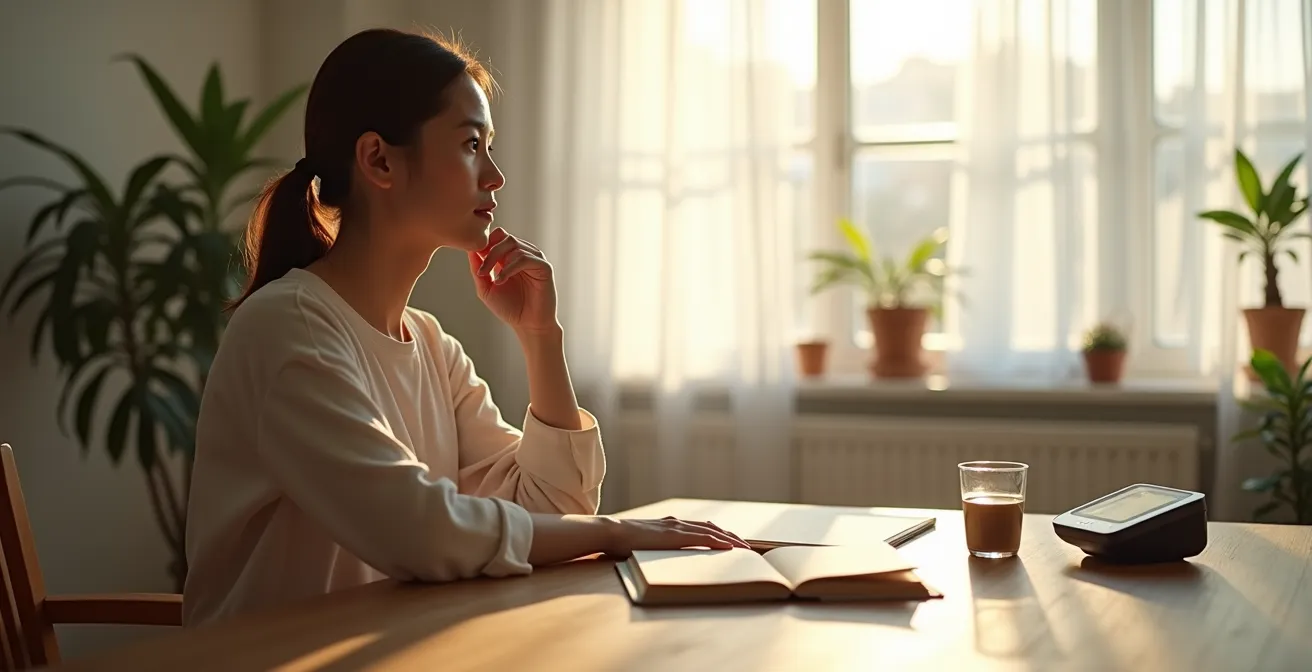
By adopting a regular massage schedule, you are making a long-term investment in your health. You are not just treating symptoms; you are actively conditioning your body for greater resilience and calm.
Why NSDR Recovers Energy Faster Than a 90-Minute Nap?
We’ve all been there: you’re exhausted, you lie down for a nap, and you wake up 90 minutes later feeling groggy, disoriented, and sometimes even more tired than before. While naps can be beneficial, they are not always the most efficient way to recover energy, especially when the fatigue is mental. This is where a practice called Non-Sleep Deep Rest (NSDR) comes in. NSDR is a form of guided meditation that intentionally brings your brain into a state of deep relaxation while you remain conscious. This process can be more restorative than a nap because it directly quiets the “thinking mind” without the risk of sleep inertia.
During an NSDR session, you are guided to focus on your breath and bodily sensations. This shifts your brainwave activity from the active Beta state to the calmer Alpha and even Theta states—the same states experienced during the early stages of sleep and deep meditation. Unlike a nap, where you might drop into deep sleep and be jolted awake by an alarm, NSDR allows for a gentle, controlled descent into rest and an equally gentle return to alertness. You get the restorative brain benefits without the grogginess.
The state of deep calm achieved during a Swedish massage is the perfect springboard into an NSDR practice. The massage has already quieted the physical tension and activated your parasympathetic nervous system. Following it immediately with a short NSDR protocol can amplify and prolong the benefits, creating a powerful synergy for mental and physical recovery. It’s like giving your brain the same deep rest your body just received.
Your 10-Minute Post-Massage NSDR Plan
- Find a quiet space: Immediately after your massage, lie down comfortably on your back where you won’t be disturbed.
- Focus on your breath: Spend 2 minutes taking slow, deep breaths. Inhale through your nose, exhale slowly through your mouth, maintaining the sense of calm from the massage.
- Scan your body: For the next 3 minutes, bring your awareness to the physical sensations in your body without judgment. Notice the warmth, the tingling, the feeling of the surface beneath you.
- Practice progressive relaxation: For 3 minutes, mentally travel from your toes to your head, consciously inviting each part of your body to release any remaining tension and become heavy.
- Return to alertness: Use the final 2 minutes to gently bring your awareness back to the room. Wiggle your fingers and toes, stretch slowly, and open your eyes, carrying the calm with you.
This simple practice acts as a bridge, extending the profound relaxation of the massage into your mental space. It teaches your nervous system to access a state of deep rest on command, a skill that is invaluable for managing energy and stress in daily life.
Why Cooling Your Mattress to 18°C Doubles Deep Sleep Duration?
The connection between a great massage, deep relaxation, and a good night’s sleep is intuitive. But to truly optimize your sleep, especially the crucial deep sleep stage, there is one more environmental factor to consider: temperature. Your body’s core temperature needs to drop slightly to initiate and maintain deep, restorative sleep. Keeping your sleep environment cool—ideally around 18°C (or 65°F)—is one of the most powerful things you can do to improve sleep quality. A cool room doesn’t just feel more comfortable; it’s a biological signal to your brain that it’s time for deep rest.
This is where Swedish massage plays another, often overlooked, role. The physical manipulation of the muscles and the stimulation of the circulatory system have a powerful effect on the body’s ability to regulate its own temperature. As leading research points out, there is a direct link between circulation and the body’s cooling mechanism.
Swedish massage improves peripheral circulation. This enhanced blood flow makes the body more efficient at releasing heat through the skin, helping it cool down faster at night and enter deep sleep more easily.
– Sleep and Circulation Research, International Journal of Preventive Medicine
Essentially, a late afternoon or early evening Swedish massage acts as a primer for your body’s natural sleep cycle. It helps your body dissipate heat more effectively, so when you enter a cool bedroom later that night, your system is already prepped to drop its core temperature and transition smoothly into the deep sleep stages where physical repair and memory consolidation occur.
This creates a powerful “trifecta” for complete nervous system regulation. The protocol combines three scientifically-validated approaches into a synergistic sequence. It begins with a Swedish Massage in the late afternoon to release physical tension and improve circulation. This is followed by a brief NSDR practice in the evening to quiet the mind and reduce mental chatter. Finally, you retire to a Cool Sleep Environment (around 18°C) to enable the deep, restorative sleep your body and brain need to fully recover. Each step enhances the effectiveness of the others, creating a holistic protocol for profound well-being.
Key Takeaways
- Swedish massage is a scientific tool for activating the parasympathetic nervous system, not just a “light” massage.
- Effective communication about pressure is crucial and welcomed by professional therapists. Your feedback is data, not a complaint.
- For long-term benefits like lower blood pressure, consistency through a “loading” and “maintenance” phase is more important than sporadic sessions.
How to Master the Basic Effleurage Stroke to Relax Your Partner at Home
Now that you understand the profound science behind gentle touch, you have the power to share some of its benefits with those you care about. You don’t need to be a professional therapist to offer a moment of genuine relaxation. Mastering one basic but powerful Swedish massage technique—effleurage—is enough to help your partner de-stress after a long day. Effleurage consists of long, gliding strokes, and its magic lies not in its complexity, but in its rhythm and intention.
Recent neuroscience has shown that our skin has a special class of nerve fibers, called C-tactile afferents, that are specifically tuned to respond to slow, gentle, skin-temperature touch. When you perform a slow, rhythmic effleurage stroke on someone, you are directly activating these fibers, which are linked to feelings of calm, social bonding, and reduced anxiety. This turns a simple back rub into a powerful act of co-regulation, where your calm, present touch helps to regulate your partner’s nervous system.
The key is to focus on presence and calm intention rather than technical perfection. To perform effective effleurage at home, remember the “Three R’s” and a couple of essential tips:
- Rhythm: Keep your strokes slow, consistent, and predictable. Imagine the pace of a calm heartbeat, aiming for about 3-5 seconds to complete one long stroke. This predictability signals safety to the brain.
- Repetition: Repeat the same stroke pathway over the same area (like the back or shoulders) at least 5-7 times. Repetition builds trust and deepens the relaxation response.
- Responsiveness: Pay attention to your partner’s breathing. As you continue, you will likely notice it slowing and deepening. Try to match the pace of your strokes to their slowing breath.
- Direction and Lubrication: Always use smooth, flowing strokes moving toward the heart to support natural blood flow. Applying a small amount of oil or lotion will prevent pulling on skin and hair, making the experience much more pleasant.
Even a five-minute session of silent, intentional effleurage on the neck and shoulders can be a meditative and deeply connecting practice for a couple. It’s a way to communicate care and safety without words, leveraging the simple, profound biology of touch to create a shared moment of peace.
Your journey into the world of therapeutic touch is an investment in your long-term health and resilience. By starting with the safe, intentional, and scientifically-grounded practice of Swedish massage, you are giving your nervous system the tools it needs to find its way back to balance. We invite you to experience this for yourself and discover the profound calm that awaits.