
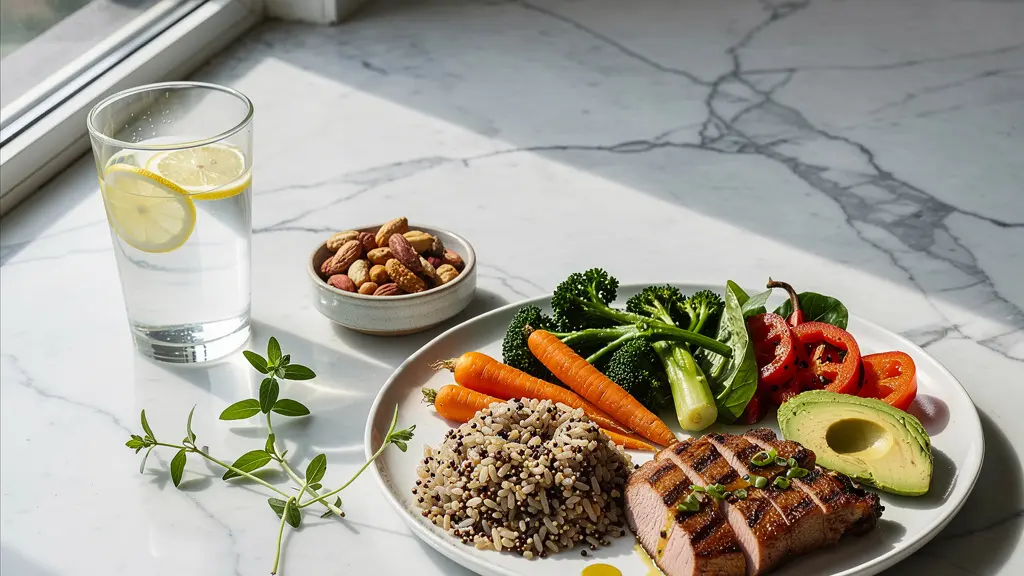
The afternoon energy slump is not a sign of laziness; it’s a predictable hormonal cascade triggered by poor meal structure.
- Mastering your blood sugar by “dressing” your carbohydrates with fiber, fat, and protein is the non-negotiable first step.
- Hidden sugars in “healthy” drinks and the type of iron you consume have a greater impact on your energy than calories alone.
Recommendation: Shift your focus from just choosing “healthy foods” to building a metabolically sound meal architecture that controls insulin and supports sustained performance.
The dreaded 3 PM slump. It arrives like clockwork, a wave of fatigue that washes over your desk, making focus impossible and the siren call of the coffee machine irresistible. You ate a “healthy” lunch—a salad, maybe some oatmeal earlier—so why do you feel like you need a nap under your desk? For years, office workers have been told the solution is to simply eat a “balanced lunch,” avoid sugar, and stay hydrated. While not incorrect, this advice is dangerously incomplete. It treats the symptom, not the system.
This generic approach ignores the powerful hormonal cascade happening inside your body. It fails to explain why some “healthy” foods can be the primary culprits behind your energy crash. The fatigue you feel isn’t a failure of willpower; it’s a biological response to a poorly constructed meal that sends your blood sugar on a rollercoaster, leading to an insulin surge and a subsequent cortisol spike. But what if the true key wasn’t just about the *foods* you eat, but the *architecture* of your meal?
This guide moves beyond generic advice. We will explore the metabolic principles that govern your energy levels. You will learn not just what to eat, but how to strategically combine foods to manage your insulin response, optimize nutrient absorption, and build a foundation for sustained, crash-free performance throughout the entire afternoon. It’s time to stop fighting the slump and start engineering your energy from the inside out.
To help you master your afternoon energy, this article breaks down the core metabolic strategies you can implement immediately. Explore the topics below to build your personalized plan for a crash-free workday.
Summary: How to Structure Lunch to Eliminate the 3 PM Energy Crash
- Why Your “Healthy” Oatmeal Breakfast Is Causing Mid-Morning Hunger?
- How to Add 10g of Fiber to Any Meal Without Changing the Flavor?
- Steak or Lentils: Which Provides More Bioavailable Iron per Calorie?
- The Liquid Calorie Mistake That Spikes Insulin Faster Than Soda
- When to Eat Carbs After Lifting for Maximum Muscle Repair
- Solving the Sedentary Slump: 3 Ways to boost Circulation Before 2 PM
- How to Eat Carbohydrates at Dinner to Lower Stress Hormones Overnight?
- How to Spot the Skin Signs of Pre-Diabetes Before Blood Tests Confirm It
Why Your “Healthy” Oatmeal Breakfast Is Causing Mid-Morning Hunger?
That virtuous bowl of plain oatmeal you had for breakfast could be the secret saboteur of your mid-morning focus. When you consume carbohydrates, especially processed ones like instant oats, without adequate protein, fat, or fiber, you’re setting yourself up for a classic blood sugar spike-and-crash cycle. These “naked carbs” are digested rapidly, flooding your bloodstream with glucose. Your pancreas responds by releasing a large amount of insulin to manage the sugar, which then causes your blood sugar to plummet, triggering hunger, cravings, and fatigue long before lunchtime.
The solution isn’t to demonize carbs, but to “dress” them properly. This concept of metabolic architecture is about building a meal that slows down digestion and promotes a gentle, sustained release of energy. By adding key components, you transform a potential energy-drainer into a performance-fueling meal. For peak metabolic function, nutritionists recommend including 20-30 grams of protein at each meal to promote satiety and stabilize blood sugar. This is the foundation of preventing the hormonal cascade that leads to a crash.
Instead of eating your oatmeal plain, think of it as a base. By adding sources of healthy fats (like nut butter), protein (Greek yogurt or protein powder), and fiber (chia or flax seeds), you change its entire metabolic impact. This simple act of “dressing your carbs” creates a buffer that blunts the insulin response, keeping you full, focused, and energized until your next meal.
- Step 1: Add 1-2 tablespoons of nut butter (almond or peanut) to your oatmeal for essential fats.
- Step 2: Mix in a scoop of protein powder or 1/4 cup of Greek yogurt to boost protein content.
- Step 3: Top with 1 tablespoon of chia seeds or ground flax for added fiber and omega-3s.
By applying this strategy, you shift from a reactive state of fighting hunger to a proactive state of engineering sustained energy from your very first meal.
How to Add 10g of Fiber to Any Meal Without Changing the Flavor?
We’re constantly told to eat more fiber, but the thought of adding chalky powders or bulky vegetables to every meal can be unappealing. The secret to effortlessly boosting your fiber intake lies in understanding its different forms and leveraging “invisible” sources. One of the most effective and tasteless ways to add fiber is by harnessing the power of resistant starch, a unique type of fiber created through a simple cook-and-cool process.
Research shows that when you cook starchy foods like potatoes, rice, or pasta and then let them cool, a portion of the starches crystallizes into a form your body can’t digest. This process, known as retrogradation, effectively creates fiber without adding any new ingredients or altering the taste. According to one analysis, this can significantly increase the fiber content of leftovers, providing food for your gut bacteria while having a minimal impact on your blood sugar. It’s the ultimate metabolic hack for your meal prep.

Beyond resistant starch, several other sources can be seamlessly integrated into your diet. A tablespoon of acacia fiber dissolves completely in liquids like coffee, tea, or soup, adding 5-6g of fiber with zero taste or texture change. Similarly, a tablespoon of chia seeds or ground flaxseed can be mixed into yogurt, smoothies, or oatmeal, adding around 4-5g of fiber along with healthy omega-3 fats. These additions are not just about hitting a number; they are crucial for slowing glucose absorption and feeding the beneficial bacteria in your gut, which play a vital role in regulating everything from mood to metabolism.
By combining these methods, you can easily add 10 or more grams of fiber to your daily intake, enhancing satiety and stabilizing your energy levels without ever feeling like you’re on a “high-fiber diet.”
Steak or Lentils: Which Provides More Bioavailable Iron per Calorie?
When you’re fighting fatigue, iron is a critical nutrient. But not all iron is created equal. The source of your iron dramatically affects how much your body can actually absorb—a concept known as bioavailability. This is where the steak versus lentils debate becomes fascinating from a metabolic performance perspective. Steak contains heme iron, derived from hemoglobin, while lentils contain non-heme iron, the form found in plants.
Your body absorbs heme iron far more efficiently than non-heme iron. However, the story doesn’t end there. When you look at the caloric cost of obtaining that iron, the picture becomes more nuanced. To get the same amount of usable iron, you might need fewer calories from plant-based sources if you combine them correctly.
The following table breaks down the key differences in absorption and caloric density, highlighting a critical factor: the power of Vitamin C to unlock plant-based iron.
| Iron Source | Type | Base Absorption Rate | With Vitamin C | Calories per 3mg Iron |
|---|---|---|---|---|
| Beef Steak | Heme | 15-35% | No change | ~170 cal |
| Lentils | Non-heme | 2-20% | Up to 6x increase | ~130 cal |
| Spinach | Non-heme | 1-15% | Up to 5x increase | ~85 cal |
As the data shows, pairing non-heme iron sources like lentils or spinach with a source of Vitamin C (like bell peppers, lemon juice, or tomatoes) dramatically increases iron absorption. This strategic food pairing means you can obtain your iron for a lower caloric budget from plants than from meat. For the office worker focused on energy without excess calories, a lentil salad with a lemon-based vinaigrette and chopped bell peppers can be a more metabolically efficient choice for fighting iron-related fatigue than a piece of steak.
Ultimately, the best choice depends on your overall diet, but knowing how to maximize bioavailability gives you the power to architect a high-energy, nutrient-dense lunch, regardless of the source.
The Liquid Calorie Mistake That Spikes Insulin Faster Than Soda
In the quest for a healthy lunch, one of the most common and damaging mistakes is consuming hidden liquid sugars. You might diligently avoid soda, but the “healthy” smoothie, fruit juice, or specialty coffee you’re drinking could be doing more damage to your blood sugar. Liquid calories are absorbed almost instantaneously, as there is no fiber to slow them down, leading to a massive insulin spike that all but guarantees an afternoon crash.
One of the worst offenders masquerading as a health food is agave nectar. Often marketed as a “natural” sweetener, it can be more metabolically disruptive than high-fructose corn syrup (HFCS). An analysis reveals that agave nectar often contains 70-90% fructose, compared to just 55% in HFCS. This intense fructose load goes straight to the liver, promoting fat storage and insulin resistance, directly contributing to the hormonal cascade of fatigue.
Case Study: The Hidden Sugar in Your Oat Milk Latte
Your daily oat milk latte is another prime suspect. Many commercial oat milks contain added enzymes, like amylase, used to break down the oat starches into simpler sugars (maltose). This process gives the milk its creamy, sweet taste but also skyrockets its glycemic index. Without even looking at the nutrition label, consumers are often unaware that a standard oat milk latte can easily contain 15-20 grams of sugar from the milk alone, triggering a significant insulin response and setting them up for the inevitable slump.
The key takeaway is to treat all sweetened beverages with suspicion, regardless of their health halo. Water, unsweetened tea, and black coffee are your best bets for hydration without metabolic disruption. If you’re having a smoothie, ensure it’s built like a proper meal: prioritize low-sugar greens, a solid protein source (like Greek yogurt or protein powder), and a source of healthy fat (like avocado or chia seeds) to buffer the sugar from any fruit.
By eliminating these stealthy sugar bombs, you take a massive step toward stabilizing your blood sugar and reclaiming your afternoon focus.
When to Eat Carbs After Lifting for Maximum Muscle Repair
For those who fit a workout into their day, nutrient timing becomes a powerful tool for performance and energy management. After a resistance training session, your muscles are uniquely primed to absorb nutrients, a state often called the “anabolic window.” During this period, your muscle cells are significantly more sensitive to insulin. This is a crucial opportunity: you can use the power of the insulin shuttle to your advantage, directing carbohydrates to be stored as glycogen in your muscles for repair and recovery, rather than being converted to fat.
The common belief is that you must consume carbs within a tight 30-minute window post-workout, but the science is more flexible. While the window is most potent immediately after exercise, research shows muscles maintain 4-6 hours of elevated insulin sensitivity post-exercise. This means you don’t necessarily need to chug a sugary shake the second you leave the gym. Your post-workout lunch, eaten an hour or two later, can still effectively replenish glycogen stores and kickstart muscle repair, provided it’s properly structured.
The urgency of your carb intake depends on the intensity and frequency of your training. For an elite athlete training twice a day, the 30-minute window is critical. But for the average office worker doing a 45-minute lifting session, the priority is simply having a well-balanced meal within the next few hours. The key is to always pair those carbohydrates with a high-quality protein source to maximize the muscle-building response.
Your Action Plan: Strategic Post-Workout Carb Timing
- Assess your workout type: Was it a glycogen-depleting session (e.g., over 60 minutes of intense cardio or lifting) or a standard gym session (30-45 minutes)?
- For glycogen-depleting workouts: Aim to consume fast-acting carbohydrates (like a banana or white rice) and protein within 30 minutes to kickstart recovery immediately.
- For standard gym sessions: Focus on having your next balanced meal within 2-3 hours. This is more than sufficient to leverage the enhanced insulin sensitivity.
- Calibrate your carb intake: If training twice daily, prioritize the 30-minute window with approximately 0.5-1 gram of carbs per kilogram of body weight.
- Always pair with protein: No matter the timing, consume 20-30g of protein with your post-workout carbs to maximize the insulin shuttle effect for muscle repair.
By timing your carbohydrates strategically around your workouts, you ensure those calories are used for productive repair and recovery, supporting both your fitness goals and stable all-day energy.
Solving the Sedentary Slump: 3 Ways to boost Circulation Before 2 PM
Even with a perfectly architected lunch, sitting at a desk for hours on end can lead to a “sedentary slump.” This form of fatigue is caused by poor circulation and reduced oxygen flow to the brain. When you’re inactive, blood pools in your lower extremities, and your brain is literally starved of the fuel it needs to stay alert. The solution is simple: re-engage your body’s circulatory system with short, targeted bursts of movement.
You don’t need a full workout. In fact, one of the most effective techniques can be done in just two minutes. A specific sequence of movements known as the Nitric Oxide Dump protocol is designed to stimulate the release of nitric oxide from the lining of your blood vessels. As one study highlighted by Time magazine shows, this powerful gas causes your blood vessels to widen, instantly boosting blood flow and oxygen delivery throughout your body. Performing this sequence during a natural energy dip can significantly increase alertness.
The 2-Minute Nitric Oxide Dump Protocol
This protocol involves a simple, equipment-free sequence: 20 bodyweight squats, 20 arm circles, and 20 calf raises. The combination is designed to activate the largest muscle groups in your body, triggering a system-wide release of nitric oxide. Studies have shown this can increase alertness by up to 54%, providing a natural, caffeine-free jolt of energy right at your desk.

Beyond this protocol, two other simple habits can make a huge difference. First, set a timer to stand up and stretch for 60 seconds every hour. This prevents blood from pooling and keeps your lymphatic system moving. Second, practice “desk-side isometrics” like seated calf raises or glute squeezes. These subtle muscle contractions are enough to stimulate blood flow without drawing attention from colleagues. The goal is to create frequent, low-intensity circulatory “nudges” throughout the day.
By actively combating sedentary physiology, you ensure that the well-fueled blood from your smart lunch can actually reach your brain, keeping you sharp and productive until the end of the day.
How to Eat Carbohydrates at Dinner to Lower Stress Hormones Overnight?
The “no carbs at night” myth is one of the most persistent and detrimental pieces of diet advice. For years, we’ve been told that eating carbs in the evening leads directly to fat gain. From a metabolic performance standpoint, this is fundamentally wrong. In fact, strategically consuming the right kind of carbohydrates at dinner can be a powerful tool for lowering stress, improving sleep quality, and setting you up for a more energized tomorrow.
The key lies in the relationship between carbohydrates, serotonin, and the stress hormone cortisol. Carbohydrate intake helps shuttle the amino acid tryptophan into the brain, where it is converted into serotonin. This neurotransmitter not only promotes feelings of calm and well-being but is also a precursor to melatonin, the hormone that governs your sleep-wake cycle. A strategic carb-inclusive dinner can therefore enhance sleep quality. Furthermore, an evening carbohydrate meal helps to blunt the natural nighttime rise in cortisol. Chronically high cortisol disrupts sleep and promotes belly fat storage. In fact, studies show evening carbohydrates can produce a 23% reduction in nighttime cortisol levels, leading to more restorative sleep and better hormonal balance.
This doesn’t mean you should eat a giant bowl of pasta before bed. The strategy is about precision and balance—a “Goldilocks” approach. You want just enough carbohydrates to trigger the serotonin response without causing a large blood sugar spike that could disrupt sleep.
- Choose complex carbs: Opt for a serving of about 1/2 sweet potato, 1/2 cup of quinoa, or 1/2 cup of brown rice.
- Time it right: Consume your meal 2-3 hours before bed to allow ample time for the serotonin-to-melatonin conversion.
- Pair it properly: Always combine your carbs with lean protein and healthy fats to ensure a stable blood sugar response.
- Add magnesium: Include magnesium-rich foods like spinach or pumpkin seeds to further enhance relaxation.
- Control the portion: Keep the total carbohydrate portion under 40g to get the hormonal benefits without the disruptive blood sugar spike.
By leveraging carbohydrates to work with your hormones instead of against them, you can profoundly improve your sleep quality, lower stress, and wake up with the energy reserves needed to conquer the day.
Key Takeaways
- The afternoon slump is a metabolic event, not a personal failing, driven primarily by your meal’s architecture.
- “Dressing” your carbohydrates with protein, fat, and fiber is the most effective strategy to blunt insulin spikes and sustain energy.
- Nutrient bioavailability and hidden liquid sugars often have a greater impact on your energy levels than the total calorie count of your meal.
How to Spot the Skin Signs of Pre-Diabetes Before Blood Tests Confirm It
Your body’s struggle with blood sugar regulation doesn’t just manifest as fatigue; it sends visible warning signals long before a blood test might confirm a problem like pre-diabetes. Your skin is a powerful window into your metabolic health. Understanding these early signs can be the crucial first step in reversing course and reclaiming your vitality. These skin changes are often caused by high levels of circulating insulin, a condition known as hyperinsulinemia, which is the precursor to insulin resistance.
One of the most telling signs is a condition called Acanthosis Nigricans. These are dark, thick, velvety patches of skin that typically appear in body folds, such as the back of the neck, armpits, or groin. They are a direct result of excess insulin in the bloodstream “fertilizing” skin cells, causing them to multiply rapidly. This is not a cosmetic issue; it’s a profound metabolic red flag. According to clinical data, the appearance of these patches can predate a formal diagnosis by years, with one study from the Lam Clinic noting that 74% of patients with acanthosis nigricans are found to have insulin resistance.
Other skin manifestations serve as an early warning system, often appearing on a predictable timeline as insulin resistance progresses. Paying attention to these subtle changes allows you to take action before metabolic dysfunction becomes more severe.
| Skin Sign | Appearance Timeline | Location | Reversibility |
|---|---|---|---|
| Skin Tags | 1-2 years before diagnosis | Neck, armpits, groin | Partially reversible |
| Acanthosis Nigricans | 2-5 years before diagnosis | Neck folds, armpits | Reversible with treatment |
| Slow Wound Healing | 6-12 months before diagnosis | Extremities | Fully reversible |
| Frequent Infections | 1-2 years before diagnosis | Skin folds, feet | Fully reversible |
The good news is that these skin signs are often reversible. They are not a life sentence but a call to action. By implementing the dietary and lifestyle strategies discussed in this article—stabilizing blood sugar, improving insulin sensitivity, and managing your metabolic health—you can often see these skin conditions improve or disappear entirely.
If you recognize any of these signs on your own skin, view it not with alarm, but with empowerment. It is an opportunity to take proactive control of your health. The next logical step is to discuss these observations with a healthcare professional to create a personalized plan for metabolic optimization.