
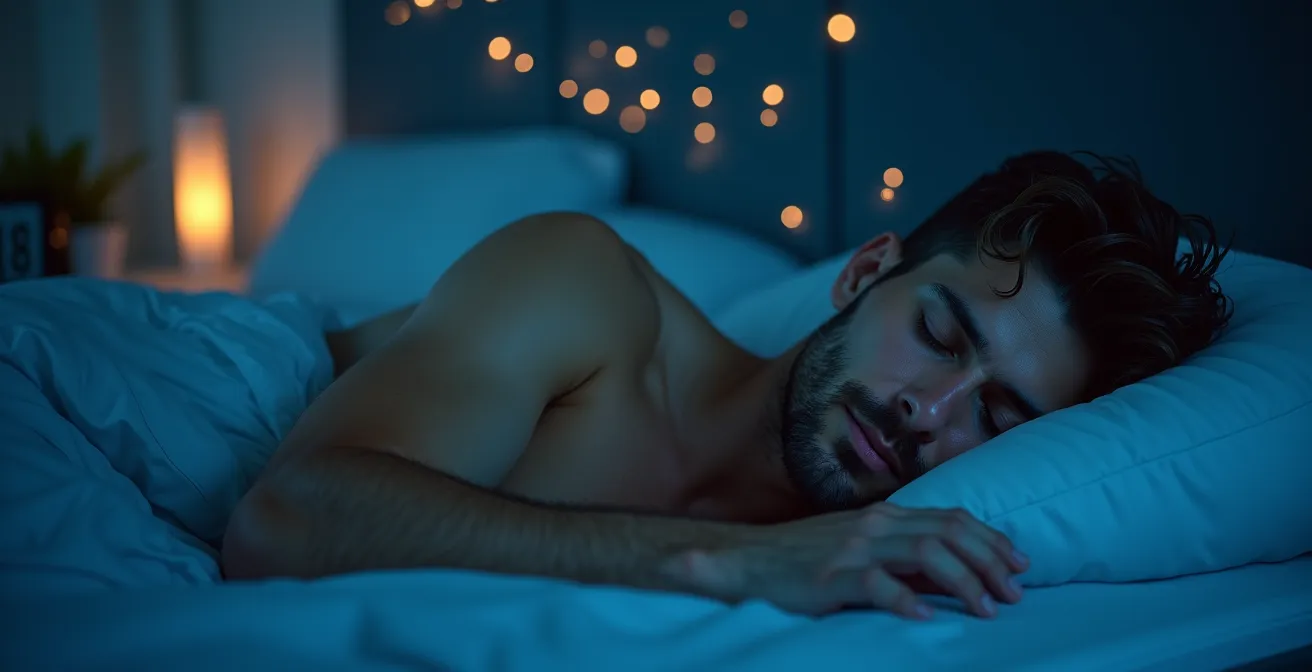
True muscle recovery isn’t about sleeping longer; it’s about engineering deeper, more restorative sleep by controlling specific physiological triggers.
- This involves precise environmental management, including core body temperature regulation and strategic light exposure to anchor your circadian rhythm.
- It also means timing neuro-active substances like caffeine and magnesium based on your unique biology and metabolic rate for optimal sleep maintenance.
Recommendation: Start by implementing one protocol from this guide, track your sleep metrics with a reliable wearable, and iterate based on your personal data.
For athletes and active adults, the frustration is common: you get a full eight hours of sleep but wake up feeling stiff, sore, and unrecovered. You’ve likely followed the standard advice—avoid screens, establish a routine, cut back on caffeine—yet the morning stiffness persists. This gap between the quantity of sleep and the quality of recovery signals that a more sophisticated approach is necessary. The issue isn’t just about being unconscious; it’s about the very architecture of your sleep and, specifically, a lack of sufficient deep Non-REM (NREM) sleep, the critical phase for physical repair.
Most sleep advice focuses on generic “sleep hygiene,” which is often insufficient for individuals placing high physical demands on their bodies. The conventional wisdom misses the powerful, direct levers we have over our physiology. The key to unlocking profound muscle recovery lies not in vague routines but in precise, science-backed protocols that directly manipulate your body’s internal environment. This isn’t about simply relaxing; it’s about actively managing your neurochemistry and physiology to maximize the duration and intensity of deep sleep.
This guide moves beyond the platitudes. We will deconstruct the specific, actionable strategies that allow you to take control of your sleep architecture. By focusing on non-obvious factors like thermal regulation, genetic caffeine timing, and precise light exposure, you can create the ideal internal conditions for your body to rebuild and repair. We will explore how to use data from wearables to measure what matters and apply targeted interventions that yield quantifiable improvements in your morning recovery scores and overall performance.
For those who prefer a visual summary, the following video offers an excellent overview of the core principles for enhancing sleep quality for better overall well-being.
To navigate these advanced strategies effectively, this article is structured around specific, high-impact protocols. The following summary outlines the key areas we will explore, from environmental control to neurochemical optimization, providing a clear roadmap to engineering superior sleep for physical restoration.
Summary: A Protocol-Based Guide to Enhancing Deep Sleep
- Why Cooling Your Mattress to 18°C Doubles Deep Sleep Duration?
- How to Use Magnesium Glycinate specifically for Sleep Maintenance?
- Wearable A or Wearable B: Which Accurately Tracks REM Cycles?
- The “Nightcap” Mistake That Destroys REM Sleep Despite Helping You Doze Off
- When to Stop Drinking Coffee Based on Your Genetics?
- When to Dim the Lights: The Perfect Timeline for a 10 PM Bedtime
- Why Your Bathroom Light Is Waking You Up More Than Espresso?
- How to trigger the Parasympathetic Nervous System When You Only Have 20 Minutes
Why Cooling Your Mattress to 18°C Doubles Deep Sleep Duration?
One of the most powerful and often overlooked regulators of sleep architecture is temperature. Your body’s core temperature needs to drop by about 1-2 degrees Celsius to initiate and maintain deep sleep. A sleeping environment that is too warm actively works against this crucial physiological process. When the ambient temperature is high, your body struggles to offload heat, which can fragment sleep and significantly reduce the time spent in the restorative NREM stages. In fact, research shows a 5-10% drop in sleep efficiency when the ambient temperature increases from 25°C to 30°C.
The ideal temperature range isn’t just about comfort; it’s a biological signal. A cooler environment facilitates the temperature drop required for deep sleep consolidation. While the perfect temperature varies, many studies point to a range between 18-20°C (65-68°F) as optimal for most people. This isn’t just theory; it’s backed by real-world data.
Case Study: Boston Community-Dwelling Older Adults Sleep Temperature Study
Researchers monitored 50 older adults using wearable sleep monitors and environmental sensors from October 2021 to February 2023. The study found sleep was most efficient and restorative when nighttime ambient temperature ranged between 20-25°C (68-77°F). This large-scale, real-world data from participants’ own homes provides practical evidence for optimizing your sleep environment based on temperature, confirming that a cooler room directly contributes to better sleep quality.
Achieving this requires more than just adjusting the thermostat. Consider using a mattress cooling pad, breathable bedding materials like linen or bamboo, or taking a warm bath 1-2 hours before bed. The warm bath paradoxically helps by increasing blood flow to the skin, which then allows your core temperature to drop more rapidly once you get out. The goal is to create a thermal gradient that encourages your body’s natural cooling process, thereby creating a robust signal for deep, uninterrupted sleep.
How to Use Magnesium Glycinate specifically for Sleep Maintenance?
Magnesium is frequently touted as a sleep aid, but its effectiveness hinges on using the right form, at the right dose, and for the right reason. For athletes and those focused on recovery, the goal is often not just falling asleep but *staying* asleep. This is where magnesium glycinate excels. Unlike other forms like magnesium citrate (which can have a laxative effect), the glycinate form is highly bioavailable and bound to glycine, an amino acid that itself has calming properties on the nervous system. It works primarily by regulating neurotransmitters, particularly by increasing gamma-aminobutyric acid (GABA), which promotes relaxation and reduces nerve activity.
However, simply taking magnesium is not a guaranteed fix. As leading sleep scientist Dr. Matthew Walker points out, its benefits are most pronounced in those with deficiencies.
Magnesium has shown benefits in older adults with insomnia, but if you have healthy levels of magnesium, it’s unlikely you need to supplement.
– Dr. Matthew Walker, Huberman Lab Podcast
For individuals under high physical stress, such as athletes, magnesium stores can be depleted through sweat, making supplementation a viable strategy for improving sleep maintenance. A specific protocol is more effective than sporadic use. Taking it a few hours before bed allows it to reach peak levels in your system when you need it most. Combining it with other synergistic compounds like L-Theanine can further enhance its calming effects without causing grogginess.
A structured approach to supplementation is key:
- Dosage and Timing: Take 200-400mg of magnesium glycinate 2-3 hours before your intended bedtime.
- Synergy: Combine with 200-400mg of L-Theanine for its synergistic calming effects on the brain.
- Enhancement: Consider adding 50mg of Apigenin (a compound found in chamomile) to further support GABA activity.
- Consistency: Take it consistently for at least two weeks to properly assess its impact on your sleep maintenance and recovery scores.
Wearable A or Wearable B: Which Accurately Tracks REM Cycles?
For a data-driven approach to sleep optimization, “feel” is not enough. You need objective data, and this is where sleep-tracking wearables become indispensable. They provide insights into your unique sleep architecture, showing you how much time you spend in each stage: light, deep, and REM. This data allows you to measure the impact of any changes you make, whether it’s adjusting your room temperature or taking a new supplement. However, not all trackers are created equal, and their accuracy in detecting specific sleep stages can vary significantly.
The gold standard for sleep measurement is polysomnography (PSG), a clinical test that measures brain waves, eye movements, and muscle activity. Consumer wearables approximate these results using different metrics, primarily heart rate variability (HRV), body temperature, movement, and respiration. For athletes concerned with recovery, both deep sleep and REM sleep are critical, but their detection methods differ. Generally, devices that use a combination of metrics, especially skin temperature and HRV, tend to have higher accuracy.
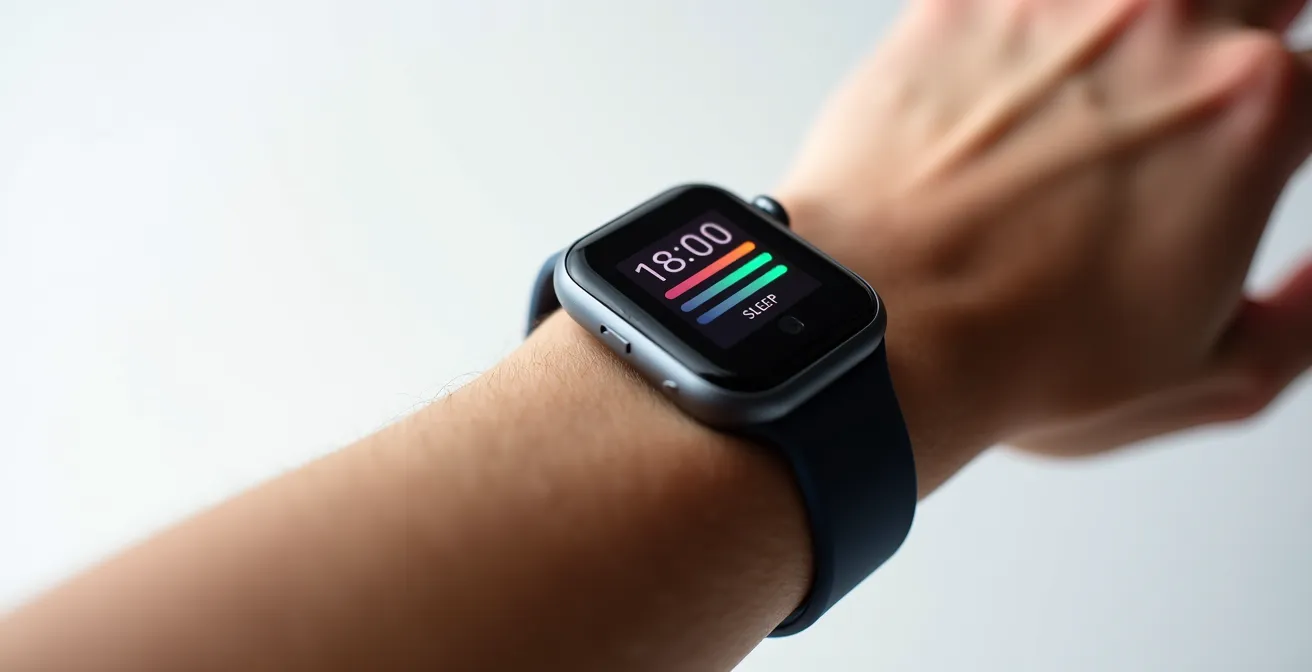
When choosing a wearable, it’s crucial to look at its validation against PSG and understand its primary measurement method. Ring-based trackers often have an advantage in temperature sensing, while strap-based devices focus heavily on HRV. The following table compares the methodologies and reported accuracy of popular device types.
| Device Type | Primary Metric | REM Detection Method | Accuracy vs Polysomnography |
|---|---|---|---|
| Oura Ring | Temperature & HRV | Skin temperature variations + HRV patterns | 79-82% agreement |
| Whoop Strap | HRV Focus | Heart rate variability algorithms | 74-78% agreement |
| Garmin Watches | Respiration | Breathing patterns + movement | 69-73% agreement |
The key takeaway is to choose a device and stick with it. While no wearable is 100% accurate, a consistent device provides a reliable baseline to track trends and measure the relative success of your sleep-enhancing protocols over time.
The “Nightcap” Mistake That Destroys REM Sleep Despite Helping You Doze Off
The belief that a glass of wine or a beer before bed helps you sleep is one of the most pervasive and damaging myths for recovery. While alcohol is a sedative and can reduce the time it takes to fall asleep (sleep latency), this initial benefit comes at a steep price. Alcohol drastically alters your sleep architecture, particularly in the second half of the night. It acts as a powerful suppressor of REM sleep, the stage critical for cognitive restoration, learning, and memory consolidation. But its most devastating impact for athletes is on deep sleep.
Deep NREM sleep is when your body does most of its physical repair. Crucially, research shows that about 70% of your daily human growth hormone (HGH) is secreted during this phase. Alcohol fragments deep sleep, leading to more frequent awakenings (even if you don’t remember them) and a significant reduction in HGH release. The result? You wake up feeling neurologically and physically unrestored, regardless of how quickly you dozed off. It creates the illusion of sleep while actively sabotaging the recovery processes that happen during it.
For athletes who cannot or choose not to abstain completely, a harm-reduction strategy is essential to mitigate the damage. The core principle is metabolic clearance—giving your body enough time to process the alcohol before you enter your critical sleep phases.
Your Action Plan: Harm Reduction Protocol for Alcohol Consumption
- Stop all alcohol consumption at least 4 hours before bedtime to allow for metabolic clearance.
- For every alcoholic drink consumed, drink a full glass of water with electrolytes to combat dehydration.
- If drinking is unavoidable, limit your intake to a maximum of 1-2 standard drinks.
- Consider taking 500mg of N-Acetyl Cysteine (NAC) before drinking to support liver function and antioxidant pathways.
- Monitor your sleep metrics (especially HRV and resting heart rate) the following night to understand the personal impact and recovery cost.
Ultimately, the data from your wearable will be undeniable: even a single drink can elevate your resting heart rate, suppress HRV, and obliterate the quality of your sleep, directly hindering muscle recovery.
When to Stop Drinking Coffee Based on Your Genetics?
The standard advice to “avoid caffeine in the afternoon” is a blunt instrument in a world where personalized physiology is key. The impact of a cup of coffee is not universal; it’s dictated by your genetics. The speed at which your body metabolizes caffeine is largely determined by a specific gene, CYP1A2. This gene controls the production of an enzyme in your liver that breaks down caffeine. Your individual “caffeine cutoff” time depends entirely on which variant of this gene you possess.
Dr. Andrew Huberman offers a stark reminder of caffeine’s lingering presence:
Caffeine has a quarter-life of about 12 hours, meaning even a morning coffee can impact evening adenosine levels.
– Dr. Andrew Huberman, Huberman Lab Sleep Series
This “quarter-life” means that 25% of the caffeine from a 10 AM coffee can still be circulating in your bloodstream at 10 PM, actively blocking the adenosine receptors that signal sleepiness. For some, this effect is negligible; for others, it’s a major sleep disruptor. Understanding your genetic makeup is the only way to know for sure.
Case Study: Personalized Caffeine Timing with the CYP1A2 Gene
The CYP1A2 gene determines your caffeine metabolism speed. Individuals with the “fast metabolizer” (AA) genotype have a caffeine half-life of 3-4 hours, often allowing them to consume coffee in the early afternoon without sleep disruption. In contrast, “slow metabolizers” (those carrying a C allele) have a half-life of 8 hours or more. For them, any caffeine consumed after noon can significantly interfere with deep sleep initiation. Genetic testing services like 23andMe can reveal your status for the rs762551 SNP, allowing for truly personalized caffeine timing and sleep optimization.
Without a genetic test, the most reliable method is personal experimentation guided by data. Establish a strict caffeine cutoff time (e.g., 12 PM) for one week and monitor your sleep latency and deep sleep duration with your wearable. Then, push the cutoff later by an hour and observe the changes. Your data will reveal your personal tolerance far more accurately than generic advice ever could.
When to Dim the Lights: The Perfect Timeline for a 10 PM Bedtime
Light is the most powerful external signal for regulating your circadian rhythm, the 24-hour internal clock that governs your sleep-wake cycle. While most people know to avoid blue light from screens at night, effective light management is a game of both timing and intensity that starts the moment you wake up. To create a strong signal for sleep in the evening, you must first establish a robust “circadian anchor” in the morning.
According to research highlighted by the Huberman Lab, getting 10-15 minutes of direct morning sunlight exposure before 10 AM is critical. This early-day light exposure signals the master clock in your brain, making your system more sensitive to the absence of light in the evening. This contrast between bright days and dark nights is what drives the timely release of melatonin, the hormone that signals your body to sleep. Without a strong morning anchor, the evening “dimming” signal is significantly weaker.
With the morning anchor set, the evening protocol becomes a gradual “light-down” process. It’s not an on/off switch but a slow, deliberate reduction in both the intensity (lux) and spectrum (color temperature) of light in your environment. This mimics the natural sunset and provides a clear, progressive signal to your brain to begin preparing for sleep. For a target 10 PM bedtime, the protocol should begin two hours prior.
Here is a step-by-step timeline:
- 8:00 PM: Turn off all bright overhead lights (which can exceed 300 lux). Switch exclusively to table lamps, keeping ambient light below 100 lux.
- 9:00 PM: Further reduce light impact. Switch to red-tinted bulbs or wear effective blue-light blocking glasses (which block wavelengths in the 450-500nm range).
- 9:30 PM: Dim all remaining lights to their minimum setting. This is the time to transition away from any task requiring bright light.
- 9:45 PM: All screens must be off completely. The light from a screen held close to the face is intensely powerful. Transition to analog activities like reading a physical book or listening to a podcast.
- 10:00 PM: Your bedroom should be as dark as possible, ideally below 10 lux, to allow for optimal melatonin production.
Why Your Bathroom Light Is Waking You Up More Than Espresso?
A common yet highly disruptive event is the middle-of-the-night bathroom visit. While the interruption itself is brief, the real damage comes from a sudden, intense exposure to light. Standard overhead bathroom lights are incredibly bright, often exceeding 1000 lux. This blast of light, even for a few seconds, is a potent signal to your brain’s master clock that it is daytime, triggering a cascade of wakefulness signals and acutely suppressing melatonin production.
The impact is far more powerful than most people realize. In a guest series on the Huberman Lab podcast, Dr. Matthew Walker delivered a stunning comparison:
A 30-second exposure to a 1000-lux bathroom light at 3 AM has a more powerful wakefulness effect on your circadian rhythm than a shot of espresso.
– Dr. Matthew Walker, Guest Series on Sleep Biology
This single event can make it incredibly difficult to fall back asleep and can disrupt the architecture of your remaining sleep cycles, robbing you of restorative deep sleep. The solution is not to avoid hydration before bed but to engineer a “sleep-safe” bathroom environment that allows you to navigate without triggering a circadian catastrophe.
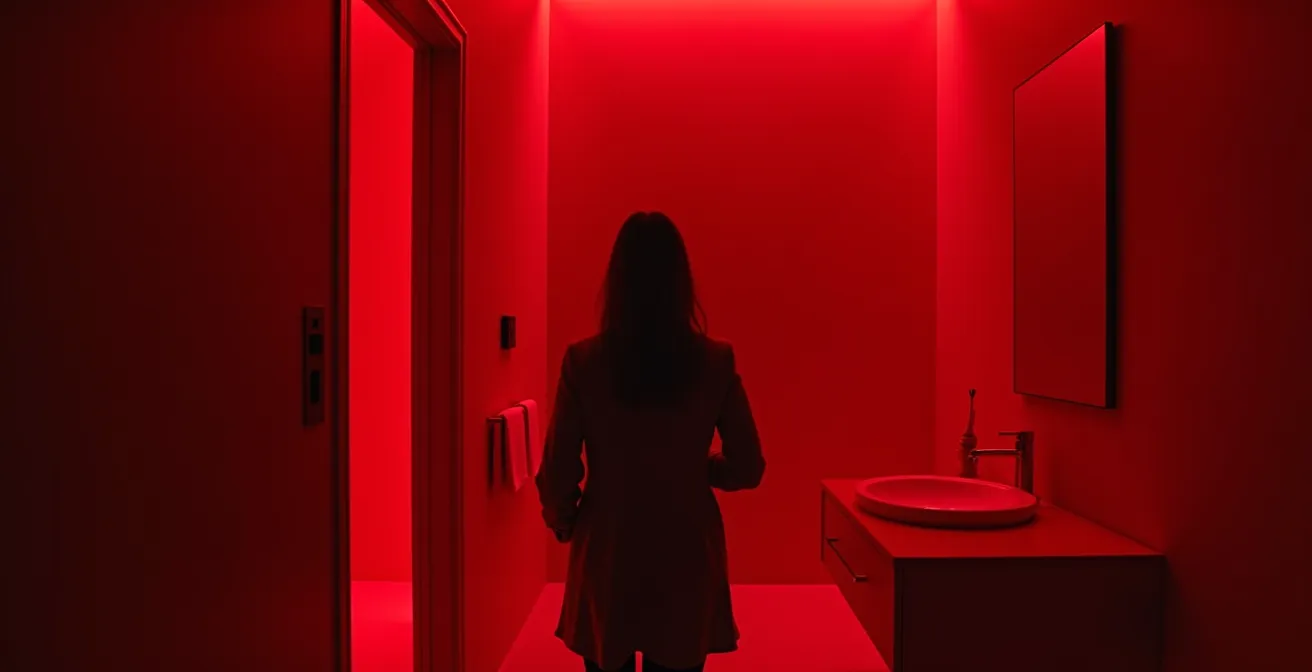
The key is to use dim, red-spectrum light. Red light has the longest wavelength and the least impact on melatonin suppression. There are several tiered solutions to achieve this, from free behavioral tricks to simple tech installations.
Checklist: Tiered Solutions for Nighttime Bathroom Visits
- Tier 1 (Free): Keep one eye tightly closed when turning on the bathroom light. This preserves the melatonin-producing pathway in one eye, making it easier to fall back asleep.
- Tier 2 (Under $20): Install a dim, red-light nightlight in the bathroom and any hallways you need to navigate.
- Tier 3 (Under $50): Replace the main bathroom bulb with a smart bulb programmed to emit only dim, red light after your bedtime.
- Tier 4 (Optimal): Install motion-activated, floor-level red LED strips. This provides safe, hands-free navigation without any direct, bright light exposure.
- Audit Your Path: Walk the path from your bed to the bathroom at night and identify all sources of disruptive light to address.
Key takeaways
- True recovery depends on sleep quality, not just quantity, with deep NREM sleep being paramount for physical repair and HGH release.
- Your sleep environment, particularly temperature and light, acts as a powerful physiological signal that can either enhance or inhibit deep sleep.
- The impact of substances like caffeine and alcohol is highly personal and can be managed with data-driven protocols based on metabolic clearance and genetics.
How to trigger the Parasympathetic Nervous System When You Only Have 20 Minutes
Sometimes, the biggest barrier to sleep isn’t environmental; it’s an overactive mind and a stressed nervous system. When your sympathetic (“fight-or-flight”) system is dominant, your heart rate is elevated, your mind is racing, and your body is not in a state conducive to rest. To prepare for sleep, you must actively shift into a parasympathetic (“rest-and-digest”) state. Fortunately, you have direct, voluntary control over this system through your breathing.
Specific breathing patterns can rapidly change your physiological state. They work by influencing the vagus nerve, the main pathway of the parasympathetic nervous system, and by altering the balance of oxygen and carbon dioxide in your bloodstream. One of the fastest methods identified by scientific research is the “physiological sigh.”
Case Study: Stanford’s Physiological Sigh Research for Rapid Nervous System Reset
Research from Stanford University identified the “physiological sigh” as the fastest known voluntary method to activate the parasympathetic response and reduce stress. The protocol is simple: two sharp inhales through the nose (the second one topping off the lungs) followed by a long, slow exhale through the mouth. This pattern rapidly offloads excess carbon dioxide from the lungs, which sends a signal via the vagus nerve to the brain to slow the heart rate. Studies showed that just five minutes of this breathing pattern can significantly lower heart rate and reduce subjective feelings of stress.
Combining this powerful breathing technique with other modalities like cold exposure and guided relaxation can create a robust, 20-minute protocol to downshift your nervous system and prepare your body for deep, restorative sleep. This is particularly useful after a late-night workout or a stressful day when you feel “wired but tired.”
Here’s a structured 20-minute protocol to activate your parasympathetic nervous system:
- Minutes 1-5: Perform physiological sighs. Inhale sharply through the nose, then sneak in another short inhale without exhaling. Then, exhale slowly and fully through your mouth. Repeat for 5 minutes.
- Minutes 6-10: Apply a cold washcloth or ice pack to the upper half of your face (forehead, eyes, upper cheeks) for 30-60 seconds. This triggers the mammalian dive reflex, another powerful way to slow heart rate.
- Minutes 11-20: Lie down and follow a guided Non-Sleep Deep Rest (NSDR) or Yoga Nidra protocol. These practices guide you into a theta-wave dominant brain state, which is the gateway to sleep. Numerous free resources are available on platforms like YouTube.
By moving beyond generic sleep hygiene and implementing these specific, science-backed protocols, you can take direct control over your sleep architecture. Start by choosing one strategy, measure its impact with your wearable, and systematically build a personalized routine that transforms your sleep from a passive activity into an active and powerful tool for muscle recovery and peak performance. Evaluate your current routine now and identify the highest-impact protocol you can implement tonight.