

Controlling pre-presentation anxiety isn’t about generic ‘deep breaths’; it’s about deliberately manipulating your body’s CO2 levels to command your nervous system.
- Mouth breathing and silent hyperventilation actively reduce oxygen to your brain, fueling the panic response.
- True control comes from increasing your CO2 tolerance, which desensitizes your body to a primary trigger of anxiety.
Recommendation: Stop focusing on just inhaling and start mastering the breath-hold. This is the physiological lever that stimulates the vagus nerve and forces your body into a state of calm command.
The sensation is familiar: you’re moments away from speaking, and your heart starts hammering against your ribs. Your palms get slick, your thoughts race, and your breath becomes shallow. The common advice is to “take a deep breath.” Many even suggest a specific technique: box breathing. It’s the method famously used by Navy SEALs to maintain composure in life-or-death situations. You inhale for four seconds, hold for four, exhale for four, and hold for four. It sounds simple, almost too simple.
But for many high-performers, this advice falls flat. They try the technique, yet the anxiety persists, sometimes even worsening. The issue isn’t the technique itself, but the lack of understanding behind it. Most guides treat box breathing like a magic incantation, failing to explain the powerful physiological mechanisms at play. They talk about calming the nervous system but don’t explain *how*. They ignore the critical errors—like unconscious mouth breathing or a low tolerance for carbon dioxide—that sabotage your efforts.
This is not another guide telling you to simply count to four. This is a tactical manual. The key to commanding your pre-presentation state isn’t just breathing; it’s about mastering the physiological levers of CO2 tolerance and vagus nerve stimulation. It’s about understanding that how you breathe directly dictates whether your brain receives a signal of “threat” or “command.” This article will deconstruct the science behind effective respiratory control, revealing why your current approach might be failing and providing a precise protocol to finally take control of your body’s stress response when it matters most.
To master this skill, we will dissect the core components of respiratory control, from the fundamental errors most people make to the advanced techniques that give you direct influence over your nervous system. This structured approach will provide a clear roadmap to achieving a state of alert calm before any performance.
Contents: Tactical Respiratory Control for Performance
- Why Mouth Breathing Reduces Oxygen Delivery to Your Brain?
- How to Use the 4-7-8 Technique to Fall Asleep in Under 5 Minutes?
- Intense Breathwork or Slow Pacing: Which Is Safer for Trauma Release?
- The Dizziness Error Beginners Make When Trying Wim Hof
- How to Increase Your CO2 Tolerance to Reduce Anxiety Sensitivity
- The Hyperventilation Error That Mimics a Heart Attack During Stress
- How to Use Diaphragmatic Breathing to Brace Your Spine During Lifts?
- How to Stop a Panic Attack Using Vagus Nerve Stimulation Techniques
Why Mouth Breathing Reduces Oxygen Delivery to Your Brain?
The most fundamental error that sabotages any breathing technique is using your mouth instead of your nose. When you feel anxious, the instinct is to gasp for air through your mouth, believing you need more oxygen. Physiologically, this is a catastrophic mistake. This action triggers a phenomenon known as the Bohr Effect. To release oxygen from your red blood cells into your tissues and brain, a sufficient level of carbon dioxide (CO2) is required. Mouth breathing, which is often rapid and shallow, causes you to expel too much CO2.
Without adequate CO2, the hemoglobin in your blood holds onto oxygen molecules more tightly, refusing to release them where they’re needed most—your brain. The ironic result is that the more you gasp for air through your mouth, the more you starve your brain of oxygen. This state, called hypocapnia, triggers dizziness, mental fog, and a heightened sense of panic, creating a vicious cycle. Landmark research confirms this, showing that hyperventilation can lead to a 40% reduction in oxygen delivery to the brain. This is precisely why a speaker can feel flustered and unable to think clearly, despite breathing heavily.
Nasal breathing, in contrast, acts as a natural regulator. It warms, filters, and humidifies the air, but more importantly, it slows down your breathing rate and increases resistance, helping you retain the necessary CO2 to facilitate oxygen exchange. Shifting from mouth to nasal breathing is the non-negotiable first step to gaining control.
Your Action Plan: Bohr Effect Application Protocol
- Master the Input: Always breathe in and out through your nose. This is the primary control for regulating CO2 levels effectively.
- Locate Your Center: Feel the breath originating from just behind your belly button, visualizing a balloon filling and emptying in your core, not your chest.
- Audit for Leaks: Pay attention to subconscious “catch-up” breaths, frequent sighs, and shoulder lifts. These are indicators of inefficient, shallow breathing.
- Check Your Mechanics: Ensure your diaphragm activates first. Your neck, shoulders, and chest muscles are secondary, not primary, breathing muscles.
- Practice Mindful Audits: Periodically check in with your breath. Is it shallow and tiring or deep and efficient? This awareness is key to correction.
How to Use the 4-7-8 Technique to Fall Asleep in Under 5 Minutes?
While box breathing is a tool for achieving alert calm, other techniques are designed for a different purpose. Understanding the distinction is crucial for applying the right tool at the right time. The 4-7-8 technique, popularized by Dr. Andrew Weil, is not designed for pre-presentation focus but for a deep parasympathetic reset, making it a powerful tool for inducing sleep. This is particularly useful for executives who suffer from anticipatory anxiety the night before a big presentation.
The method is precise: sit or lie down comfortably, place the tip of your tongue against the ridge of tissue just behind your upper front teeth, and keep it there. You then exhale completely through your mouth, making a whoosh sound. Close your mouth and inhale quietly through your nose to a mental count of four. Hold your breath for a count of seven. Then, exhale completely through your mouth, making a whoosh sound to a count of eight. This constitutes one cycle. You repeat it for a total of four cycles.
The prolonged seven-second hold and eight-second exhale are the key. This extended pattern dramatically increases CO2 levels, forcing the body to down-regulate. It powerfully stimulates the vagus nerve, which acts as a brake on your stress response, slowing the heart rate and guiding the nervous system toward a “rest-and-digest” state, not an “alert-and-perform” state. Using this the night before a presentation can prevent a sleepless night fueled by anxiety, ensuring you arrive rested and resourceful.
The table below clarifies the distinct applications of these two powerful breathing protocols.
| Aspect | Box Breathing (4-4-4-4) | 4-7-8 Technique |
|---|---|---|
| Primary Purpose | Focused calm for performance | Deep parasympathetic reset for sleep |
| Breathing Pattern | Equal 4-second phases | 4 inhale, 7 hold, 8 exhale |
| Best Used For | Pre-presentation anxiety | Night before to prevent anticipatory anxiety |
| Mental State | Alert relaxation | Letting go completely |
| Time to Effect | 96 seconds (6 rounds) | 3-4 cycles for sleep induction |
Intense Breathwork or Slow Pacing: Which Is Safer for Trauma Release?
As you explore breathwork, you may encounter more intense styles, such as Holotropic Breathwork or Rebirthing, which involve prolonged, rapid breathing. These methods are specifically designed to induce altered states of consciousness, often for the purpose of processing deep-seated emotions or trauma. It is critical to understand that these are therapeutic modalities, not performance tools. Using them without proper guidance is not only ineffective for managing pre-presentation jitters but can also be unsafe.
Intense, rapid breathing intentionally creates a state of respiratory alkalosis, a significant drop in CO2 that can lead to strong physical and emotional releases. For someone with unresolved trauma, this can be overwhelming and re-traumatizing if not managed within a controlled, therapeutic setting. The physical sensations, including tetany (muscle cramping), intense dizziness, and emotional flooding, are not conducive to preparing for a high-stakes professional engagement.
For performance anxiety, the goal is the opposite: not emotional catharsis, but emotional regulation. Slow-paced breathing like the box technique aims for balance (homeostasis), gently nudging the nervous system from a sympathetic (fight-or-flight) state to a parasympathetic (rest-and-digest) one. It keeps you grounded, present, and in control. The objective is to achieve a state of “alert calm,” not to explore the depths of your psyche minutes before walking on stage. Stick to slow, paced, and controlled breathing protocols for performance enhancement. Leave the intense breathwork to dedicated sessions with a qualified facilitator.
The Dizziness Error Beginners Make When Trying Wim Hof
Another popular form of intense breathwork is the Wim Hof Method, which involves cycles of controlled hyperventilation followed by extended breath holds. While celebrated for its benefits on immunity and resilience, beginners often make a critical error: pushing too hard, too soon, leading to dizziness or even fainting. This “dizziness error” stems from a misunderstanding of what the practice is trying to achieve and how it differs from calming techniques like box breathing.
Wim Hof breathing intentionally induces a state of hypocapnia (low CO2) during the hyperventilation phase, followed by a dramatic swing to hypercapnia (high CO2) during the breath-hold. This volatile swing is a powerful stressor that trains the body’s resilience. However, for a novice, the initial drop in CO2 can drastically constrict blood vessels in the brain, causing lightheadedness. If you are not in a safe, seated, or lying position, this can be dangerous. It is not a technique to be attempted for the first time standing up in the wings of a stage.
In contrast, box breathing is about creating stability, not volatility. A Stanford study comparing different breathing techniques highlighted that box breathing’s equal-ratio pattern is specifically utilized by the military for stress regulation and immediate performance improvement. Its gentle, rhythmic nature prevents the wild physiological swings that can cause dizziness. If four seconds feels too long initially, the tactical approach is to calibrate down. Start with a 2-2-2-2 or 3-3-3-3 count. The goal is a comfortable rhythm, not a struggle. Practice for just 30-60 seconds to start, ensuring you are seated, and gradually increase the duration as your body adapts.
How to Increase Your CO2 Tolerance to Reduce Anxiety Sensitivity
Here we arrive at the core physiological lever for mastering anxiety: CO2 tolerance. Anxiety sensitivity is not just a psychological phenomenon; it has a direct physiological root. When your body is not efficient at dealing with carbon dioxide, even a slight increase in CO2 levels—which naturally occurs during moments of stress or physical exertion—is interpreted by your brainstem as a threat signal, specifically a sign of suffocation. This triggers the classic panic response: racing heart, shortness of breath, and a desperate urge to gasp for air.
By systematically practicing breath-hold techniques, you are training your brainstem to become less reactive to rising CO2 levels. You are increasing your “CO2 tolerance.” A person with high CO2 tolerance can remain calm and clear-headed even when their CO2 levels fluctuate, while someone with low tolerance is on a hair-trigger for panic. Box breathing, with its two hold phases, is a gentle but effective way to start building this tolerance. The four-second hold after the inhale and the four-second hold after the exhale are the most important parts of the exercise.
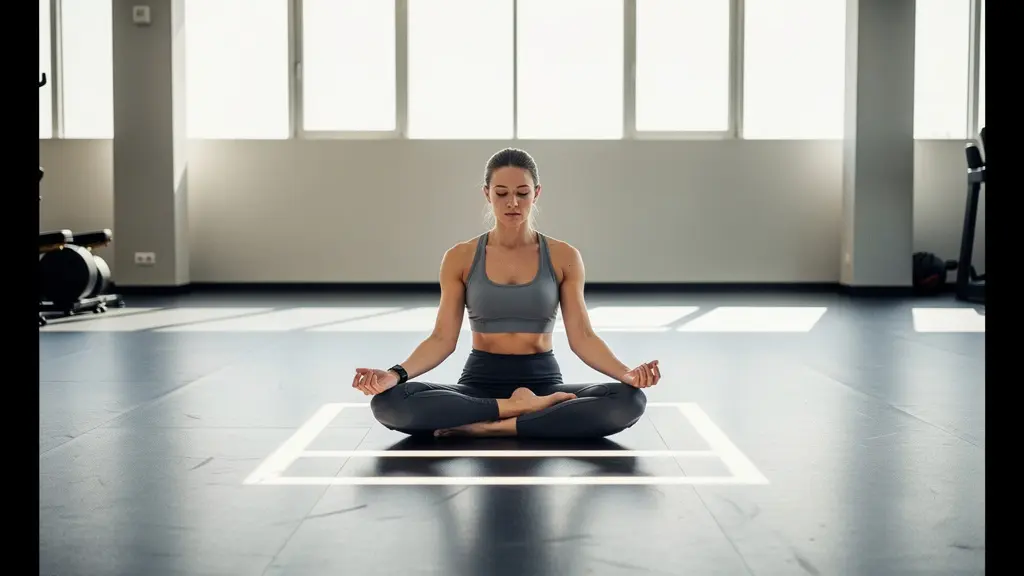
This is not just theory. Medical research shows that when the partial pressure of CO2 in your arterial blood (PaCO2) drops, it impairs oxygen release. In fact, hypocapnia from hyperventilation, defined as a PaCO2 level below 35 mmHg, directly causes cerebral vasoconstriction and reduced oxygen delivery. By increasing your tolerance, you maintain a more stable PaCO2 level, ensuring your brain stays oxygenated and calm under pressure. The goal is to make your body’s default response to stress one of calm efficiency, not panicked alarm.
The Hyperventilation Error That Mimics a Heart Attack During Stress
One of the most terrifying experiences of a panic attack is the conviction that you are having a heart attack. The chest tightness, tingling extremities, and rapid heartbeat are all symptoms that can be directly caused by an often-unnoticed phenomenon: chronic silent hyperventilation. This isn’t the dramatic gasping seen in movies; it’s a subtle, habitual pattern of over-breathing, usually through the mouth, with the upper chest instead of the diaphragm.
In a high-stress office environment, many executives exist in a state of low-grade, silent hyperventilation. They are taking quick, shallow breaths that expel too much CO2. As we’ve established, low CO2 (hypocapnia) prevents oxygen from being released into tissues and the brain. It also causes a shift in blood pH, leading to symptoms like muscle cramping (chest tightness) and nerve excitability (tingling in hands and face). When a major stressor hits—like an impending presentation—this already-primed system tips over the edge into full-blown hyperventilation, and the physical symptoms become overwhelming.
The solution is a hard reset. Breathing into a paper bag during a panic attack works for this exact reason: it forces you to re-breathe your exhaled CO2, rapidly raising your blood CO2 levels and reversing the symptoms. A more discreet protocol is the mini-breath hold: exhale normally through your nose, gently pinch your nose closed, and hold for 5-10 seconds. Release and resume normal nasal breathing. This brief hold is enough to allow CO2 to rebuild, breaking the physiological feedback loop of panic. This isn’t just about calming down; it’s about reversing the specific physiological cascade that mimics a cardiac event.
How to Use Diaphragmatic Breathing to Brace Your Spine During Lifts?
The foundation of all effective breathing is diaphragmatic breathing. While the context of bracing the spine for weightlifting may seem unrelated to public speaking, the underlying principle of creating intra-abdominal pressure (IAP) is directly applicable to feeling grounded and stable before a presentation. Breathing into your chest and shoulders is neurologically linked to the fight-or-flight response. It’s a signal of threat. Breathing deep into your diaphragm, on the other hand, signals safety and stability.
To do this correctly, imagine a 360-degree band around your waist. As you inhale through your nose, your goal is not to lift your chest, but to expand that band in all directions: forward, to the sides, and even into your lower back. This full expansion engages the diaphragm, which in turn creates IAP. This pressure acts like a natural corset, stabilizing your lumbar spine and providing a powerful sense of being physically anchored. This feeling of being “rooted” to the ground is a potent psychological antidote to the flighty, ungrounded sensation of anxiety.
This deep, diaphragmatic breath is also the most efficient way to stimulate the lower lobes of the lungs, which are rich with parasympathetic nerve receptors. This action directly engages the vagus nerve. As a Healthline medical review notes, the slow hold phase of a breath is particularly powerful for this.
The slow holding of breath allows CO2 to build up in the blood. An increased blood CO2 enhances the cardio-inhibitory response of the vagus nerve when you exhale and stimulates your parasympathetic system.
– Healthline Medical Review, as cited by Ethos3 Presentation Training
By mastering this 360-degree expansion, you are not just breathing; you are creating a stable physical core that sends an undeniable signal of safety and control to your brain.
Key Takeaways
- Your breath is not a passive process; it’s an active control system for your nervous system.
- The primary goal is not just to get more oxygen, but to maintain optimal CO2 levels for effective oxygen delivery via the Bohr Effect.
- Mastering the breath-hold is the fastest way to increase CO2 tolerance and stimulate the vagus nerve, your body’s built-in braking system for stress.
How to Stop a Panic Attack Using Vagus Nerve Stimulation Techniques
We have now assembled the components of a complete physiological toolkit. Box breathing is your core practice for building CO2 tolerance and maintaining an “alert calm.” You understand that nasal, diaphragmatic breathing is the non-negotiable foundation. But what do you do in an “emergency” when you feel the anxiety spiraling into a full-blown panic attack right before you go on?
The answer is to “stack” several techniques to create an overwhelming signal of safety to your brain, primarily by targeting the vagus nerve. The vagus nerve is the main highway of the parasympathetic nervous system, and stimulating it directly and forcefully is the fastest way to slam the brakes on a panic response. A simple but powerful “vagal stack” protocol can be done discreetly in minutes.
First, begin with several cycles of box breathing to establish a rhythm. Next, on the exhale, add a gentle humming sound (like “hmmmmmm”). This vibration of the vocal cords is a potent vagus nerve stimulator. At the very end of each hummed exhale, swallow hard. Swallowing activates muscles in the throat that are also connected to the vagus nerve. The sequence is: inhale 4, hold 4, hum/exhale 4, hold 4, swallow. Repeat for 3-5 cycles. For a final, powerful reset, if you have access to a restroom, splash cold water on your face, focusing on the area under your eyes and at your temples, for 15-30 seconds. This triggers the “mammalian dive reflex,” another primitive and powerful vagal stimulant that instantly slows the heart rate.
By shifting your focus from the vague notion of “calming down” to the tactical application of these physiological levers, you transform anxiety from an overwhelming force into a manageable variable. Start practicing these protocols today, not just before presentations, but as a daily discipline. This will build the neurological and physiological resilience required to step into any high-pressure situation with a state of unwavering command.
Frequently Asked Questions on Breathwork for Performance Anxiety
What should I do if I feel dizzy during the practice?
If you feel dizzy, pause and return to normal breathing before resuming. This is especially important for beginners who may be adjusting to the technique. Dizziness is often a sign of blowing off too much CO2. Ensure you are breathing through your nose and consider reducing the count (e.g., from 4 seconds to 3) until you are comfortable.
Can box breathing help during panic attacks?
Yes, box breathing can be a helpful tool during panic attacks by slowing the breath and activating the body’s relaxation response. However, during an acute panic attack, focusing on the extended exhale (as in the 4-7-8 technique) or using the vagal stack protocol described in this article can often be more effective for an immediate reset.